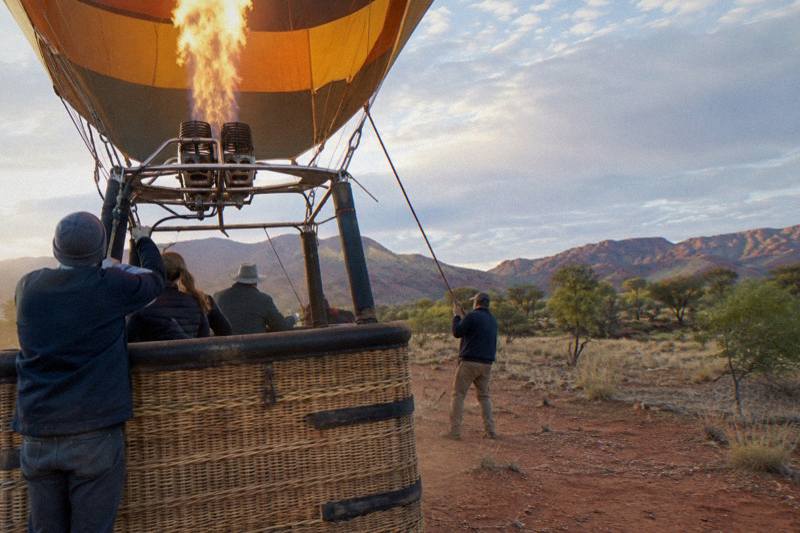
Will I Be Cold On A Hot Air Balloon Ride?
Honest answer with Bureau of Meteorology Alice Springs temperature data, operator clothing advice and month-by-month pre-dawn cold expectations for a balloon flight over the Red Centre.
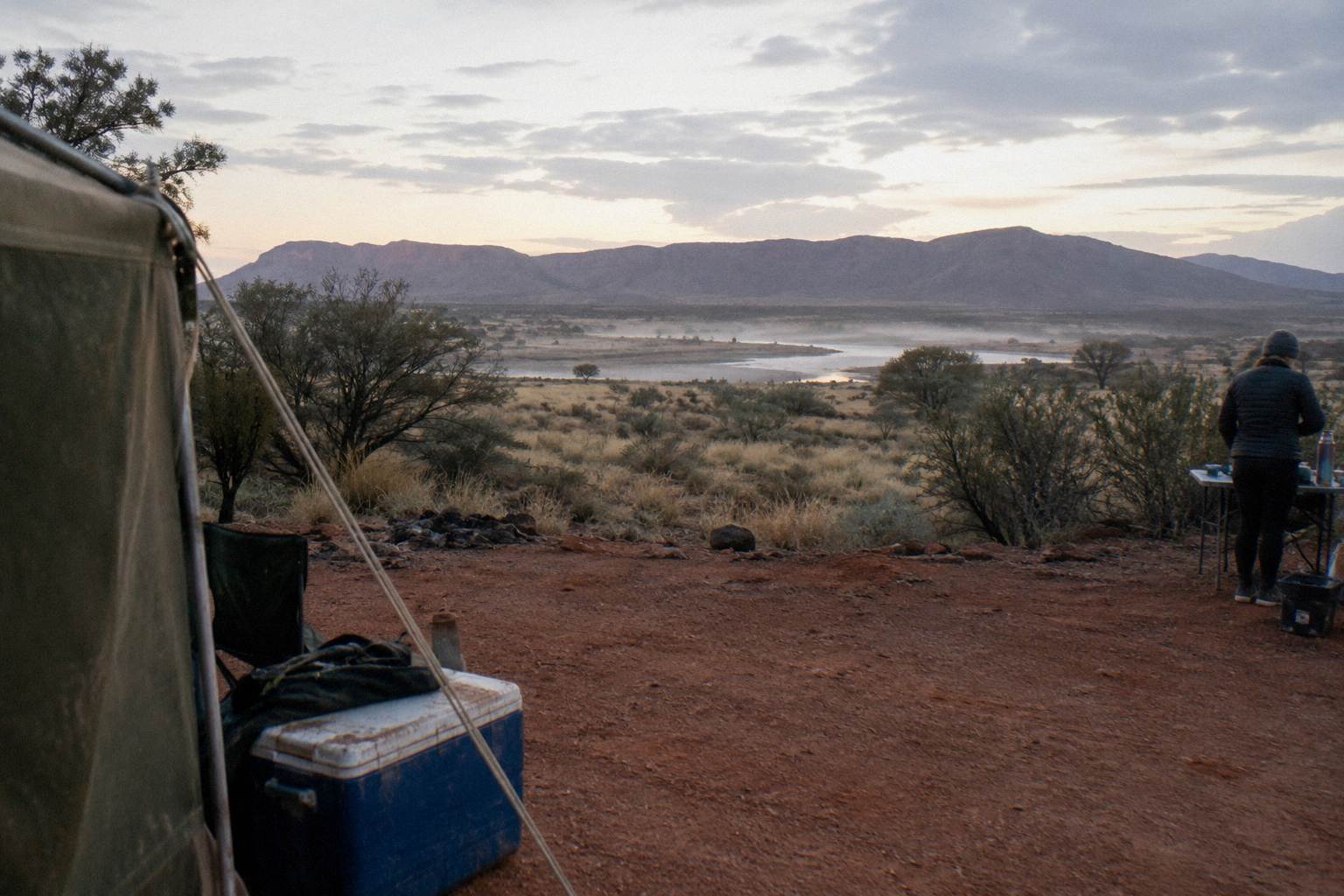
Yes, most of the year you will feel cold standing at the launch field before dawn, and in Alice Springs from May to September that cold is genuine winter cold, not a morning chill. The Bureau of Meteorology's 85-year record for Alice Springs Airport puts the July mean minimum at 3.9 °C and the lowest temperature ever recorded in that month at minus 7.5 °C. Passengers are picked up about an hour before first light.
That is the honest answer, and it comes with an important qualification. The climate statistics most people find with a quick search are whole-day numbers, and the daytime maximum of 28.9 °C averaged across the year tells you nothing about what 5:45am feels like. Pre-dawn temperatures sit close to the minimum row of the record, not the maximum row. A town that hits 36.6 °C on an average January afternoon also drops to 21.6 °C on an average January night, and you will be standing in a paddock south of town during the drop, not the peak.
The good news is that cold of this kind is entirely manageable with clothing, and the operator publishes specific advice on what to wear. This page works through the actual temperature record month by month, the operator's clothing guidance, why the pickup is so early, and what the operators do and do not say about warmth in the basket itself.
If you are weighing the decision now, these are the flights and the day options most readers compare for an Alice Springs dawn:
The featured option on this site is the Alice Springs early morning balloon flight, operated by Outback Ballooning, rated 4.9 from 288 reviews on its main booking page. It runs about four hours door to door and includes return transfers from most Alice Springs accommodation, sparkling wine and juice after landing, and a commemorative certificate. The operator's published fares are A$380 adult and A$340 child for the 30 minute flight, and A$450 adult and A$405 child for the 60 minute flight. Bookings can be changed free up to 24 hours before, and if the pilot cancels for weather you rebook or take a full refund. For a broader look at what guests report, the Alice Springs balloon flight reviews guide collects the patterns.
How Cold Does Alice Springs Actually Get Before Dawn?
Alice Springs pre-dawn cold follows the mean minimum row of the Bureau of Meteorology record, and that row swings from 21.6 °C in January down to 3.9 °C in July before climbing back. The extremes go lower still: the record low is minus 7.5 °C in July, and every winter month has recorded below zero. A passenger at the launch field in June or July should plan for single digits, sometimes below freezing.
The numbers below come from the Bureau of Meteorology's climate averages for Alice Springs Airport, station 015590, covering 1941 to 2026, 85 years of records. These are whole-day statistics, so treat the minimum row as the best available guide to what the coldest part of the night feels like, which is exactly the window a balloon passenger occupies.
| Month | Mean min (C) | Lowest recorded (C) | Mean max (C) |
|---|---|---|---|
| Jan | 21.6 | 10.0 | 36.6 |
| Feb | 20.8 | 8.5 | 35.3 |
| Mar | 17.7 | 6.1 | 32.8 |
| Apr | 12.6 | 1.4 | 28.4 |
| May | 8.1 | -2.7 | 23.1 |
| Jun | 4.9 | -6.0 | 20.0 |
| Jul | 3.9 | -7.5 | 19.9 |
| Aug | 5.9 | -4.1 | 22.9 |
| Sep | 10.3 | -1.0 | 27.5 |
| Oct | 14.9 | 1.3 | 31.3 |
| Nov | 17.9 | 3.5 | 33.8 |
| Dec | 20.3 | 9.3 | 35.6 |
The full station record is published by the Bureau of Meteorology for Alice Springs Airport. Two patterns matter for a balloon passenger. First, the shoulder months are deceptive: April averages a mild 12.6 °C minimum but has recorded 1.4 °C, and October has recorded 1.3 °C against a 14.9 °C average. Second, the cold is concentrated in the exact hours you will be outside. By the time the sun is properly up and the flight is over, the desert is already warming fast.
Read the minimum row as the pre-dawn expectation, not the maximum row. A July day in Alice Springs averages a pleasant 19.9 °C at its peak, which is why winter is a comfortable time to visit the Red Centre in general. But the balloon experience begins in the dark, roughly an hour before first light, and the temperature at that hour is tracking the overnight minimum. Guests flying in June or July who packed only for the daytime maximum will be cold at the launch field, full stop.
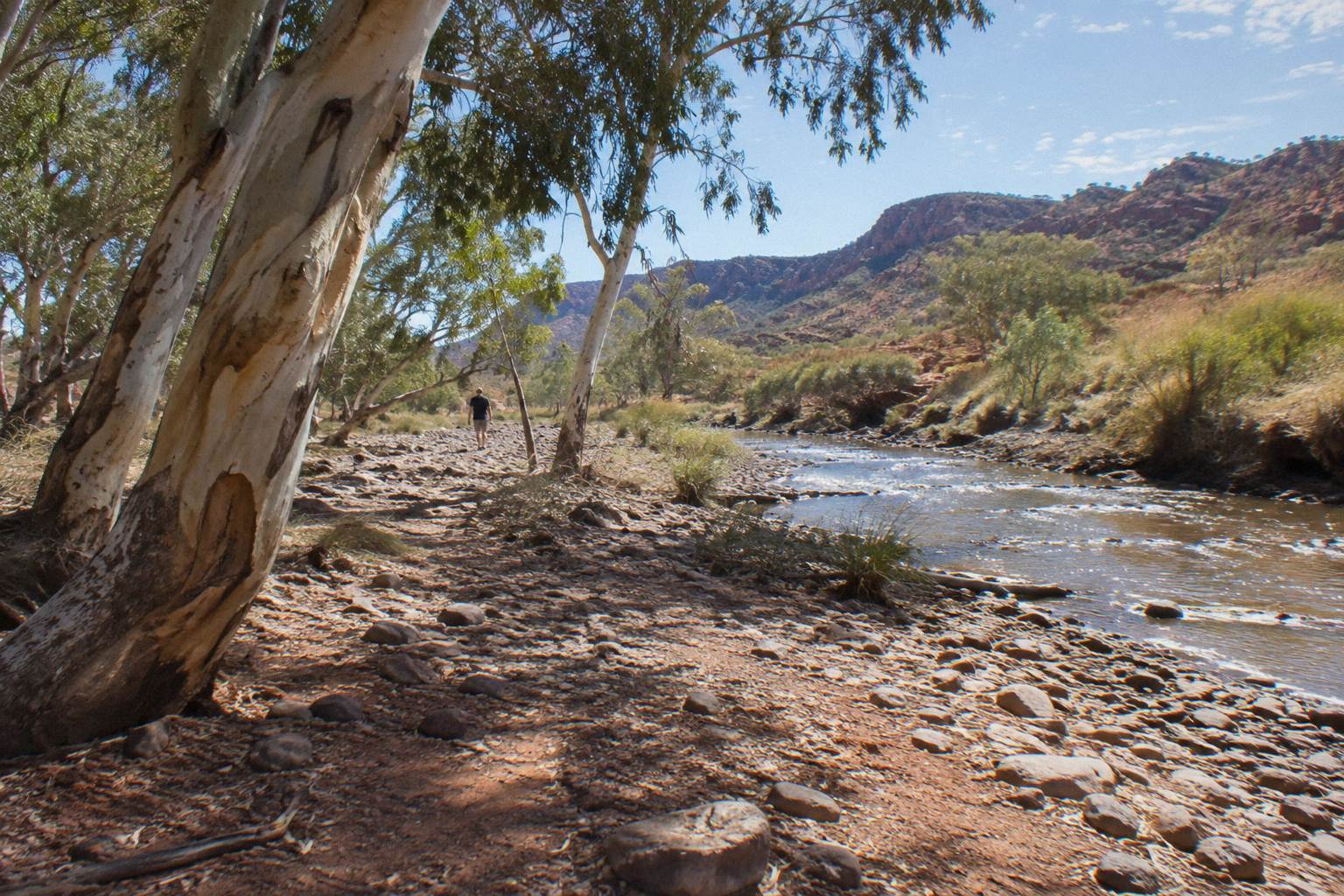
For more on picking a month, the guide to the best time for a balloon flight in Alice Springs works through the seasonal trade-offs, including the rainfall picture. Rain matters too, though less than you might think: Alice Springs averages only 43.1 rain days a year, and the driest months, August at 1.8 days and April at 2.1 days, sit inside the shoulder season. No wind statistics appear in the station record, and none are claimed here.
What Should You Wear On A Cold Morning Flight?
The operator's advice is concrete: outdoor clothing that is not white, long pants, a hat, and enclosed flat shoes with no high heels, with warm layers recommended from about May to September. Spinifex Ballooning, the other local brand, suggests a light jacket from April to October and very warm clothing in mid-winter. No dangling jewellery or scarves at the launch site, and backpacks stay on the bus.
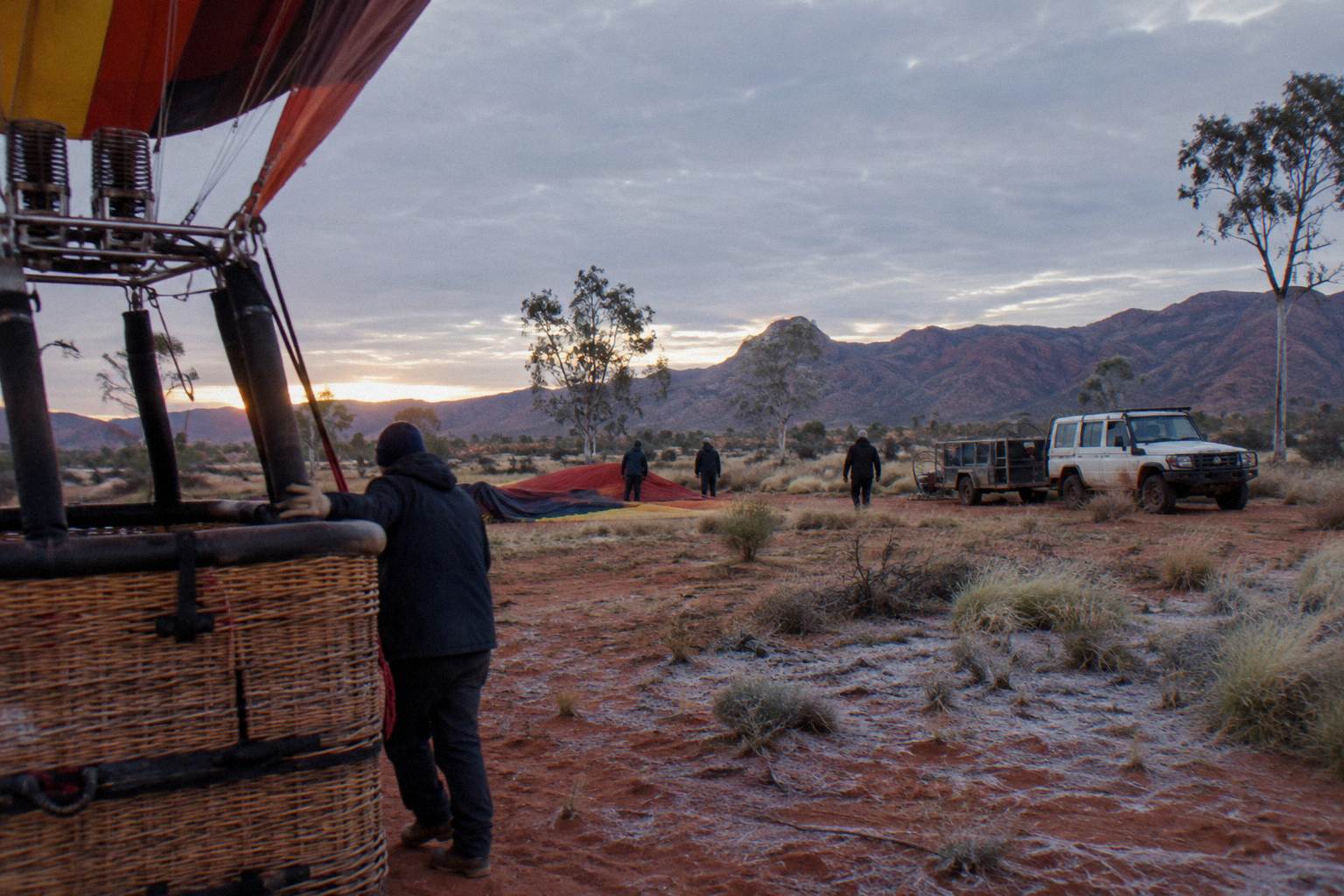
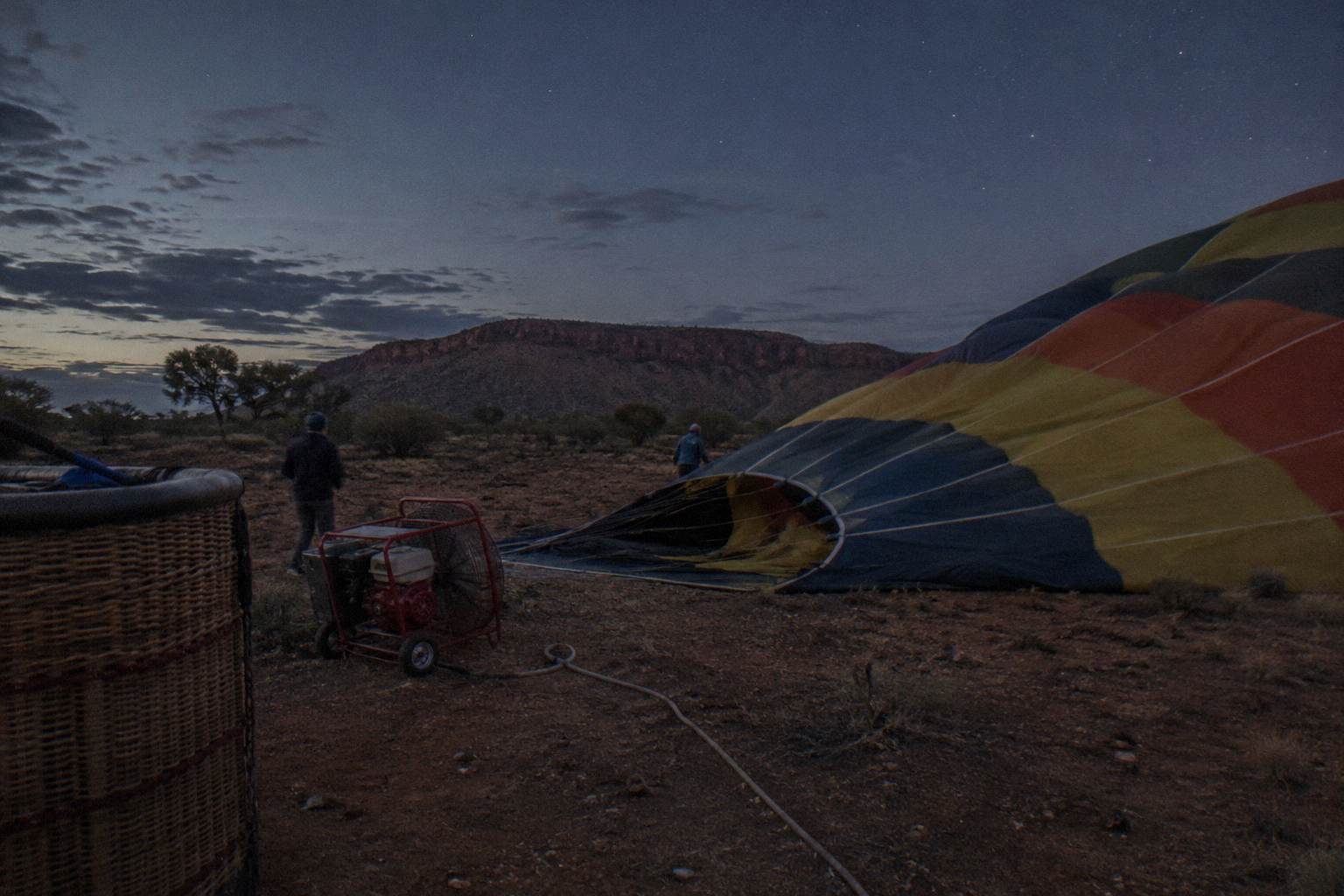
That clothing list comes straight from the operators' own guidance, published on the Outback Ballooning frequently asked questions page. The layering advice is the part people skip and regret. "Warm layers" for May to September means dressing the way you would for a winter morning walk, not throwing a jumper over a t-shirt. Desert cold is dry and still at that hour, and you will be standing around at the launch field for a while before the flight, watching the balloon inflate in the dark.
The details are worth a closer look, because a few of them are restrictions rather than suggestions:
| Item | Operator guidance | Why it matters before dawn |
|---|---|---|
| Layers | Warm layers about May to September (Outback); very warm clothing mid-winter (Spinifex) | Pre-dawn temps track the mean minimum row |
| Trousers | Long pants | Standing in an open basket, about 1.2 m high |
| Footwear | Enclosed flat shoes, no high heels | You climb into the basket using foot holes, unaided |
| Head | A hat | Significant heat is lost through the head in still, cold air |
| Colour | Outdoor clothing, not white | The operator gives no reason for this; ask it directly |
| Jewellery and scarves | None dangling at the launch site | Safety around the inflation fan |
| Bags | Backpacks stay on the bus | Nothing loose in or around the basket |
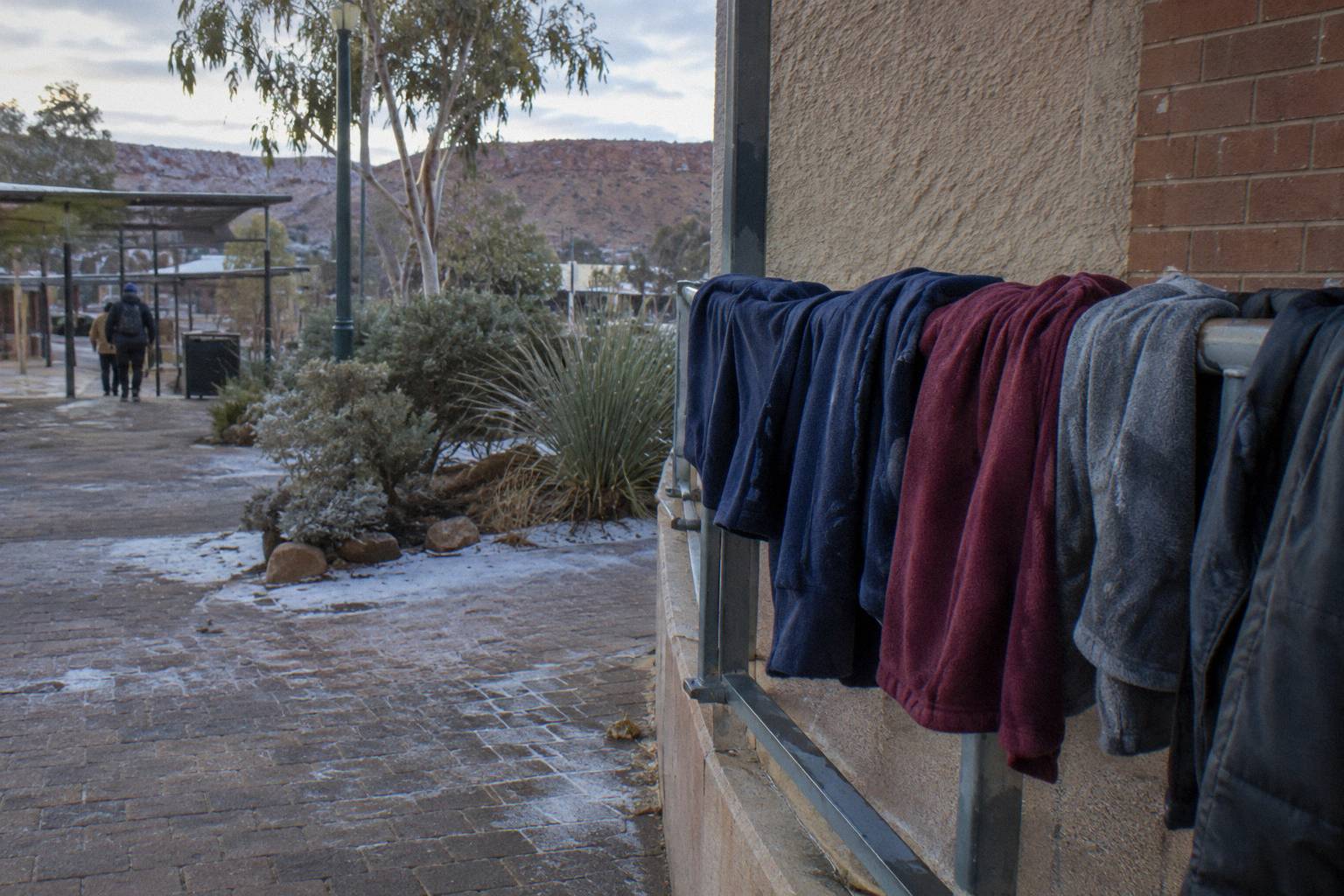
The scarf rule deserves emphasis on a page about cold, because a scarf is exactly what a cold person reaches for. Do not wear one at the launch site. The restriction is operator-stated and unambiguous, and the operators' safety briefings treat loose items around the inflation fan seriously. A warm beanie, a zipped jacket with a high collar and gloves solve the same problem without the loose fabric.
The "not white" clothing rule has no stated reason on any fetched operator page, so none is invented here. If you want the operator's own explanation, ask when you book. Whether cameras, phones or drones are permitted or restricted is also not stated in the operator's published material; the honest answer is to check with the operator directly before you fly, and to plan for cold hands if you do photograph the flight. The longer what to wear on a hot air balloon guide unpacks the full kit list.
One more practical point: you must be able to climb into the basket unaided, using foot holes, and stand for the whole flight. Stiff cold fingers and bulky clothing make that climb slightly harder in July than in November, so gloves that you can still grip with, rather than mittens, are a sensible mid-winter choice.
Why Is The Pickup So Early, And How Early Exactly?
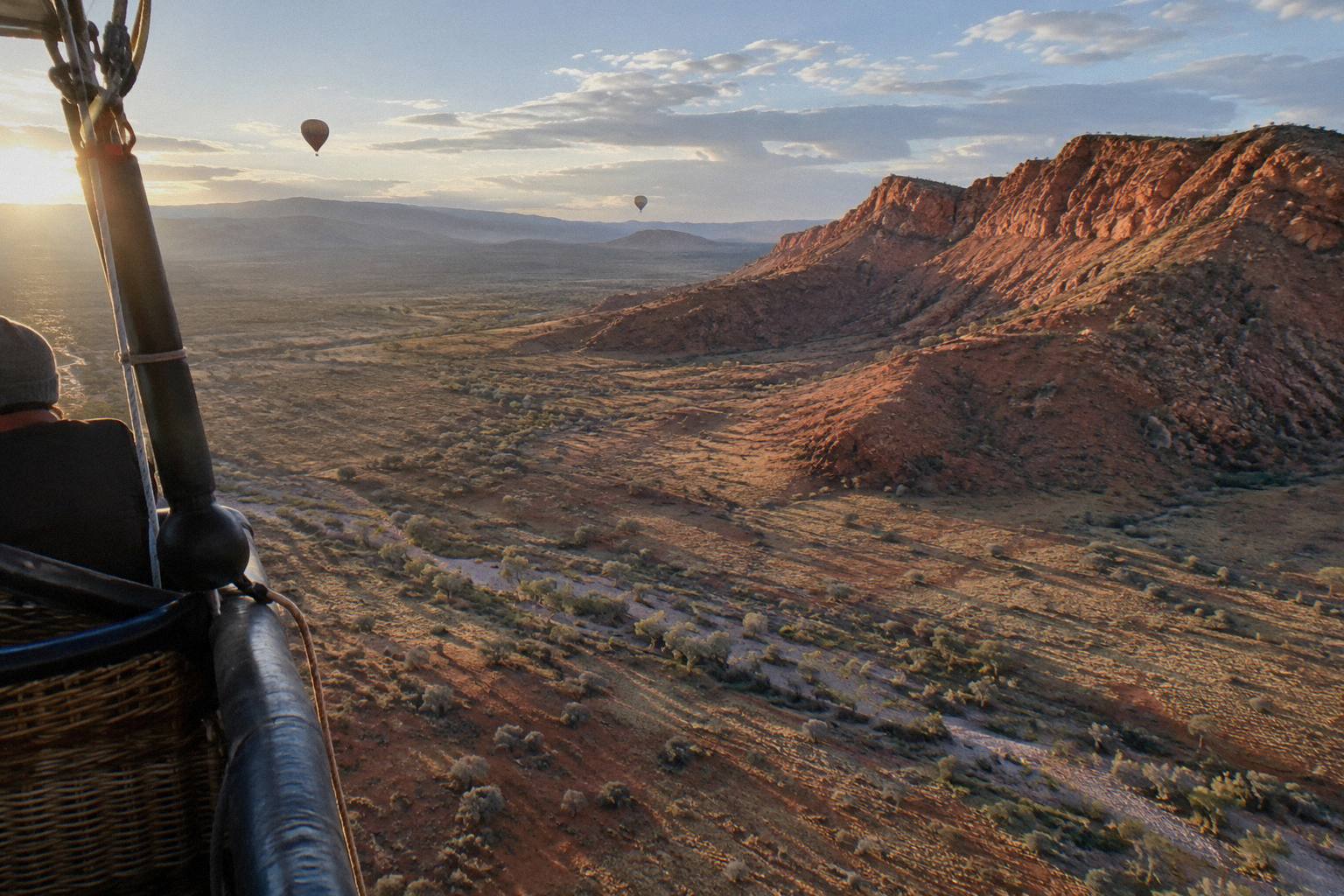
Pickup is approximately one hour before first light, which in Alice Springs means about 4:15am in summer and about 5:45am in mid-winter, with the exact time confirmed when you book and again the day before. That early slot exists because balloons fly at dawn. The whole experience runs about four hours door to door.
Those pickup anchors are the operator's own published times, and they are the numbers to plan your alarm around. The table below is a computed approximation, built from the NOAA solar position calculation for Alice Springs, latitude minus 23.698, longitude 133.883, on ACST, the Northern Territory having no daylight saving. It is accurate to about two minutes, and it is not an official Bureau of Meteorology product. Cross-checked against the operator's anchors, it lines up: first light around 5:17 in late December gives a pickup near 4:15am, and first light around 6:52 in mid-July gives one near 5:45am. Dawn in central Australia moves by well over an hour between midsummer and midwinter, which is why the pickup time shifts with it. More of these guides are collected on Alice Springs Hot Air Balloon.
| Month (15th) | Approx. sunrise | Approx. first light | Coldest-hour temp guide (mean min C) |
|---|---|---|---|
| Jan | 6:00 | 5:35 | 21.6 |
| Feb | 6:22 | 5:58 | 20.8 |
| Mar | 6:36 | 6:14 | 17.7 |
| Apr | 6:48 | 6:25 | 12.6 |
| May | 7:01 | 6:37 | 8.1 |
| Jun | 7:14 | 6:49 | 4.9 |
| Jul | 7:16 | 6:52 | 3.9 |
| Aug | 7:01 | 6:38 | 5.9 |
| Sep | 6:32 | 6:09 | 10.3 |
| Oct | 6:02 | 5:39 | 14.9 |
| Nov | 5:42 | 5:18 | 17.9 |
| Dec | 5:42 | 5:17 | 20.3 |
The practical takeaway is that winter flying buys you a slightly kinder alarm clock: a 5:45am pickup in July rather than a 4:15am one in December. Summer flying buys you more sleep but a warmer launch field, with mean minimums above 20 °C from November through February. Neither season is the "right" one; it is a trade between cold and sleep, and layers solve the cold part.
Return transfers from all Alice Springs accommodation are included in the fare, though private addresses and rural properties may not be covered, and rural or camping guests meet at Crowne Plaza Lasseters reception, 93 Barrett Drive. There is no pickup from Uluru, which is about 450 km away, so plan to sleep in Alice Springs the night before. The guide to hotel pickup for an Alice Springs balloon flight covers the logistics, including the optional drop at the airport on request after the flight.
The cold interacts with the early start in one more way worth naming. The coldest hour of the night is typically just before dawn, which means the drive out to the launch field and the inflation happen at close to the day's minimum temperature, while the flight itself and the pack-up happen as the sun comes up and the desert begins to warm. You will be coldest while standing still watching the balloon inflate, and noticeably less cold an hour later in the basket. After landing there are light individually wrapped snacks, Australian sparkling wine and fruit juice, which is a welcome end to a 4 °C morning.
The same Outback Ballooning flight is also sold on a second booking page under the name Early Morning Ballooning in Alice Springs, rated 4.8 on that listing. It is the identical experience, the same operator and the same 30 or 60 minute flight, not a different product, and the operator's published fares are the ones printed above. What differs is only the booking page.
Does The Burner Keep You Warm In The Basket?
The operators say nothing in their published material about the burner keeping passengers warm, so no such claim is made here. What is stated is that flights stay within the first 1000 ft above ground, that baskets are about 1.2 m high with compartments about 60 cm wide, and that flights are not guaranteed to be in the air at sunrise. Treat warmth from the burner as an unknown, and dress for the ambient temperature.
This is the gap where most articles invent an answer. Balloon burners do put out heat, and passengers standing in the basket do sometimes notice it, but none of that appears in the operator's own terms, brochure or FAQ pages, and this site prints only what the operators state. The safe planning assumption is the recorded temperature: if the mean minimum is 3.9 °C, dress for 3.9 °C, and treat anything the burner adds as a bonus you did not budget for.
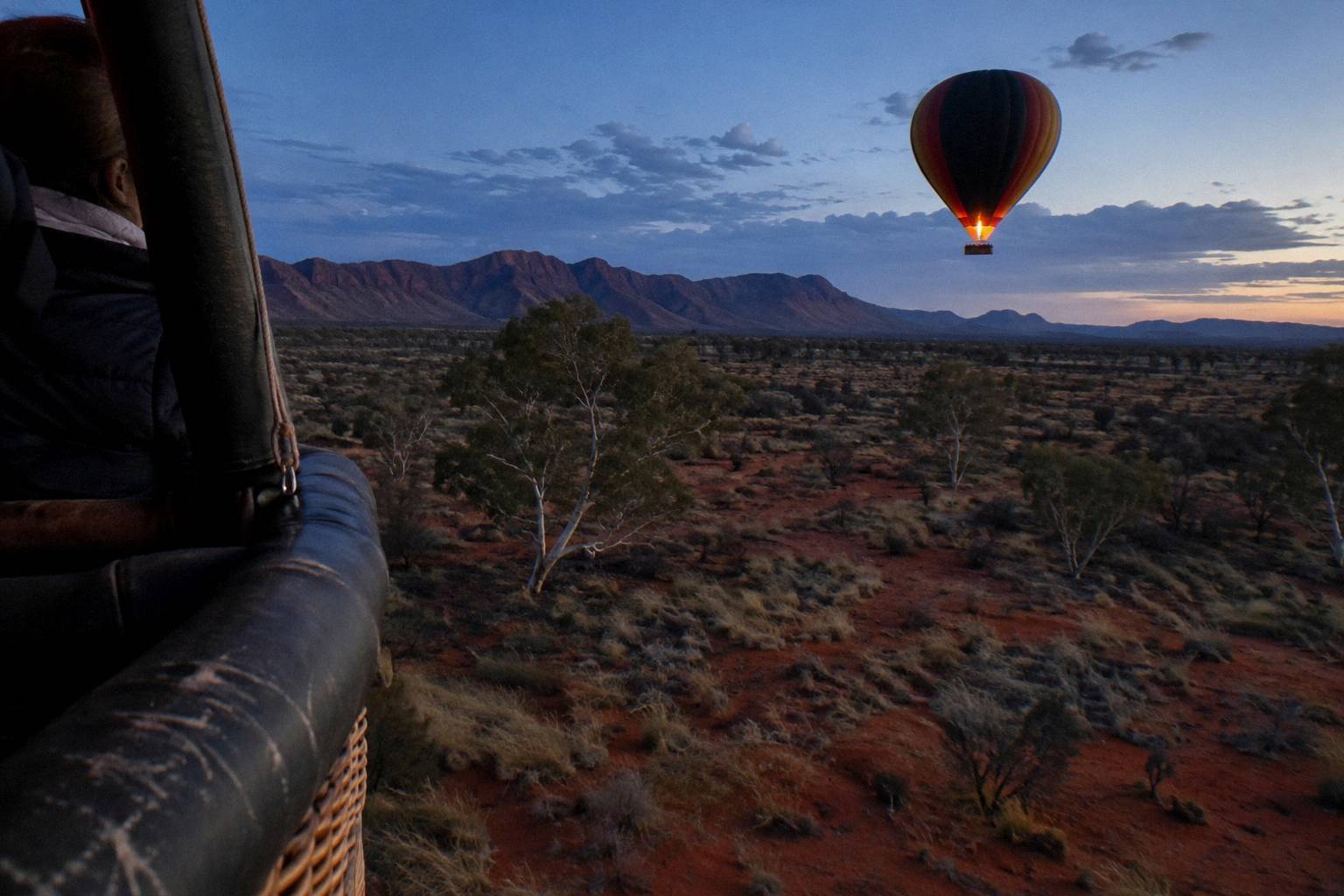
Two related operator statements help you plan honestly. First, the operator does not guarantee passengers will be in the air at sunrise, so the moment you have pictured, floating as the first light hits the MacDonnell Ranges, happens on most mornings but is not contractual. Second, flight durations are approximate, and there is no refund if a flight runs under its booked 30 or 60 minutes; a 60 minute flight cut short to 30 is charged as the 30 minute fare. Neither point is about cold directly, but both shape how long you will be standing outside on a winter morning, which is the same question in the end.
The launch is about 15 km south of Alice Springs, adjacent to the MacDonnell Ranges, over historic Owen Springs Cattle Station, and a typical flight covers 10 to 20 km. Balloons carry between 2 and 24 people depending on the aircraft, which is why the compartments are narrow and why you will be standing close to other warm bodies. On the coldest mornings that is not nothing, but it is not a heating system either. The country you drift over is worth reading about in its own right: see the MacDonnell Ranges from a balloon.
Who Feels The Cold Most, And What Else Helps?
Passengers who underestimate the standing time feel the cold most: you are outdoors at the launch field, then standing in the basket for the whole flight, with no seated shelter at any point. Warm layers, a hat, enclosed shoes and gloves cover nearly all of it, and the after-landing sparkling wine and juice end the morning on a warmer note. Anyone with a medical condition should notify the operator in advance.
The standing requirement matters more than most pre-flight advice acknowledges. There is no seat, no cabin and no option to wait in a heated vehicle once the balloon is inflating, and the whole trip is about four hours from pickup. People who manage cold well on a short walk sometimes struggle with three hours of standing in still, sub-5 °C air, which is the honest profile of a July morning. Everything the operators tell you to bring is aimed at that exact problem.
A few edge cases are worth naming plainly. Pregnancy beyond 12 weeks is not flown, per operator policy. Passenger weights are collected at booking, and passengers over 110 kg receive an extra safety email, though there is no hard published weight limit. Ages 3 to 5 are accepted on an individual basis but not recommended, and the child fare band runs from 6 to 14. On a cold morning the age question doubles as a warmth question: very young children tire of standing in the cold faster than adults, and the operator's own recommendation of 6 years reflects that reality as much as any rulebook. The full detail is in the hot air balloon age limit guide.
If reading about a 5:45am winter start has you reconsidering the whole dawn idea, it is fair to think about pairing the balloon with a warmer-hour activity instead or as well. Two of the most-booked companions to a dawn flight in Alice Springs:
The West MacDonnell Ranges day trip, run by Emu Run Experience, departs at 7:45am and returns about 5:30pm, which lands neatly after a balloon morning ends and includes hotel pickup, Standley Chasm entry, morning tea and a bushman's lunch. The West MacDonnell Ranges Day Tour With Lunch, run by Wildlife Tours Australia, runs about 10.5 hours in an air-conditioned mini-coach with a morning departure, so it suits the day before or after a balloon flight rather than the same day.
Common Questions About Cold On A Hot Air Balloon Ride
Will I Be Cold On A Hot Air Balloon Ride?
Yes, especially in Alice Springs between May and September, when pre-dawn temperatures track the mean minimum row: 3.9 °C in July on average, with a record low of minus 7.5 °C. Bring the warm layers the operator recommends and you will be comfortable.
How Cold Is Alice Springs At Balloon Pickup Time?
Pickup is about one hour before first light, roughly 4:15am in summer and 5:45am in mid-winter. Those hours sit close to the overnight minimum, which averages from 3.9 °C in July to 21.6 °C in January.
What Should I Wear For A Winter Balloon Flight?
Warm layers, long pants, a hat and enclosed flat shoes, per the operator's advice for May to September. No high heels, no dangling jewellery, no scarves at the launch site, and backpacks stay on the bus.
Does The Burner Keep Passengers Warm?
The operators publish nothing about burner warmth, so treat it as an unknown rather than a promise. Dress for the recorded ambient temperature and treat any burner heat as a bonus.
Which Month Is Coldest For A Balloon Flight?
July, with a mean minimum of 3.9 °C and the station's lowest recorded temperature, minus 7.5 °C. June and August are close behind on mean minimums.
Can I Bring A Backpack With Extra Warm Clothes?
No, backpacks stay on the bus. Wear your extra layers rather than carrying them, and use pockets for anything small you want during the flight.