What Is The Fatality Rate Of Hot Air Balloons?
No verified fatality-rate statistic for hot air balloons exists in this site's research. Here is what is actually on the record for Alice Springs, the licensing facts, and what to check yourself.
No verified fatality-rate statistic for hot air ballooning exists, and that is itself the most useful answer. Not one rate, odds figure, or industry-wide safety comparison can be confirmed from an official source, so none is printed here. What is verifiable is narrower: a licensing regime run by CASA, one documented conviction in the NT relating to a balloon passenger death, and checks any traveller can run in ten minutes.
Anyone typing this question into a search box is usually doing one of two things. They are either genuinely anxious about a flight they are close to booking, or they have read a headline about a balloon accident somewhere in the world and want context. Both are fair. The problem is what the search results give back: numbers with no source, comparisons with cars or aircraft that no regulator endorses, and phrases like "statistically one of the safest forms of travel", which no official source supports.
What can be said with confidence is much more concrete than a rate would be. In Australia, commercial balloon operators are licensed and audited by the Civil Aviation Safety Authority, the same regulator that oversees airline operations. The operator whose flights this site features, Outback Ballooning, publishes its licence details openly. It has also, in the past, been convicted over a passenger death, a matter of public record described in full further down this page. A reader deserves both facts together, not a comforting average.
If you are weighing a specific flight, the practical comparison is not between ballooning and driving, because no verified comparison exists. It is between one operator and another, and that is something you can actually check. The flight sold through this site, the 30 minute dawn flight with Outback Ballooning, holds a 4.9 rating from 288 reviews, and the questions worth asking an operator before booking are set out below.
What The Verified Record Actually Shows
The single documented record relevant to Alice Springs ballooning is this: NT WorkSafe reported that Outback Ballooning Pty Ltd was convicted and fined in July 2021 over the death of a passenger in 2013, with a combined penalty of A$130,000. The release said the passenger's scarf became entangled in the inflation fan. That is the whole verified record, stated plainly, without softening and without any suggestion of an unblemished history.
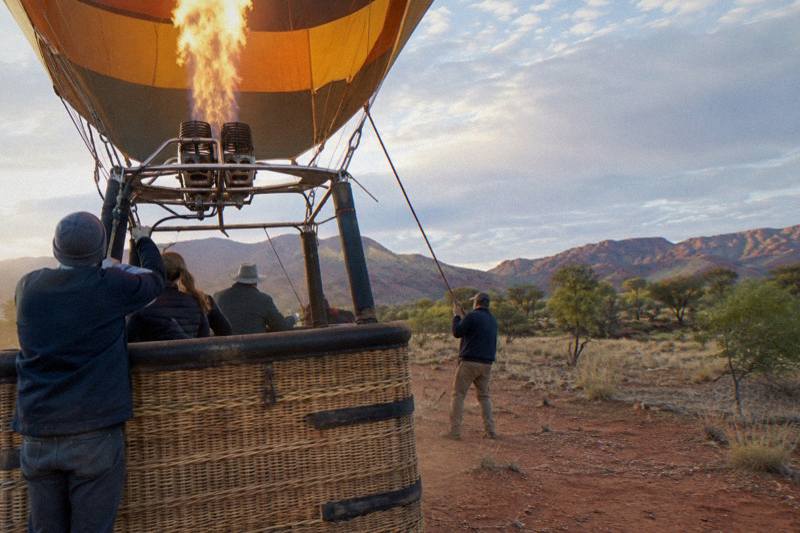
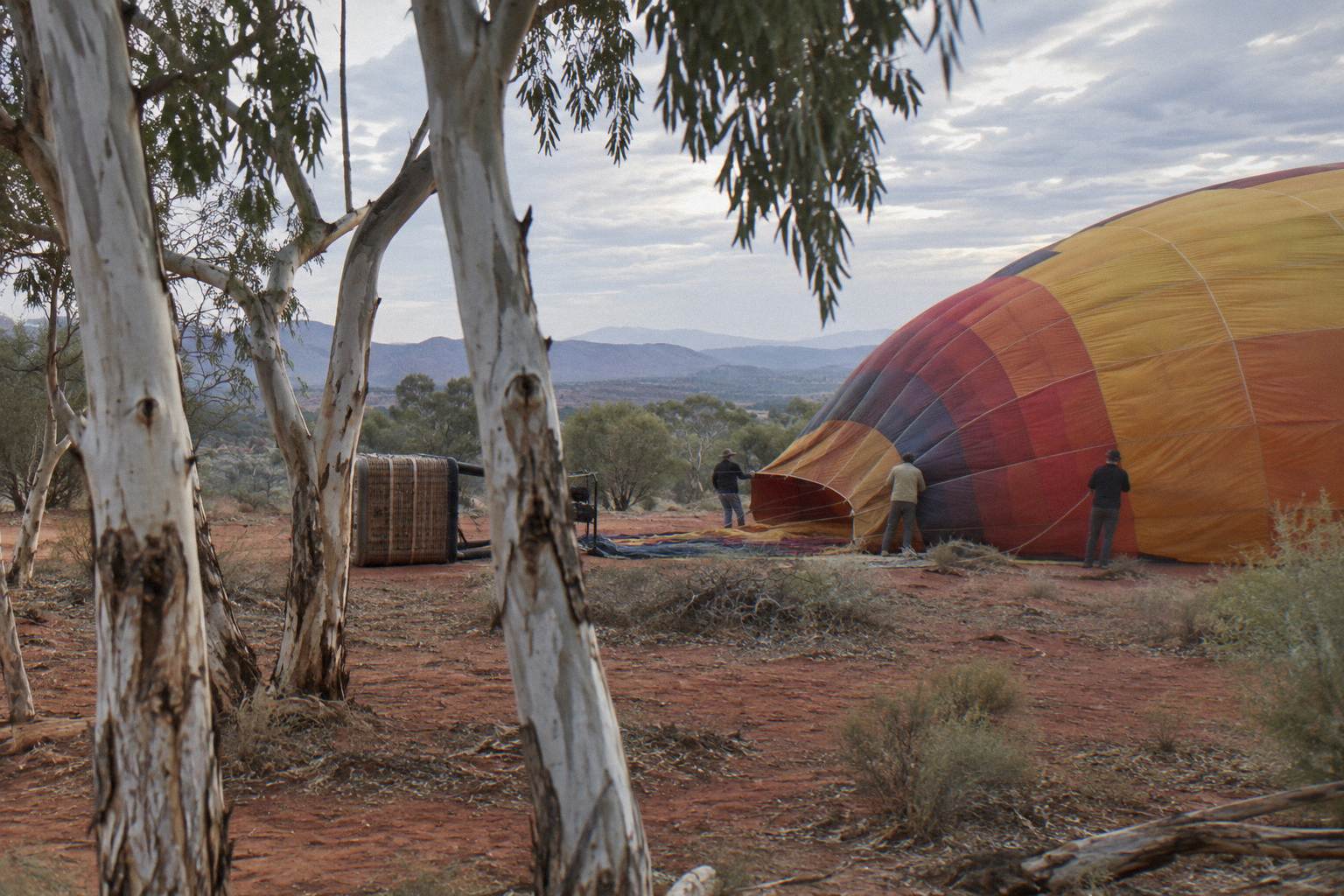
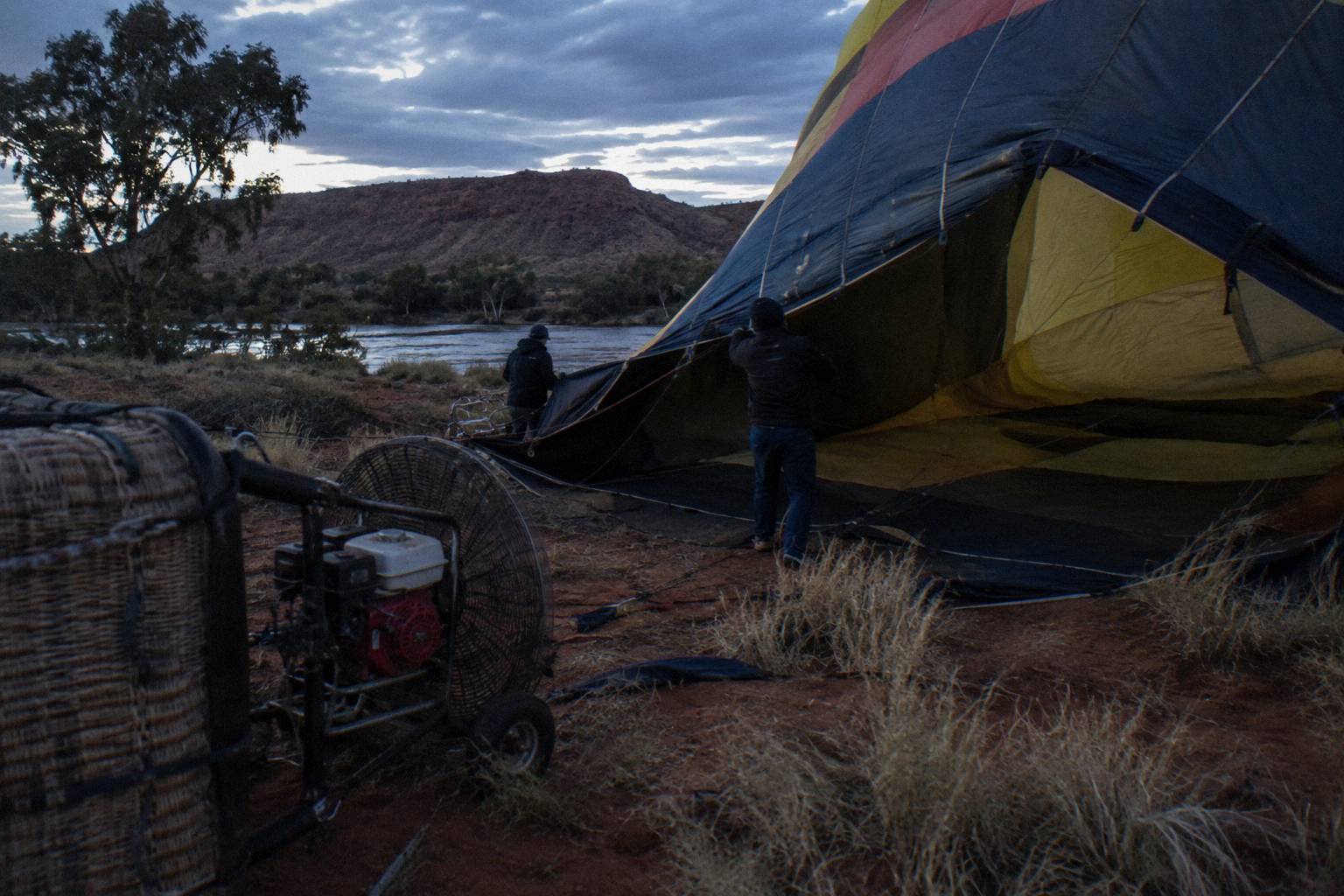
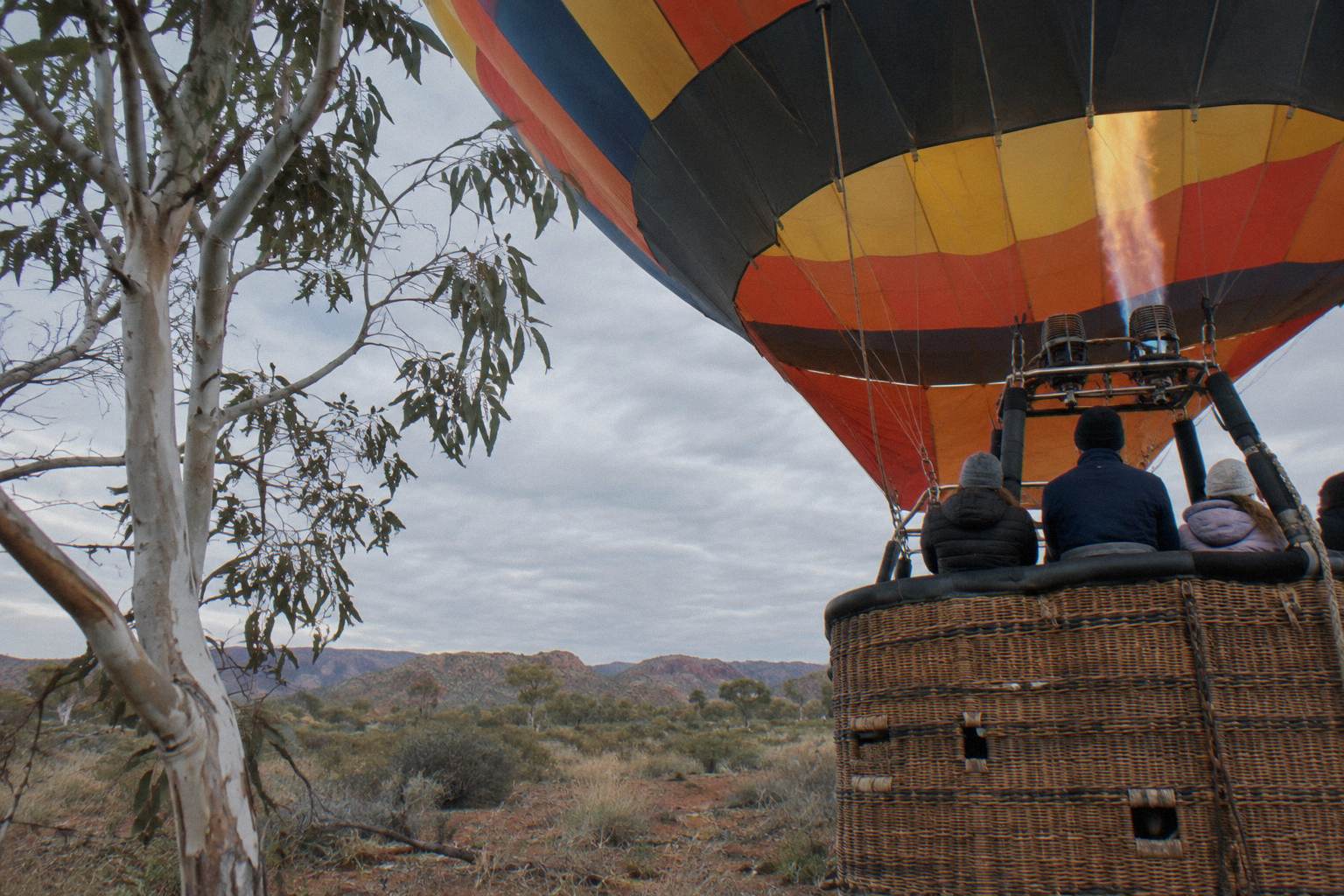
The details matter, because a bare mention of a "conviction" invites both under-reaction and over-reaction. The NT WorkSafe media release, dated 22 July 2021, records a combined penalty of A$130,000. The death occurred in 2013. The mechanism described, a scarf caught in the inflation fan, is worth pausing on: it happened on the ground, during the launch preparation, not in the air. It is also precisely why operators now instruct passengers that no dangling jewellery or scarves are permitted at the launch site.
This site will not speculate about the relationship between the convicted entity and the current operator beyond what the record states. Outback Ballooning Pty Ltd was convicted; the operating entity named on the operator's current site carries a different ABN. Nothing further is established in the research, so nothing further is claimed.
There is a second piece of Alice Springs ballooning history that readers often arrive here looking for: a fatal balloon accident in Alice Springs in 1989. This page deliberately does not retell it, because it has its own article, and the coverage there draws on sources specific to that event. If that is what brought you here, read the account of what happened in the 1989 Alice Springs balloon accident instead.
For readers asking the fatality-rate question with a booking in mind, the useful takeaway from the 2021 record is behavioural, not statistical. The hazard it documents was a loose item of clothing near ground equipment. Operators now brief against exactly that. When the crew tells you at the launch field to tuck away scarves and jewellery, that instruction has a history behind it.
How Balloon Operators Are Licensed In Australia
Commercial balloon operators in Australia operate under Civil Aviation Safety Authority regulation, and Outback Ballooning states it holds Air Operator Certificate CASA.AOC.0496, is a CASA Approved Maintenance Organisation, and employs pilots with a Commercial Balloon Pilot Licence, an aviation medical and a security clearance. It also states it carries carriers' liability insurance under the Civil Aviation (Carriers' Liability) Act 1959. These are licence and insurance facts the operator publishes about itself, and readers can verify them directly.
The operator sets these details out on its own CASA regulation page, which is worth reading in full before a flight. An air operator's certificate is not a formality. It is the same class of authorisation under which Australian airline operations run, and it imposes maintenance, operational and crewing requirements the operator must continue to meet to keep it. A CASA Approved Maintenance Organisation designation means the maintenance side is separately accredited.
One detail deserves care, because a careless version of it circulates. Two Alice Springs balloon brands, Outback Ballooning and Spinifex Ballooning, both print the same certificate number, CASA.AOC.0496, and business-registry records suggest Spinifex is a business name of the same operation. The safe wording, and the accurate one, is that both brands operate under the same CASA air operator's certificate and appear to be one operator. They should not be presented as two unrelated competitors, and no separate certificate should be claimed for either.
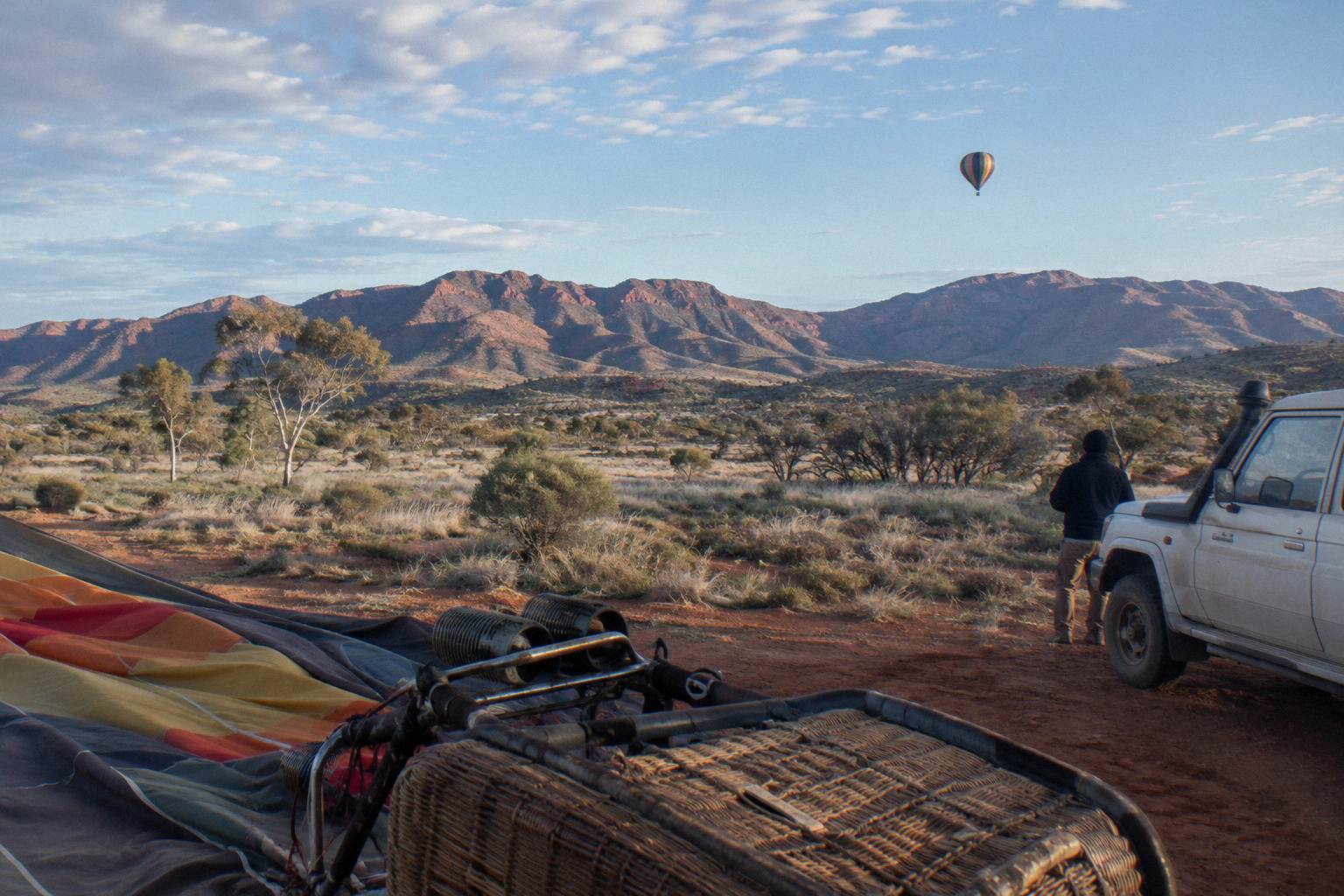
There is also a limit to what licensing proves, and honest writing names it. A licence tells you an operator meets a regulatory standard at the time of audit. It does not tell you the operator has never had an incident, and in this case the public record says otherwise. The two facts sit side by side on this page on purpose.
| Requirement | What Outback Ballooning states | Where a reader can check it |
|---|---|---|
| Air Operator Certificate | CASA.AOC.0496 | Operator's own regulation page |
| Maintenance accreditation | CASA Approved Maintenance Organisation | Operator's own regulation page |
| Pilot licensing | Commercial Balloon Pilot Licence | Operator's own regulation page |
| Pilot medical | Aviation medical held | Operator's own regulation page |
| Pilot security clearance | Held | Operator's own regulation page |
| Liability insurance | Carriers' liability under the Civil Aviation (Carriers' Liability) Act 1959 | Operator's own regulation page |
One membership claim you should not expect to find: the operator makes no mention of Australian Ballooning Federation membership on its published pages. If a booking page or brochure tells you an operator belongs to an industry body, ask the operator directly rather than assuming. The same caution applies to any third-party page quoting safety figures about an operator: the operator's own published pages, and the regulator's, are the sources that count.
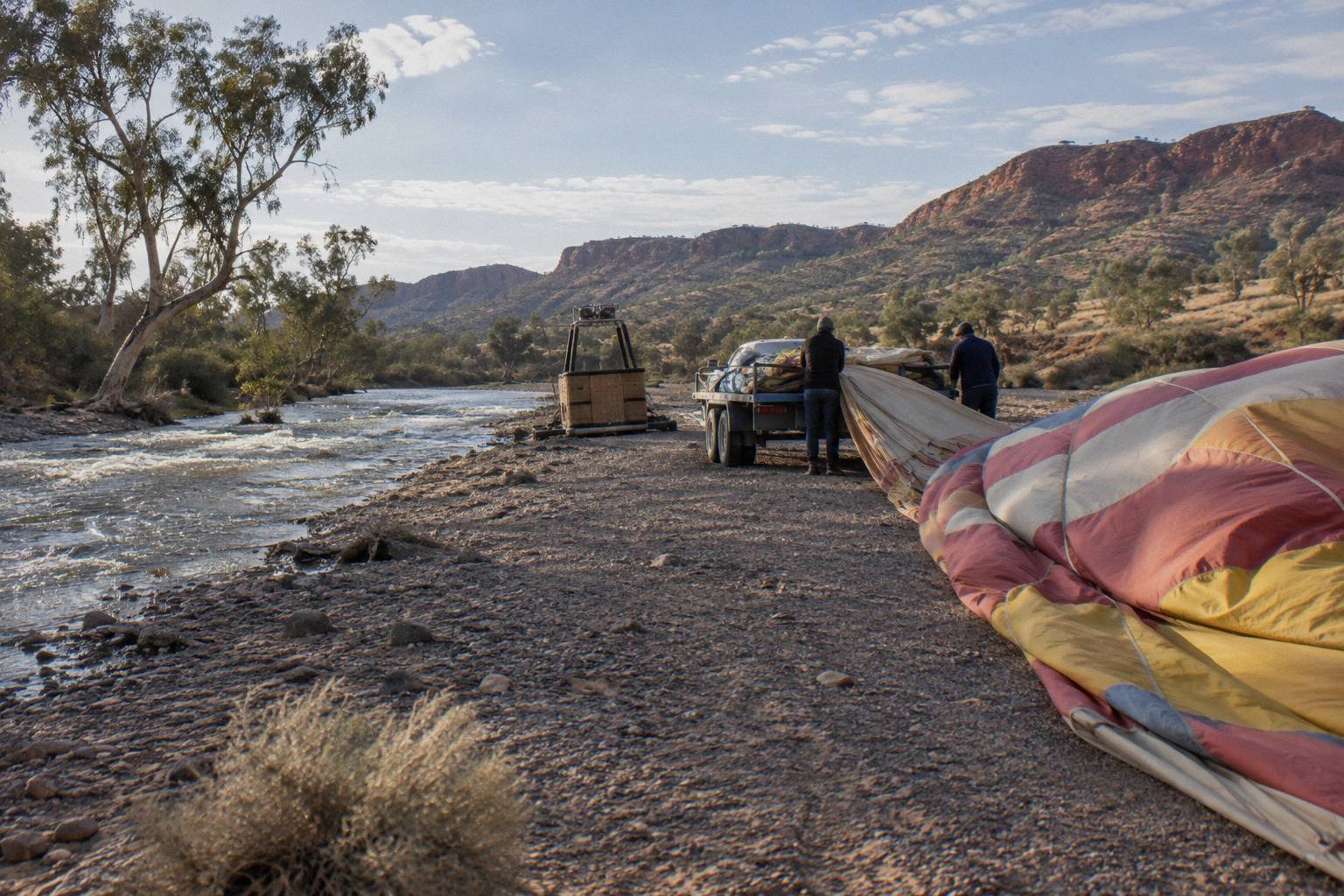
The conviction noted above is documented rather than rumoured. NT WorkSafe, which published the outcome, records that Outback Ballooning Pty Ltd was convicted and fined a combined A$130,000 in July 2021 over the 2013 death of a passenger whose scarf became entangled in the inflation fan. The practical lesson for passengers is specific: inflation fans run on the ground before launch, so loose scarves, cords, straps and long hair should be secured or removed during set-up, and the crew's instructions at the launch site followed exactly.
Weather cancellations have a set path. The pilot's decision on whether conditions are safe to fly is final, and a cancelled flight means a rebooking on another day or a full refund for prepaid guests. Travellers on tight schedules should build in a spare dawn in Alice Springs rather than assuming the first attempt will launch.
Verification is straightforward. Licence questions can be put to CASA, and the prosecution record to NT WorkSafe, while the operator's own regulation page remains the first stop for certificate, maintenance, crew and insurance details. Any answer that contradicts what the operator publishes is worth pursuing with the regulator before booking.
Why No Honest Fatality Rate Exists To Quote
Every fatality "rate" floating around the internet divides a count of deaths by a count of flights or passengers, and each half of that fraction is a guess in a different way. Deaths are counted from news reports spanning different countries and decades, while flight and passenger numbers are estimated, because no global registry of balloon flights exists. No official, sourced figure exists, so none is printed here.
That is not evasion; it is the only defensible position. A rate computed from two uncertain numbers produces a figure with a veneer of precision and no substance behind it. Worse, the comparisons usually built on top of it, ballooning versus driving, ballooning versus commercial aviation, are comparisons no regulator has published. When a website tells you ballooning is "safer than" something else, ask it for the source. In this site's experience of researching exactly that question, there isn't one that survives contact with the primary sources.
What a reader can do instead is look at the record of the operator they are actually considering, in the jurisdiction they will actually fly in. Australia has a strong regulator, a public conviction record searchable through NT WorkSafe, and operators that publish licence details. That is a better basis for a decision than a decimal point borrowed from an unnamed study.
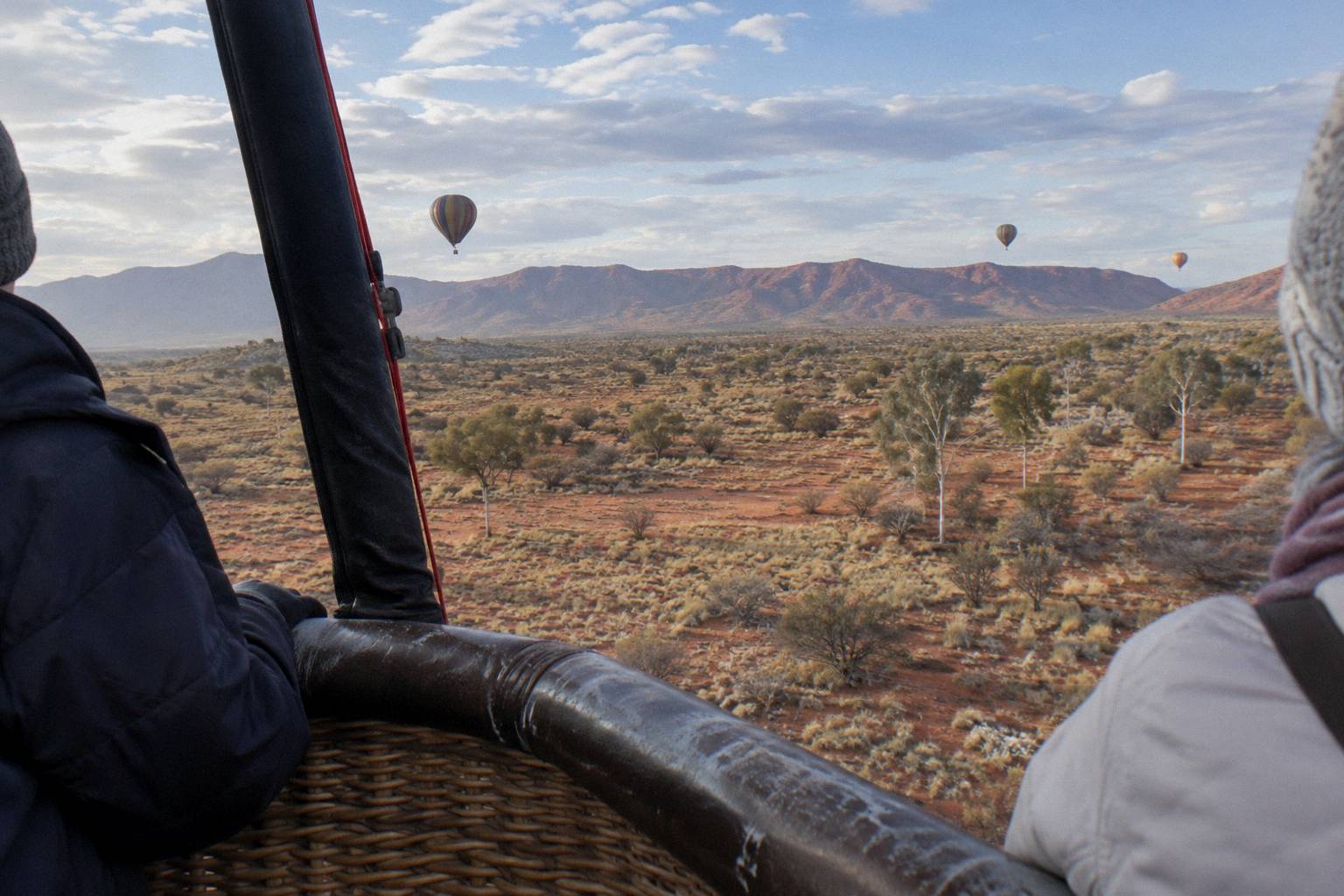
If the underlying anxiety is about falling, the physics of the basket is a more useful thing to read about than an invented rate. This site has a separate article on whether it is possible to fall out of a hot air balloon, which looks at basket design, the roughly 1.2 metre wall height and the compartment layout. The short version: the basket is built so that standing passengers are held well below the rim, and flights are flown in the calm air of early morning for exactly this class of reason. If that reassurance is enough, you can look at dates and times for the 30 minute dawn flight and judge the rim height for yourself.
What You Can Check Yourself Before Booking
A practical pre-booking check takes about ten minutes: confirm the operator's air operator's certificate on its own site, read its terms for cancellation and weather, ask about passenger restrictions that apply to you, and check the date and mechanism of any incident in its public record. Every one of these checks is free, and together they tell you more about your specific flight than any aggregate statistic could.
Start with the certificate. Any Australian commercial balloon operator should be able to state its CASA air operator's certificate, and a moment on the operator's own pages will usually find it. Next, read the conditions of travel, not just the price page. The terms tell you how the operator handles weather cancellations, refunds and passenger restrictions, and an operator's terms are often more revealing than its marketing. Outback Ballooning's terms, for example, state that the pilot's weather decision is final, that guests rebook or take a full refund when a flight is cancelled, and that flights can also be cancelled for minimum numbers.
Then be honest with yourself against the restrictions. This operator collects passenger weights, sends an additional safety email to passengers over 110 kg, does not fly pregnancies beyond 12 weeks, and requires every passenger to climb unaided into a basket about 1.2 metres high and stand for the duration. None of these is a judgement about you; they are load, harness and basket realities that a professional operator manages before the flight rather than on the morning.
It is worth writing to the operator with your specific circumstances rather than hoping the morning goes smoothly. A medical condition, a mobility question or a weight near the threshold is exactly the kind of thing the terms say is assessed individually, and the operator's terms state the pilot's discretion is absolute on the day. Asking early costs nothing and protects your fare: cancelling within 24 hours of the flight forfeits the full fare, so a question asked a week out is free while the same question at the launch field can be expensive.
| Check | How to do it | What a good answer looks like |
|---|---|---|
| Air operator's certificate | Operator's own site or direct question | Certificate number stated openly, e.g. CASA.AOC.0496 |
| Incident record | Regulator and work-safety media releases | You already know what you found, and can weigh it |
| Weather and refund terms | Read the conditions of travel before paying | Pilot's decision final, refund or rebook clearly stated |
| Restrictions that apply to you | Declare weight, pregnancy, medical conditions in advance | Individual assessment offered, no vague reassurance |
| Ground safety briefing | Listen at the launch field | Clear instructions on scarves, jewellery and where to stand |
Finally, ask the operator directly about anything that is not settled. Whether cameras and phones are permitted or restricted is not published by this operator, so the honest instruction is to ask when booking rather than assume either way. The same goes for any question not answered here: an operator that answers specific safety questions specifically, before you have paid, is telling you something no statistic can.
For readers whose worry is fear of heights rather than safety per se, the experience is different from what most imagine: the basket rim sits at chest height or above, there is no engine noise, no sensation of wind because the balloon moves with the air, and the ground sense is closer to a viewing platform than a cliff edge. The site's guide to whether hot air ballooning is safe and its piece on taking a first balloon flight with a fear of heights cover that ground in more detail than this page needs to.
How This Operator Talks About Its Own Safety
Outback Ballooning states its safety credentials on a dedicated regulation page: the certificate, the maintenance accreditation, the licences its pilots hold and the insurance it carries, and it also allows in its terms for a substitute CASA-approved operator to fly on a given morning. It claims tourism accreditation on its home page. This site prints those claims as the operator's own statements, alongside the 2021 conviction record, because the two together are the truthful picture.
That terms clause about a substitute operator surprises some readers, so it deserves a plain explanation. It is standard practice in small aviation businesses: if an aircraft, balloon or crew becomes unavailable, the flight may be operated by another certificated operator to the same regulatory standard. It is not a loophole; it is how the certificate system maintains coverage, and any substitute must itself hold CASA approval.
The operator also publishes operational limits that are safety-relevant rather than marketing. Flights stay within the first 1,000 feet above ground. Launch is from roughly 15 km south of Alice Springs, over Owen Springs Cattle Station, with the MacDonnell Ranges as backdrop rather than flight path. The operator's own stated flying average is 250 to 300 days a year, weather and loadings permitting, which is its claim, reported here as such.
Readers booking through any third party rather than the operator should note one more verified term: if a weather cancellation occurs, guests who booked through an agent contact that agent, who may retain a booking fee. Booking conditions, including the no-fee cancellation window of more than 24 hours, are set out in this site's guide to balloon flight cancellations and weather.
Deciding whether to fly is ultimately a personal weighing of a real record against real regulation, and a site that hides half of that picture to make a sale is not helping. This article was published by Alice Springs Hot Air Balloon, a site whose purpose is to help readers book this exact flight, and it states the conviction record here anyway, because a reader deserves the whole picture before the pre-dawn pickup. The flight itself, a 30 minute dawn flight with transfers and sparkling wine after landing, is linked throughout this page for readers whose questions have been answered.
Common Questions About Hot Air Balloon Safety
What Is The Fatality Rate Of Hot Air Balloons?
No verified fatality-rate statistic exists, and any confident figure quoted online should be treated as unverified. What is verifiable is the Australian licensing regime and the public record of the operator you are considering, including the 2021 NT WorkSafe conviction over the 2013 passenger death.
Has Anyone Died Hot Air Ballooning In Alice Springs?
The public record this site verified covers a 2013 death in which NT WorkSafe reported the passenger's scarf became entangled in the inflation fan, leading to a conviction and a combined A$130,000 penalty in July 2021. A separate fatal accident occurred in Alice Springs in 1989, covered in its own article on this site.
Is Hot Air Ballooning Regulated In Australia?
Yes. Commercial balloon operators hold a CASA air operator's certificate, under the same regulator that oversees airlines. Outback Ballooning states it holds CASA.AOC.0496, is a CASA Approved Maintenance Organisation, and employs commercially licensed pilots with aviation medicals and security clearances.
Are Balloon Accidents Usually In The Air Or On The Ground?
The verified record on this page concerns the ground phase: a scarf caught in the inflation fan during launch preparation. This is why operators brief passengers against dangling jewellery and scarves at the launch site and keep backpacks on the bus.
What Should I Check Before Booking A Balloon Flight?
Confirm the operator's air operator's certificate, read its cancellation and weather terms, declare any weight, pregnancy or medical factors in advance, and ask directly about anything unclear, such as camera policies. These checks take minutes and beat any aggregate statistic.