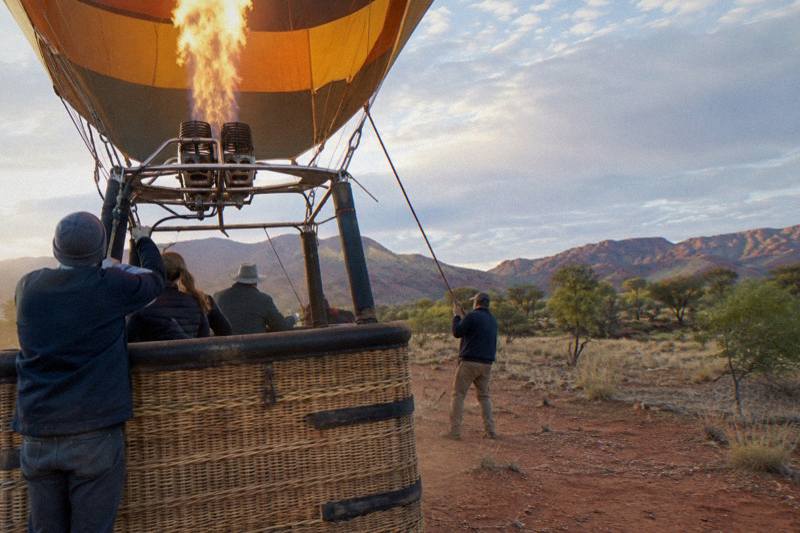
Is It Possible To Fall Out Of A Hot Air Balloon?
What the operator's own rules say about staying inside the basket on an Alice Springs balloon flight: basket height, boarding requirements, and the one documented incident on the record.
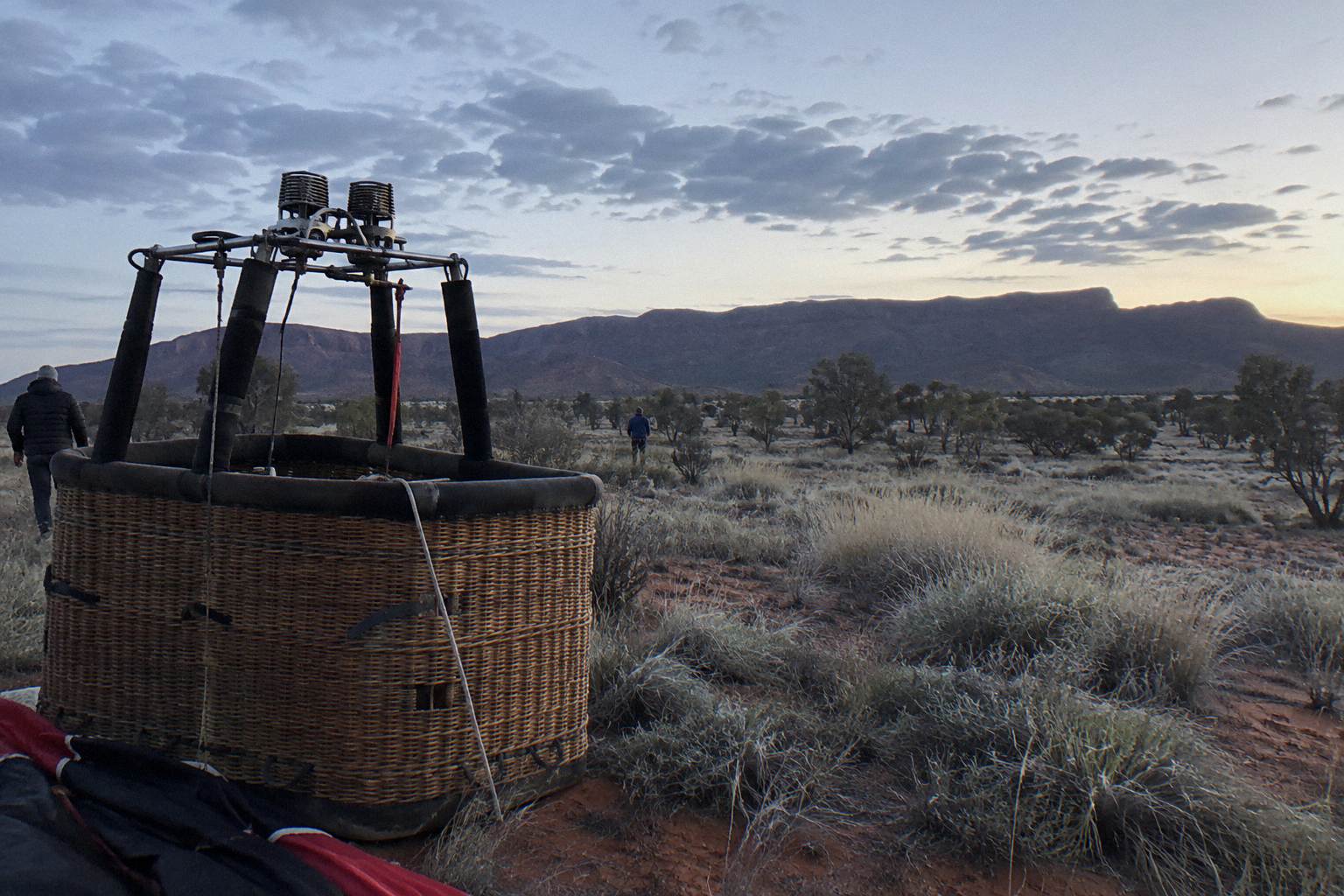
This page cannot give you a yes or a no. The verified research on Alice Springs ballooning contains no statement, statistic or claim about passengers falling out of baskets, in either direction. What the operator does publish is concrete: the basket walls stand about 1.2 m high, each passenger compartment is about 60 cm wide, passengers must climb in unaided using foot holes, and everyone stands for the whole flight. That is the honest basis for any answer.
What follows is a careful reading of what Outback Ballooning, the operator behind the Alice Springs dawn flight, actually states on its own pages and in its brochure. It is tempting for a travel site to brush this question off with a breezy reassurance, and plenty do. But a reader asking whether you can fall out of a balloon is making a booking decision, and that reader deserves the documented facts rather than a promise the operator itself never makes.
The site you are reading, Alice Springs Hot Air Balloon, exists to publish exactly this kind of checked detail about ballooning over the Red Centre. The launch happens about 15 km south of Alice Springs, adjacent to the MacDonnell Ranges, drifting over historic Owen Springs Cattle Station, with the Ranges lit by early light as a backdrop rather than a flight path, since the operator states plainly that it does not fly over them. The flight typically covers 10 to 20 km and stays within the first 1000 ft above the ground.
If you are weighing whether to book at all, the flight itself is worth a look alongside the safety picture. The main booking page for the dawn hot air balloon flight from Alice Springs shows a rating of 4.9 from 288 reviews, and the operator's published fare for the 30 minute flight is A$380 adult and A$340 child.
How The Basket Is Built To Keep Passengers Inside
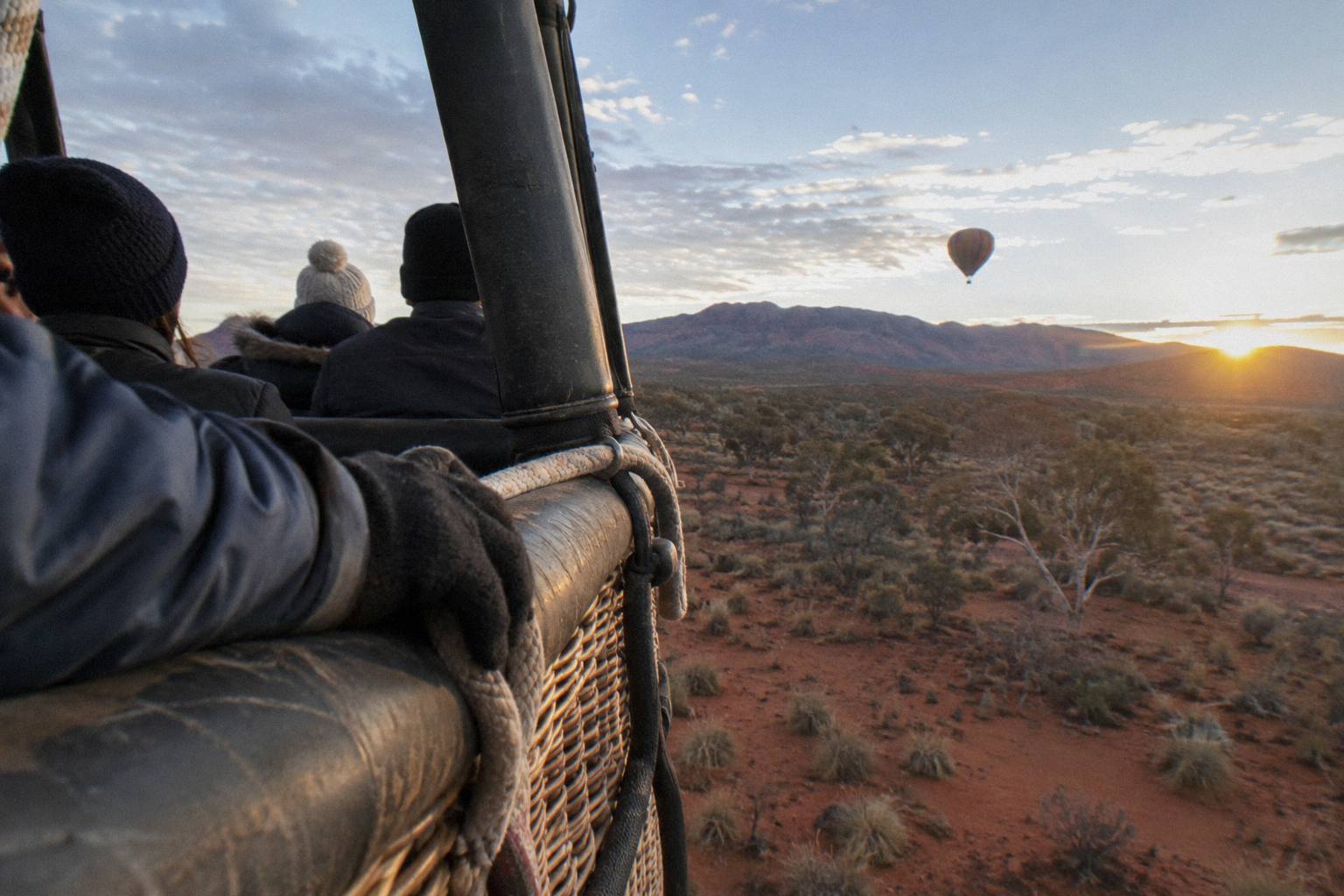
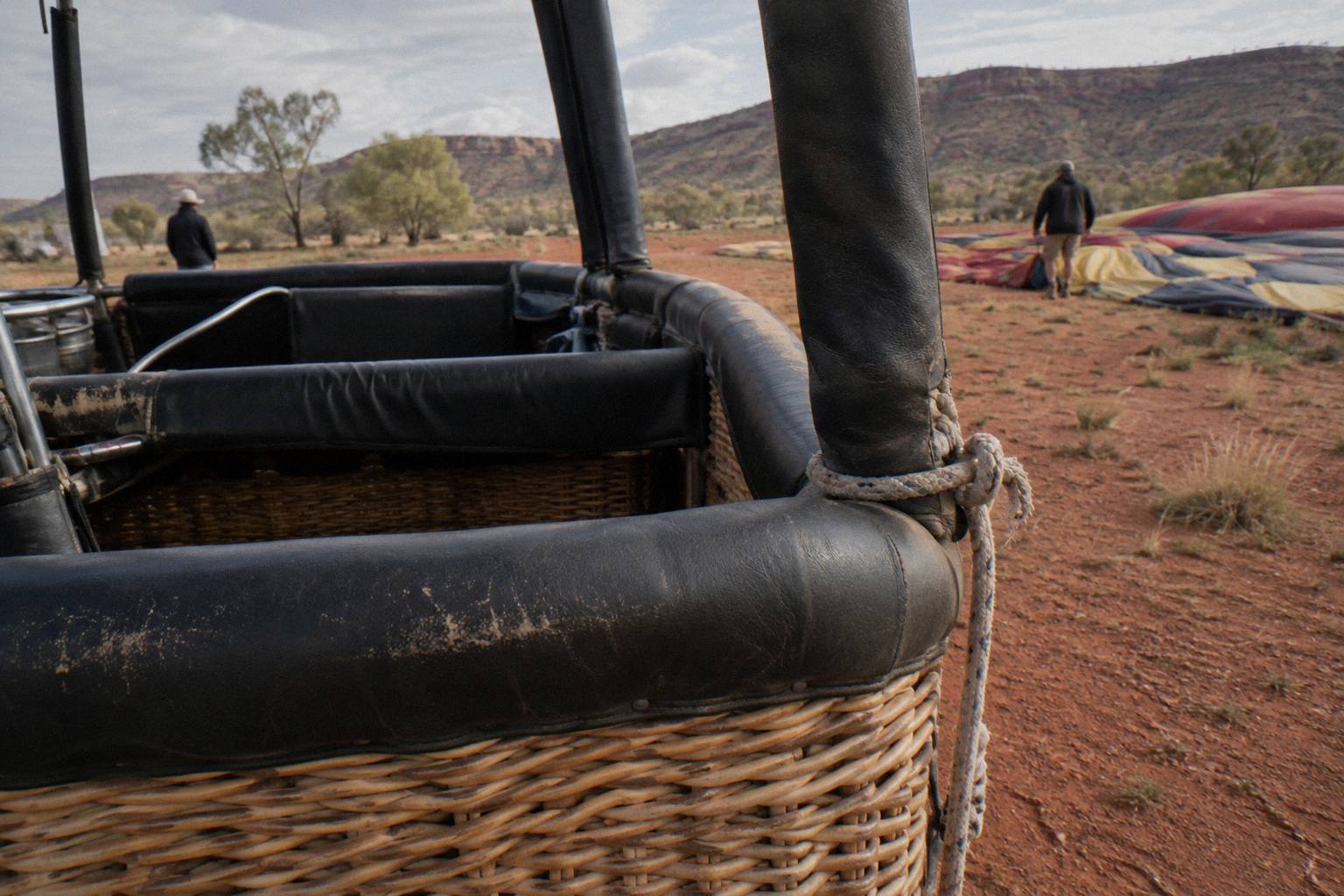
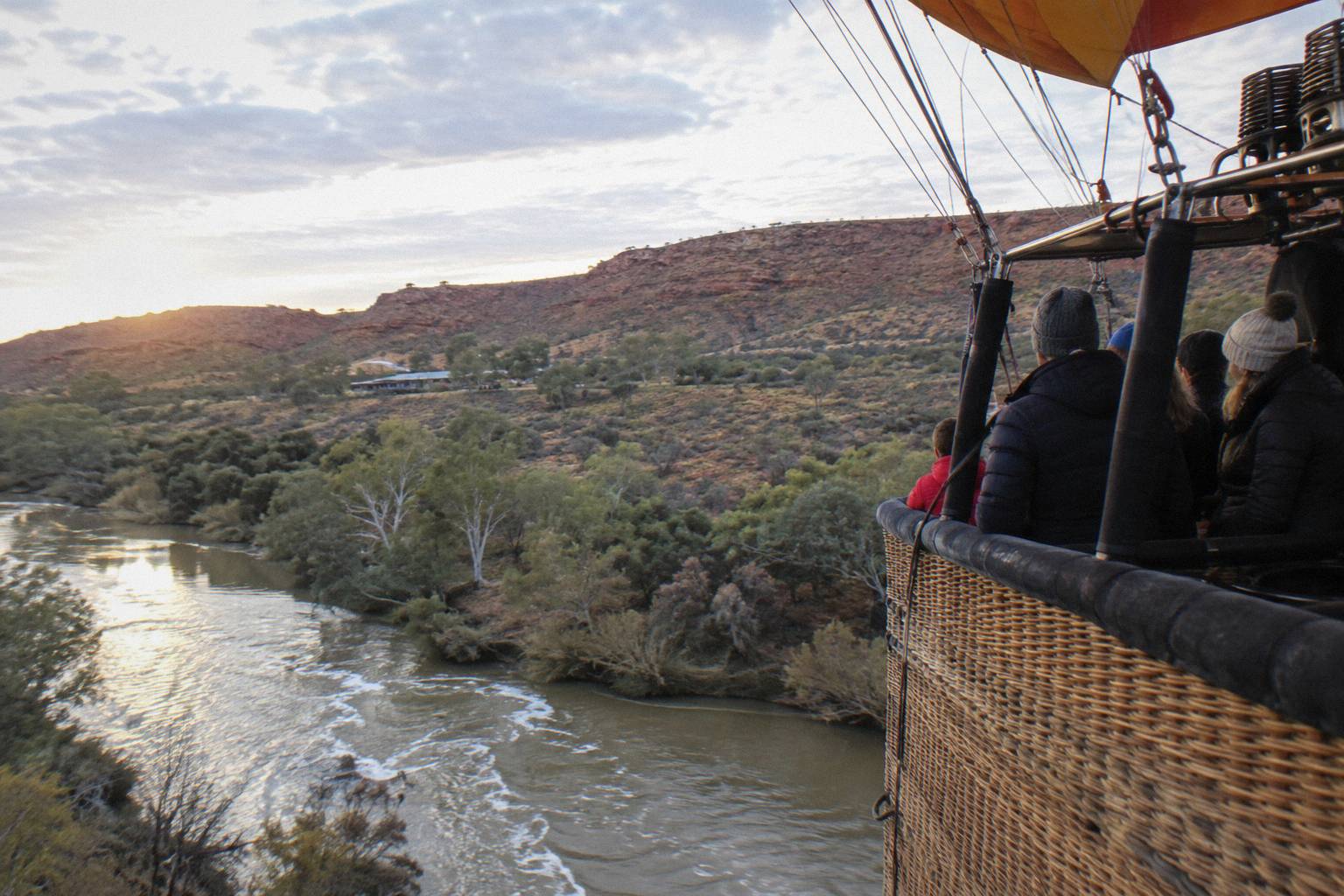
The basket walls are about 1.2 m high and the passenger compartments about 60 cm wide, according to the operator's own description. Passengers stand throughout the flight and are separated into compartments, which means each person is held within a walled section rather than standing loose in an open platform. The research contains no statement about falls, so the physical description is the whole of what can be said.
Those measurements matter more than they might first appear. A 1.2 m wall, roughly chest to shoulder height on most adults, is the barrier between a standing passenger and the open air. The compartment width of about 60 cm means you are standing in a slot with walled sides and padded edges, not perched on a ledge. Outback Ballooning carries between 2 and 24 people per balloon depending on the aircraft; Spinifex Ballooning, the other brand flying from Alice Springs, gives different group sizes on different pages, 4 to 24 on the Tourism NT listing and up to 16 on a third-party page, so the honest summary is that the operators give different group sizes.
Both brands operate under the same CASA air operator's certificate, CASA.AOC.0496, a number each of them prints on their own sites, and business-registry records suggest they appear to be one operator under two brand names. Outback Ballooning holds that certificate, is a CASA Approved Maintenance Organisation, and its pilots hold a Commercial Balloon Pilot Licence, an aviation medical and a security clearance, all stated on the operator's CASA regulation page. None of that is a promise about falls. It is the licensing structure that sits behind the aircraft and the pilot.
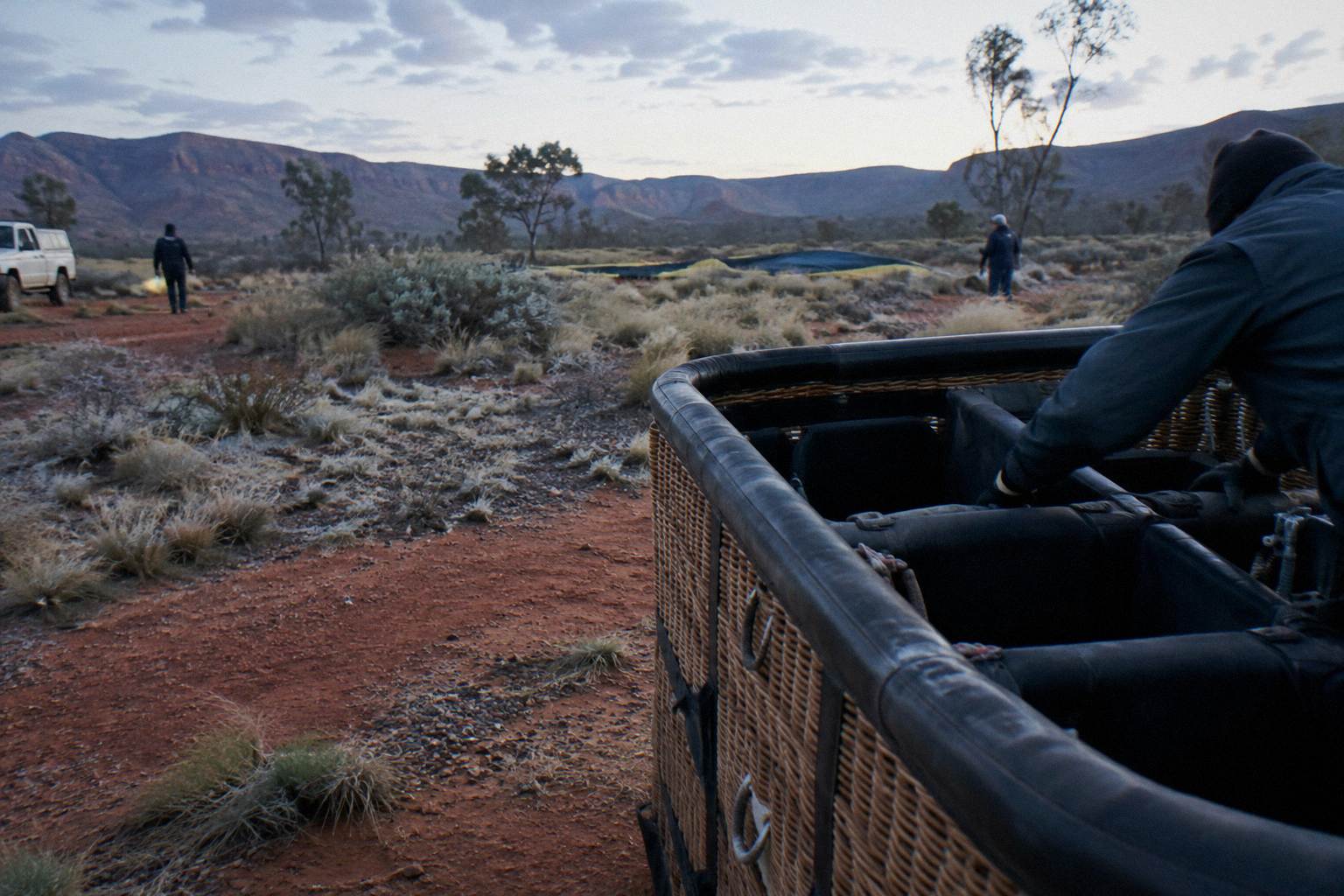
The boarding requirement is the other half of the picture. The operator's terms state that passengers must climb into the basket unaided, using foot holes in the side, and stand throughout the flight. That single rule does a lot of quiet work: it means every passenger has demonstrated the mobility to get over the wall under their own power, and it rules out arrangements where someone is lifted or hoisted into a compartment they cannot manage independently.
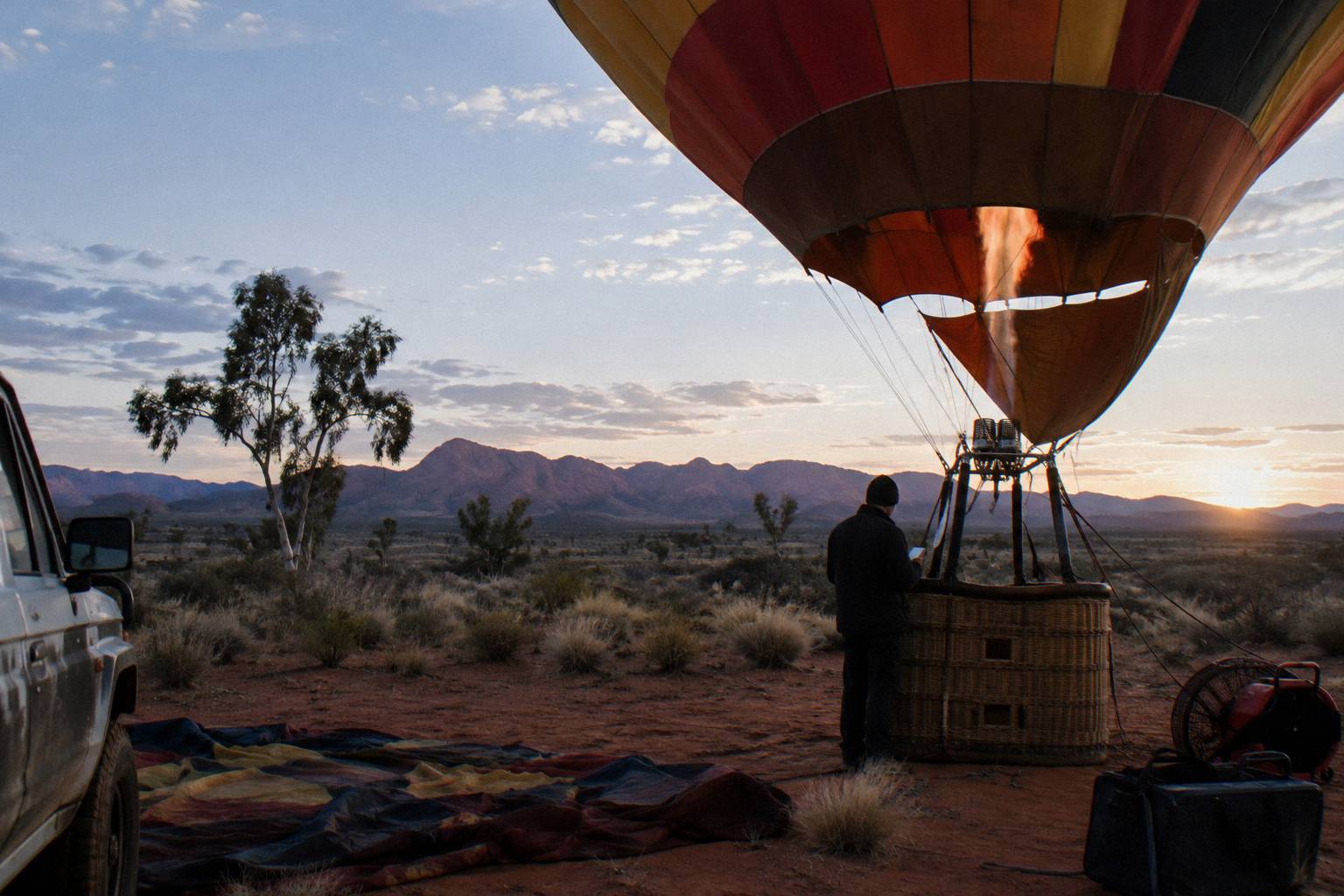
There is one more documented restriction that touches this question directly. Loose items are treated seriously at the launch site: no dangling jewellery and no scarves, and backpacks stay on the bus. The reason given for banning dangling items at the launch field is not spelled out in the operator's pages, and this site will not invent one, but the rule itself is explicit and it is enforced at the same moment passengers are standing beside the basket and the inflation fan.
What The Operator Asks Of Passengers Before Flight
Before anyone leaves the ground, the operator collects passenger weights, requires notification of medical conditions and disability in advance, and assesses every case individually with the pilot's discretion described as absolute. Passengers over 110 kg receive an extra safety email. These rules exist because the aircraft is loaded and balanced deliberately, not as a formality, and they are the operator's clearest published answer to risk.
Weights are collected at booking, not as a judgment but as a load calculation. There is no hard weight limit in the operator's own words; a third-party page claims 100 kg, which disagrees with the operator's figure, so the 110 kg safety-email threshold is the one to rely on. Whether anyone is weighed on the launch field is not stated anywhere in the research, and this page will not describe a weigh-in that may or may not happen.
The same logic runs through the age and health rules. The minimum age is recommended at 6 years, with ages 3 to 5 accepted on an individual basis but not recommended, and the child fare band running from 6 to 14 in both local operators' brochures. The main booking page for the dawn flight puts it simply: age 6 and over, with an adult. Pregnancy is the sharpest line of all, with neither Outback nor Spinifex flying anyone beyond 12 weeks, citing CASA and their own policy.
Medical conditions and disability are handled case by case. Notify the operator in advance, and each case is assessed individually; the pilot's discretion on the morning is described in the terms as absolute. The booking page for the flight states it is not suitable for pregnant or mobility-impaired passengers, which lines up with the unaided climb and the standing requirement described in the previous section.
| Requirement | What the operator states | Where it applies |
|---|---|---|
| Minimum age | Recommended 6 years; ages 3 to 5 accepted individually but not recommended | Booking and terms |
| Child fare band | 6 to 14 years, both local operators' brochures | Fares |
| Weights | Collected at booking; over 110 kg triggers an extra safety email | Booking and terms |
| Pregnancy | Not flown beyond 12 weeks | Both operators' terms |
| Medical and disability | Notify in advance; assessed individually; pilot's discretion absolute | Terms |
| Dangling items | No scarves or dangling jewellery; backpacks stay on the bus | Launch site |
An online check-in waiver is emailed five days before the flight, which is when most of these questions get answered in writing. If you have a condition, a weight above 110 kg, or a child under 6, that email thread is the place to raise it, not the launch field at dawn. If none of that applies to you, you can book the 30 minute dawn flight and watch for that waiver email five days out. You can read more about who should not ride in a hot air balloon for the full picture on restrictions.
The Documented Alice Springs Incident And What It Was
Outback Ballooning Pty Ltd was convicted and fined in July 2021 over the 2013 death of a passenger, a combined A$130,000. NT WorkSafe's media release says the passenger's scarf became entangled in the inflation fan. That is the one documented incident on the record, and it did not involve anyone falling from the basket in flight.
This matters because any honest answer to the falling question has to acknowledge the record rather than imply a clean one. An NT WorkSafe media release records the conviction, and the detail it contains, a scarf caught in the fan used to inflate the balloon on the ground, is precisely why the operator's rules now ban dangling jewellery and scarves at the launch site. The rule and the record belong to the same story.
| Item | What the record states | Source |
|---|---|---|
| Incident | 2013 death of a passenger | NT WorkSafe media release |
| Cause reported | Passenger's scarf entangled in the inflation fan | NT WorkSafe and news coverage |
| Outcome | Conviction and fine, July 2021 | NT WorkSafe media release |
| Total penalty | A$130,000 combined penalty | NT WorkSafe media release |
| Falls from the basket | No statement in the research | Verified facts file |
Two cautions go with that table. First, do not read the conviction as a statement about falls; it concerns a ground incident before flight. Second, do not read the absence of fall statistics as reassurance. Fatality statistics, odds and industry-wide safety figures are not published, so none are printed here, and a page that offered you a number would have made it up.
Why The Basket Rules Ask You To Stand And Hold On
Standing is the designed position for the whole flight: there are no seats, no harnesses are mentioned anywhere in the operator's published material, and the terms require passengers to remain standing from launch to landing. Landing is the phase the operator prepares passengers for verbally on the morning, which is standard balloon practice, and the published terms say durations are approximate with no refund if a flight runs short.
The absence of seats is not a cost-cutting detail, it is how balloon baskets work. A standing passenger in a 60 cm compartment braced against padded walls is the configuration the aircraft is certified around. The pilot's pre-flight briefing covers the landing position, typically a brace with knees bent and a grip on the internal handles, though the exact wording used on the day belongs to the crew, as the operator does not publish the briefing's contents.
Nothing in the operator's material mentions restraints, and nothing rules them out; the pages are simply silent. What they are not silent about is the experience itself. The operator describes the 30 minute flight as floating silently above the Outback as the morning light begins to illuminate the MacDonnell Ranges, and the 60 minute version as a chance to keep an eye out for kangaroos, spinifex grasses, mulga scrub and cattle stations. Wildlife the operator names includes red kangaroos, birds and wild camels.
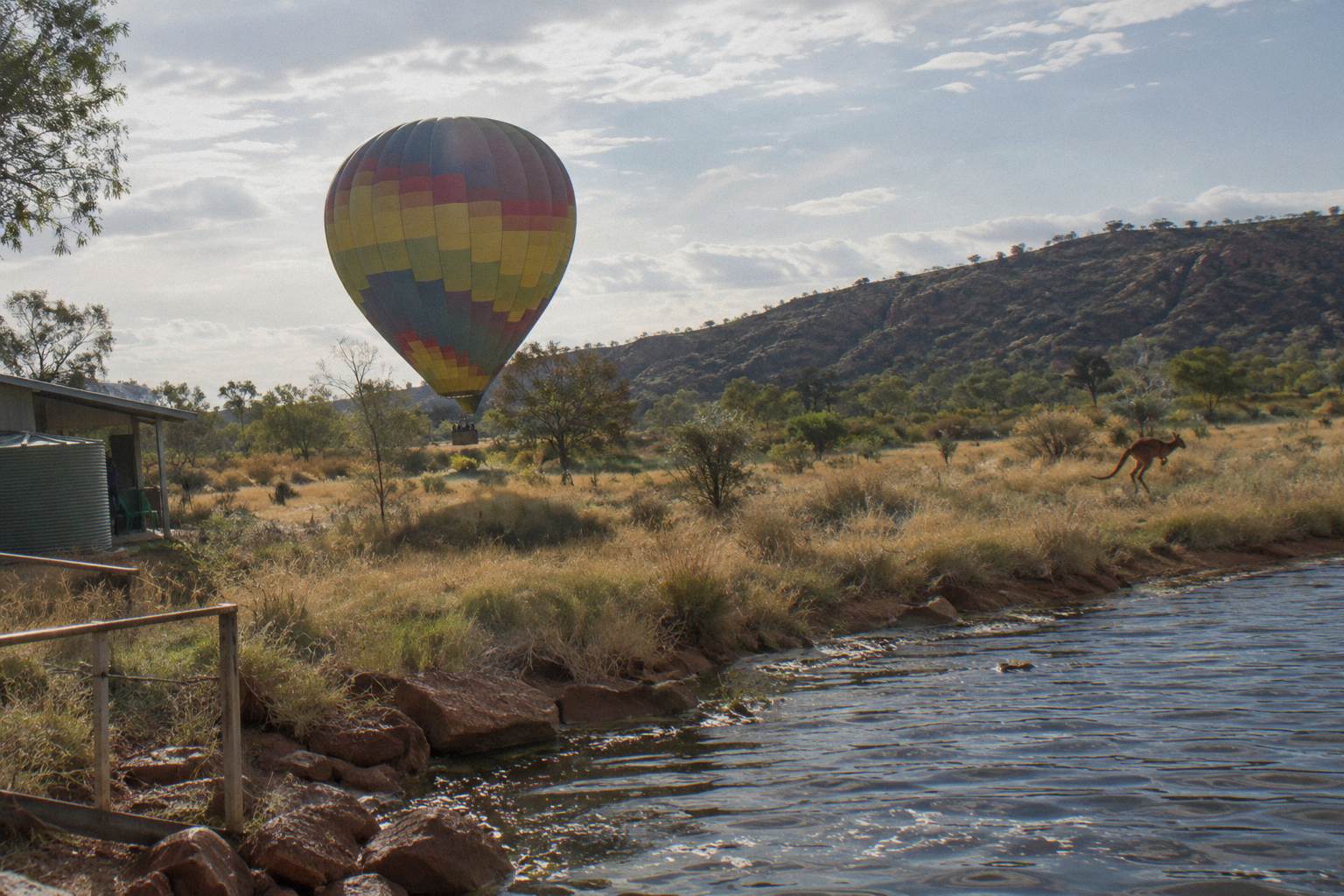
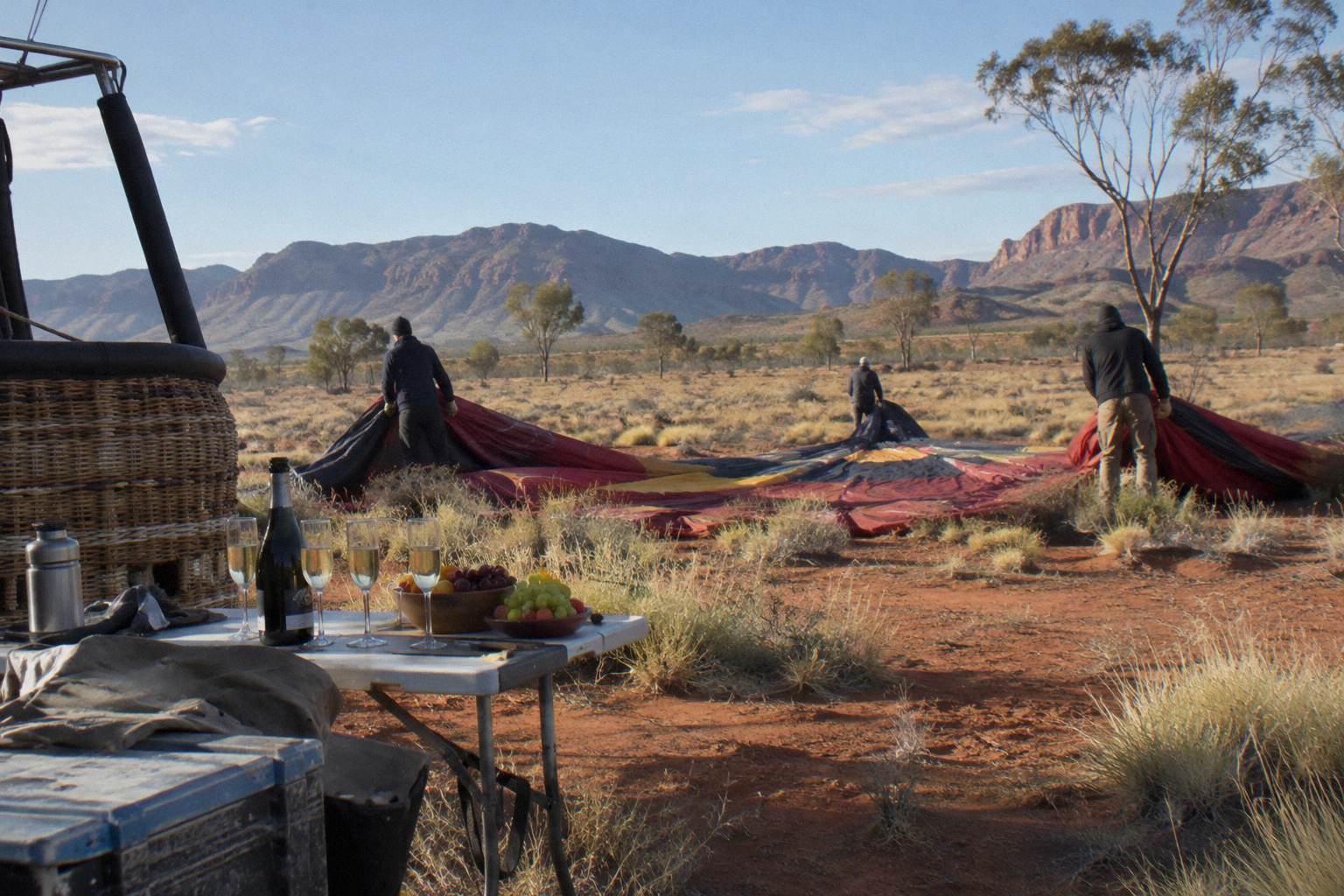
After landing there are light individually wrapped snacks, Australian sparkling wine and fruit juice, a commemorative certificate, and the option to help the crew pack up the balloon, which is a good moment to look at the basket from the outside and see exactly what held you for the last half hour.
Weather Calls, Cancellations And The Pilot's Final Say
The pilot's decision on the morning is final, and a flight can be cancelled for weather or minimum numbers; in that case guests rebook another day or take a full refund if prepaid. Cancelling yourself more than 24 hours before the flight carries no fee, while cancelling inside 24 hours or not showing up forfeits the full fare. The operator states flights are not guaranteed to be in the air at sunrise.
This is relevant to the falling question in an indirect but real way: the same judgement that decides whether conditions are safe to fly is the judgement that decides whether the basket goes up at all. The operator says it flies an average of 250 to 300 days a year, its own claim, and it operates daily all year excluding New Year's Day, Christmas Day and Boxing Day, weather and loadings permitting. A reader nervous about the flight can take some comfort in the fact that the go or no-go call is not a commercial decision made lightly.
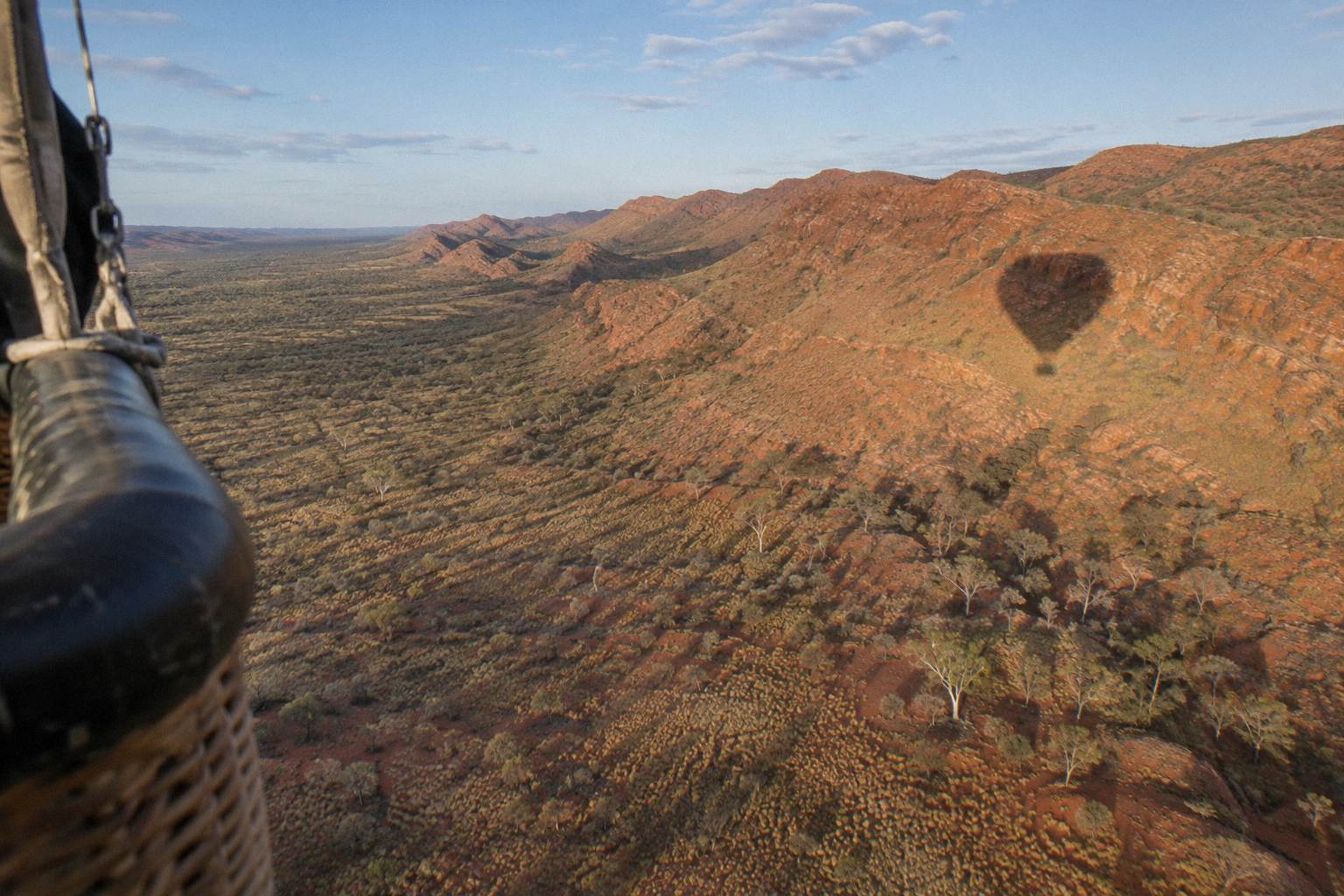
Pre-dawn cold is the other practical thing. Bureau of Meteorology normals for Alice Springs Airport, drawn from 85 years of records at station 015590, put the July mean minimum at 3.9 °C and the record low at -7.5 °C, so winter launch fields are genuinely cold places to stand around while the balloon inflates. The July sunrise sits around 7:16 am with first light near 6:52, and pickups run about one hour before first light, around 5:45 am in mid-winter according to the operator's own anchors, which matches the BOM climate averages picture of cold, dry winter mornings. Warm layers from May to September are the operator's clothing advice, along with long pants, a hat and enclosed flat shoes.
The same cold morning is also when the ground rules bite: no scarves, no dangling jewellery, backpacks on the bus. If you want the full clothing picture, what to wear on a hot air balloon flight covers it in detail, and whether hot air ballooning is safe addresses the wider safety question this page only touches.
The flight sold through this site runs about 4 hours door to door, including return transfers from most Alice Springs accommodation and the post-flight refreshments. There is a second booking page for the identical Outback Ballooning flight, Early Morning Ballooning in Alice Springs, rated 4.8 with no review count published; the two pages are the same flight by the same operator, never two different experiences.
What This Adds Up To For A Nervous Passenger
No page on this site will tell you falling out is impossible, because the operator never says so and no statistic exists to back it up. What is documented is a 1.2 m walled compartment you board under your own power, a pilot with a CASA licence and absolute discretion on the morning, and published restrictions on age, weight notification, pregnancy and dangling items.
A nervous reader can act on all of it. Ask the operator directly about anything that worries you, by phone or in reply to the waiver email five days out; the terms invite notification of medical conditions in advance and say each case is assessed individually. Wear clothing that gives you nothing dangling. Listen to the briefing, and take the landing position seriously, because landing is the phase every balloon operator drills hardest. And if the whole idea still sits badly, the Red Centre is not short of alternatives: the West MacDonnell Ranges Day Tour With Lunch by Wildlife Tours Australia, about 10.5 hours with guided bush walks and gorge stops, keeps you at ground level and you can judge it from the booking page rating, though its morning departure suits a separate day.
For readers who do fly, the details of the Alice Springs experience are worth knowing in advance: launch about 15 km south of town, a drift of typically 10 to 20 km over Owen Springs Cattle Station, the Ranges as backdrop, and no view of Uluru, which sits about 450 km away and is simply not visible from the flight. There is no pickup from Uluru either, so the flight means a night in Alice Springs first. The general shape of the experience is described in what a hot air balloon ride is like.
Common Questions About Falling From A Hot Air Balloon
Is It Possible To Fall Out Of A Hot Air Balloon?
The verified research contains no statement on falls in either direction, so no yes or no can be given. The operator's published facts are that basket walls stand about 1.2 m high, compartments are about 60 cm wide, passengers climb in unaided and stand throughout the flight.
Do Hot Air Balloon Baskets Have Doors Or Harnesses?
The operator's published material does not mention doors or harnesses. It describes a walled basket about 1.2 m high with compartments about 60 cm wide, boarded unaided through foot holes in the side.
Why Can't You Wear A Scarf At The Balloon Launch Site?
The operator bans dangling jewellery and scarves at the launch site. The 2021 NT WorkSafe conviction of Outback Ballooning Pty Ltd over the 2013 death of a passenger, whose scarf became entangled in the inflation fan, is the documented context.
Can Children Fall Out Of A Balloon Basket?
No statement on falls exists in the research. The rules around children are: minimum age recommended at 6 years, ages 3 to 5 accepted individually but not recommended, child fares for 6 to 14, and age 6 and over with an adult on the main booking page.
What Happens If The Weather Is Bad On Flight Day?
The pilot's decision is final. If the flight is cancelled for weather or minimum numbers, guests rebook another day or take a full refund if prepaid. Cancelling more than 24 hours ahead carries no fee; inside 24 hours forfeits the fare.
Is It Safe To Stand The Whole Flight?
Standing is the designed position and the terms require it from launch to landing. There are no seats. This page prints no safety statistics because none exist in the verified research, and any site offering you such a number is guessing.