What Happened In The 1989 Alice Springs Balloon Accident?
The ATSB record of the 13 August 1989 mid-air balloon collision near Alice Springs that killed 13 people, the trial that followed, and what it did and did not change.
On Sunday 13 August 1989, two tourist hot air balloons, VH-NMS and VH-WMS, collided during a dawn charter flight near Alice Springs. The lower balloon, VH-NMS, fell to the ground and was destroyed. Thirteen people died, the pilot and twelve passengers, with no survivors on that balloon. The official ATSB investigation report, 198900820, records the event and its causes.
It was, and remains, the deadliest balloon accident in Australian history, and it happened in the same stretch of country where Alice Springs balloon flights operate today, roughly 14 km south-south-east of Alice Springs Airport. Five tourist balloons had launched within minutes of each other from the same area that morning. Two of them came together at about 7 am, and one did not come down under control.
For a reader deciding whether to book a balloon flight, the question usually underneath the search is a fair one: could this happen here again? The honest answer has two parts. The first is what the official record actually says happened, which is laid out below. The second is what changed afterwards, which the Australian Transport Safety Bureau addressed in recommendations referred immediately to the regulators of the day. Both parts belong together, and neither part supports filling gaps with remembered numbers or rumours.
There is a third part that careful readers deserve too: what the record does not contain. Accident coverage on the internet tends to harden over time, with details added by retelling until a confident-sounding paragraph bears little resemblance to the sourced document underneath it. Where this page is silent, or says plainly that something is unverified, that silence is deliberate and it is the most reliable thing on offer. Every date, figure and name printed below traces to the ATSB report, the Northern Territory appeal judgment, or named 1989 press coverage held in the research for this site.
Sydney Morning Herald reporting from 1989 says the balloons lifted off from Santa Teresa Mission Road, 10 to 15 km south of town, and that the stricken balloon came down on Undoolya Station scrubland. The Herald's description of the morning was that it was clear and still, beautiful flying weather, which is part of what makes the event so studied: nothing about the sky that day forced the two aircraft together.
What The Official ATSB Record Says
The ATSB report, numbered 198900820 and titled for the balloon Kavanagh Hot Air Balloon E-260, VH-NMS, 14 km SSE of Alice Springs Airport NT, 13 August 1989, was approved for release on 28 November 1989. It records a departure at 0656 and the collision at 0705, and it attributes the event to pilot lookout, positioning and the absence of radio contact, not to any defect in the balloon.
The investigation report is public and can be read in full. The summary page is at the ATSB investigation record 198900820, and the full document is available as the ATSB investigation report PDF. Everything in the sections below comes from that report unless another source is named, and where a detail rests on a single newspaper account rather than the official record, that is flagged.
| Fact | Detail |
|---|---|
| Date | Sunday 13 August 1989 |
| Time | Departure 0656, occurrence 0705, shortly after sunrise |
| Location | 14 km south-south-east of Alice Springs Airport |
| Balloons involved | VH-NMS (destroyed, 13 aboard) and VH-WMS (struck it from above) |
| Deaths | 13, the pilot and 12 passengers, no survivors on VH-NMS |
| Other balloons airborne | Five tourist balloons launched within minutes of each other |
The ATSB states plainly that no defect in the balloon or its envelope contributed to the accident. That finding matters because early speculation in any aircraft accident tends to run to equipment. Here the equipment was not the problem. The report's significant factors concern decisions, visibility and communication, which is also why its recommendations were aimed at regulation and training rather than at any manufacturer.
The pilot of the destroyed balloon was Anthony Fraser, 24, from Victoria, according to the Herald's reporting and the court record, which spells the name Antony James Fraser. He was killed in the accident. The other victims are not named here, and one detail that circulates, the nationality of an Italian passenger, rests on a single source and is omitted. One passenger was from Denmark, the Herald reported, and that is the extent of the personal detail this page carries: the sources support it, and everything beyond it would be borrowed colour.
How The Collision Happened
The upper balloon had climbed to 4,000 ft, about 2,000 ft above the ground, drifted west without burner use while its pilot pointed out sights, and then descended onto the lower balloon, whose own envelope blocked its pilot's view of what was above. The upper basket tore a hole in the lower envelope just below the rip panel, fouling the control lines, and the envelope collapsed.
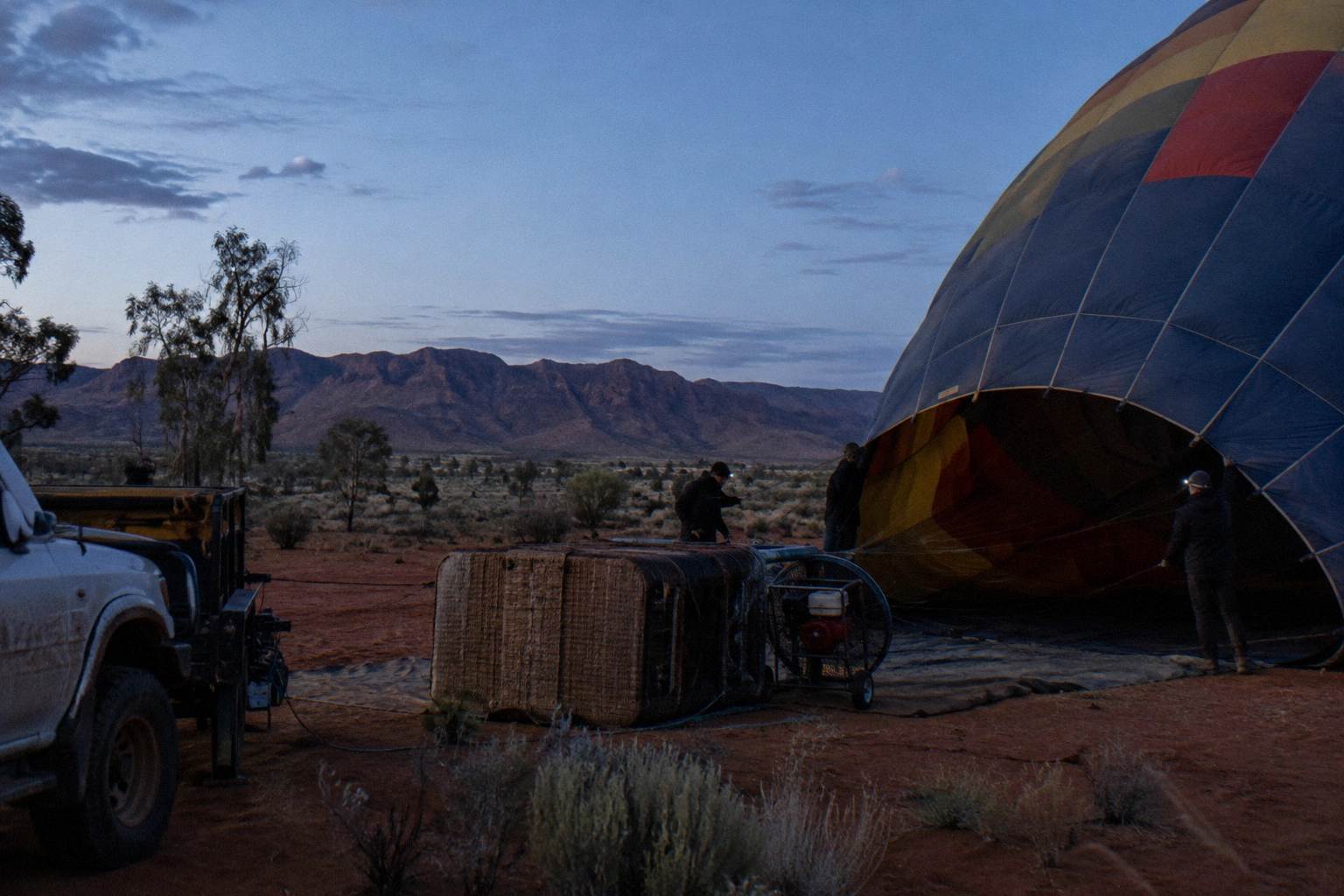
Reading the sequence in the report, the most striking detail is how ordinary each link in the chain sounds on its own. A pilot sightseeing rather than burning. A second pilot climbing to follow the first. A design in which the envelope, the huge fabric dome that every passenger spends the flight looking past, also hides everything directly overhead. None of these is dramatic alone. Together, in about nine minutes from launch to impact, they were fatal.
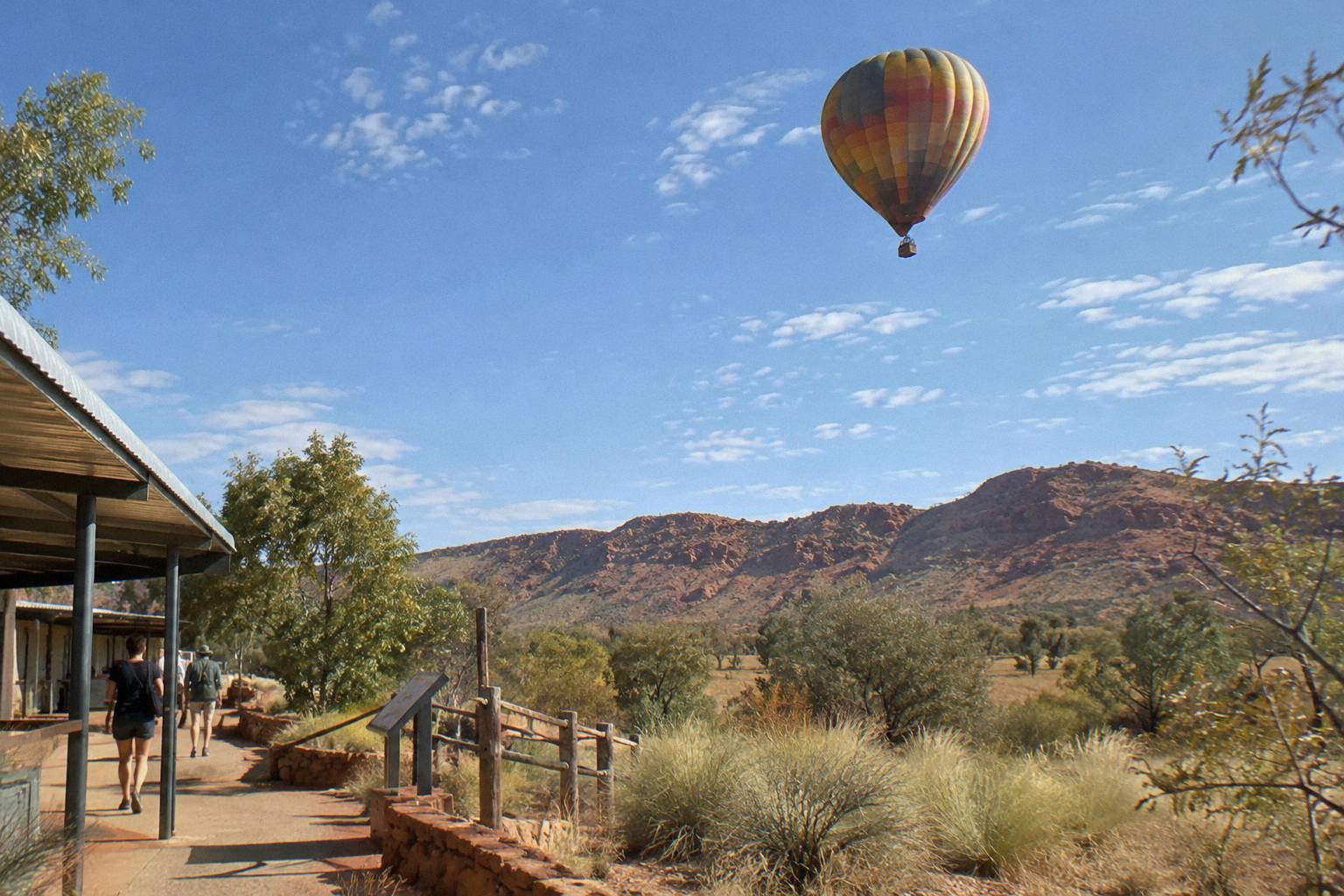
Video taken from another balloon, examined by the investigator, suggests the upper balloon was descending while the lower balloon climbed to follow it. The upper balloon lacked the mandatory instrument package; its pilot wore a wrist altimeter. Both balloons carried UHF radios on the same frequency, but the pilots were not in contact with each other. The upper balloon's pilot told a passenger afterwards that he had not noticed the other balloon, and after legal advice he declined to cooperate fully with the investigator despite a summons.
The company's own operations manual, the report notes, said the upper balloon must give way and that basket-to-envelope contact must be avoided. The rule existed. What the report examines at length is why it was not effective on the morning, and its answers are the four significant factors below, quoted as findings rather than paraphrased into blame.
| ATSB significant factor | What the report found |
|---|---|
| Lookout and give-way | The upper balloon's pilot failed to maintain an adequate lookout and did not give way to the lower balloon |
| Position assessment | The lower balloon's pilot did not adequately assess the upper balloon's position before climbing close to it |
| Radio | The two pilots were not in radio contact despite sharing a frequency |
| Outcome | Collision damage left the lower balloon uncontrollable |
The mechanics of the collapse, as the report reconstructs them, were unforgiving. The upper balloon's basket struck the lower envelope just below the rip panel, tore a hole and went more than halfway inside the fabric. As the two separated, the control lines for the rip panel and the parachute vent fouled, the rip panel opened fully, the envelope collapsed, and the basket plummeted to the ground. From first contact to impact the crew and passengers had no means of control left, which is why the report's fourth factor records the balloon as uncontrollable rather than badly flown in its final seconds.
The company operating the flights was named in 1989 coverage as Toddy's Ballooning, also reported as Toddy's Balloon Safaris. Its manager, and the pilot of the upper balloon, was Michael Sanby. The Civil Aviation Authority suspended the company's operations during the investigation, according to the Herald, which also reported the company had already suspended itself. That suspension detail is single-source and attributed to the Herald here for that reason.
The Trial And The Final Verdict
The upper balloon's pilot, Michael Winston Sanby, was tried in the Northern Territory Supreme Court on 13 counts of manslaughter and one count under section 154 of the NT Criminal Code. He was acquitted of manslaughter and convicted on the section 154 count, but on appeal the conviction was quashed as unsafe and unsatisfactory and a verdict of not guilty was directed. The final legal outcome is an acquittal.
The appeal was heard by the Northern Territory Court of Criminal Appeal in Sanby v R, CA8 of 1992, with judgment delivered on 19 October 1993. That judgment closed the criminal side of the story. A widely repeated figure, a two-year sentence, comes from a single secondary account of the 1992 trial and is omitted here; the quashing of the conviction on appeal means any sentence is not the end of the story in any case.
It is worth being precise about what this outcome means, because accident pages attract careless summaries. An acquittal after appeal is not a finding that the collision did not happen, and it is not a finding about anyone else's conduct. It is a statement that the criminal case against this pilot, as tried, could not safely stand. The ATSB's factual findings about the flight remain the ATSB's findings, and they are attributed to the ATSB wherever they appear on this page.
Any coroner's inquest finding is unverified in this research, so none is printed. Nothing here should be read as this site's own judgement of any person's conduct in 1989, and the strongest wording used anywhere above is the investigator's, not a narrator's.
What Changed In Australian Ballooning Afterwards
The ATSB made three recommendations: that the Civil Aviation Authority, with the Australian Ballooning Federation, reassess separation requirements for manned balloons, because the regulations of the day contained no give-way rule for manned balloons; that the CAA improve surveillance of aircraft documentation; and that the Australian Ballooning Federation address surveillance of instructors and examiners.
The background to the first recommendation is the quiet scandal inside the report: Civil Aviation Regulations 161 to 163, the rules governing which aircraft gives way to which, did not at the time contain a give-way rule that applied between manned balloons. Five balloons shared the same dawn sky under rules that had not anticipated that case. The accident balloon's log also had certification deficiencies, which is what drew the second recommendation towards documentation surveillance and the education of Balloon Maintenance Authority holders.
| Recommendation | Directed to | Subject |
|---|---|---|
| 1 | Civil Aviation Authority with the Australian Ballooning Federation | Reassess separation requirements for manned balloons |
| 2 | Civil Aviation Authority | Improve surveillance of aircraft documentation, educate Balloon Maintenance Authority holders |
| 3 | Australian Ballooning Federation | Surveillance of instructors and examiners so pilot certificate requirements are met and logged |
The report states that these recommendations were referred immediately to the relevant authorities and that all were being implemented. That sentence is the only verified statement this research holds about the regulatory response. No fetched source gives the text of any later rule, so this page prints none: naming a specific regulation that followed 1989 would be a guess dressed as fact. Readers who want the current rules can find them through the aviation regulator directly.
What can be said is the direction of travel. Separation between balloons, radio discipline, instrument requirements and instructor oversight were all examined because of this accident, and the ATSB recorded the authorities acting on all three fronts. That is a sourced, narrow claim, and it is the one this page stands behind.
Is There Any Link To Today's Alice Springs Operators?
No source links the 1989 company, Toddy's Ballooning, to any operator flying in Alice Springs today, and no comparison between 1989 and the present can responsibly be drawn from this record. Outback Ballooning has operated in Alice Springs since 1986, according to its own home page, and its 2021 NT WorkSafe conviction, described below, relates to a different, later incident in 2013.
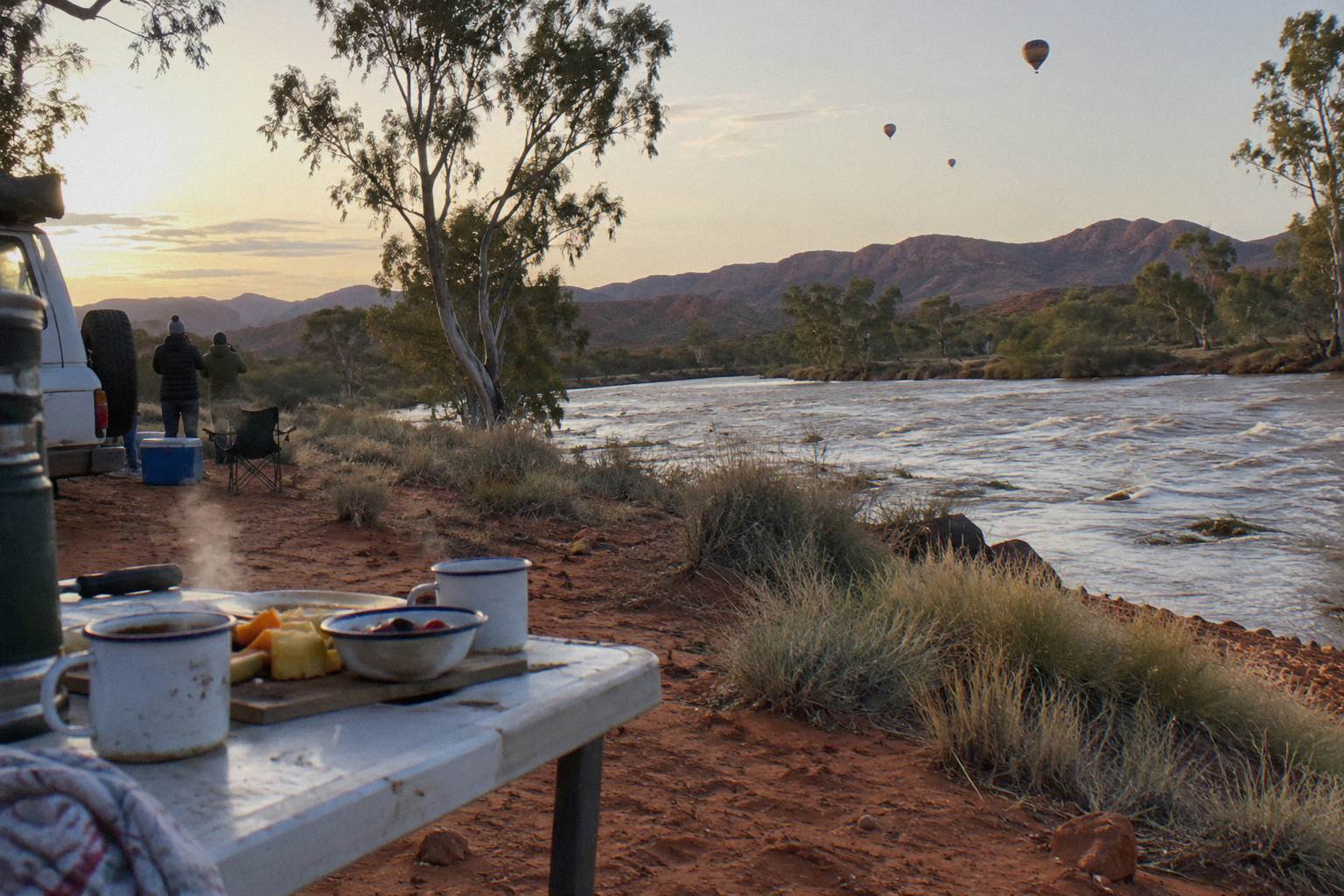
The two brands that fly from Alice Springs today, Outback Ballooning and Spinifex Ballooning, both print the same CASA air operator's certificate number, CASA.AOC.0496, and business-registry records from third-party sites list Spinifex Ballooning as a business name of the same entity as Outback Ballooning. The safe wording is that both brands operate under the same certificate and appear to be one operator. None of that connects either brand to the 1989 company, and this page makes no comparison and no safety claim about today's operators on the strength of a 1989 event.
On safety and the current operator's record, honesty is the only policy worth having. Outback Ballooning holds CASA Air Operator Certificate CASA.AOC.0496, is a CASA Approved Maintenance Organisation, and its pilots hold a Commercial Balloon Pilot Licence, an aviation medical and a security clearance, per the operator's own CASA regulation page.
Separately, and stated plainly: Outback Ballooning Pty Ltd was convicted and fined in July 2021, per an NT WorkSafe media release, over the 2013 death of a passenger after the passenger's scarf became entangled in the inflation fan. That is a different incident, decades after 1989, and it is the safety topic this site treats in full on its dedicated page.
If you are weighing up a flight and want the current operator's full record rather than the 1989 history, read whether hot air ballooning is safe and the guide to weather and cancellation rules. Those pages carry the operator-stated safety and weather facts in one place, which this page deliberately does not duplicate.
What Is Not In The Record
Honest scope limits: this research contains no text of any later Civil Aviation Authority or CASA rule, no Northern Territory coroner's finding, no victims' families' accounts, and no statistic comparing 1989 with today. Rather than fill those gaps with plausible-sounding memory, this page states they are absent.
Accident pages fail readers most often not by what they get wrong but by what they quietly invent: a cause repeated until it sounds sourced, a regulation named from half-remembered coverage, an implied moral drawn between an event and a business that had nothing to do with it. Each blank above is a blank in the fetched record. The ATSB report and the 1993 appeal judgment are public documents, and the Herald's 1989 coverage is archived, so a reader who needs those details beyond what is printed here has a clear path to the primary sources named in this article.
What the record does support is narrower and, in the end, more useful. A specific chain of avoidable errors on a clear morning. An investigation that found no mechanical defect but a regulatory gap between balloons. Recommendations the regulator and the sport's federation acted on, in the report's own words. And a criminal process that ended in acquittal, which is a fact about the courts, not about the sky.
If you are deciding whether to fly, the decision rests on today's operators, today's rules and today's weather call, not on a 1989 flight. Alice Springs Hot Air Balloon exists to put exactly that current, sourced information in one place, from the dawn flight over Owen Springs Cattle Station to what to wear and when pickup happens. Check availability if a dawn flight is on your list.
A reader who has read this far sometimes asks a simpler question than any court or investigator addressed: should the 1989 accident change what I book today? The sourced answer is that it is part of the history of the activity, not of any product on sale now, and that the pages on this site about operators, safety and cancellations exist so the present-day decision can be made on present-day facts.
Common Questions About The 1989 Alice Springs Balloon Accident
What Happened In The 1989 Alice Springs Balloon Accident?
Two tourist balloons, VH-NMS and VH-WMS, collided during a dawn flight near Alice Springs on 13 August 1989. VH-NMS fell to the ground and was destroyed, killing the pilot and all twelve passengers, thirteen people in total. The ATSB investigated and attributed the event to lookout, positioning and the absence of radio contact, not to any balloon defect.
How Many People Died In The Alice Springs Balloon Accident?
Thirteen people died: the pilot, Anthony Fraser, aged 24, and twelve passengers. There were no survivors on the destroyed balloon, VH-NMS. The other balloon involved, VH-WMS, did not crash.
Was The Pilot Found Guilty?
The upper balloon's pilot, Michael Sanby, was acquitted of thirteen manslaughter counts and convicted on one count under section 154 of the NT Criminal Code, but the Court of Criminal Appeal quashed that conviction as unsafe and unsatisfactory and directed a verdict of not guilty. The final outcome is an acquittal.
Was The 1989 Accident Linked To Outback Ballooning?
No source links the 1989 company, named in coverage as Toddy's Ballooning or Toddy's Balloon Safaris, to any operator flying in Alice Springs today. Outback Ballooning's 2021 conviction related to a separate 2013 incident, not to 1989.
What Caused The Balloons To Collide?
The ATSB's significant factors were that the upper balloon's pilot failed to maintain an adequate lookout and give way, the lower balloon's pilot did not adequately assess the other's position before climbing, the two pilots were not in radio contact, and collision damage left the lower balloon uncontrollable.
Did The Accident Change Ballooning Rules?
The ATSB recommended a reassessment of separation requirements for manned balloons, because the regulations of the day contained no give-way rule between them, along with better surveillance of aircraft documentation and of instructors and examiners. The report says all recommendations were being implemented, but no fetched source gives the text of any later rule.