Sunrise Balloon Flights In Alice Springs: How The Morning Runs
Balloons fly at dawn because that is when the air over the Centre is at its calmest. Here is how a sunrise flight over Alice Springs actually runs, from the pre-dawn pickup to the sparkling wine after landing.
Short answer
Pickup is roughly one hour before first light, about 4:15am in summer and about 5:45am in mid-winter, and the whole trip runs about four hours door to door. The launch site is about 15 km south of Alice Springs, the flight typically covers 10 to 20 km, and the operator does not guarantee you will be airborne exactly at sunrise.
Balloons fly at dawn for one practical reason: the air is calmest in the first hours after daybreak, before the desert sun starts stirring thermals. In Central Australia that logic plays out on an unusually generous scale, which is why a sunrise balloon flight over Alice Springs has become the region's signature experience, run by an operator that has flown here since 1986. The flight sold through Alice Springs Hot Air Balloon is the Outback Ballooning dawn departure, rated 4.9 from 288 reviews on its main booking page.
The morning is more structured than most first-time flyers expect. There is a very early pickup, a drive south out of town, an inflation on a launch field chosen that morning, a flight of 30 or 60 minutes, and a landing celebration with sparkling wine and fruit juice before the bus returns you to your accommodation. This guide walks through each stage with the operator's own stated times and rules, so you know exactly what the day holds before you commit to a 4am alarm.
What Time Does The Day Actually Start?
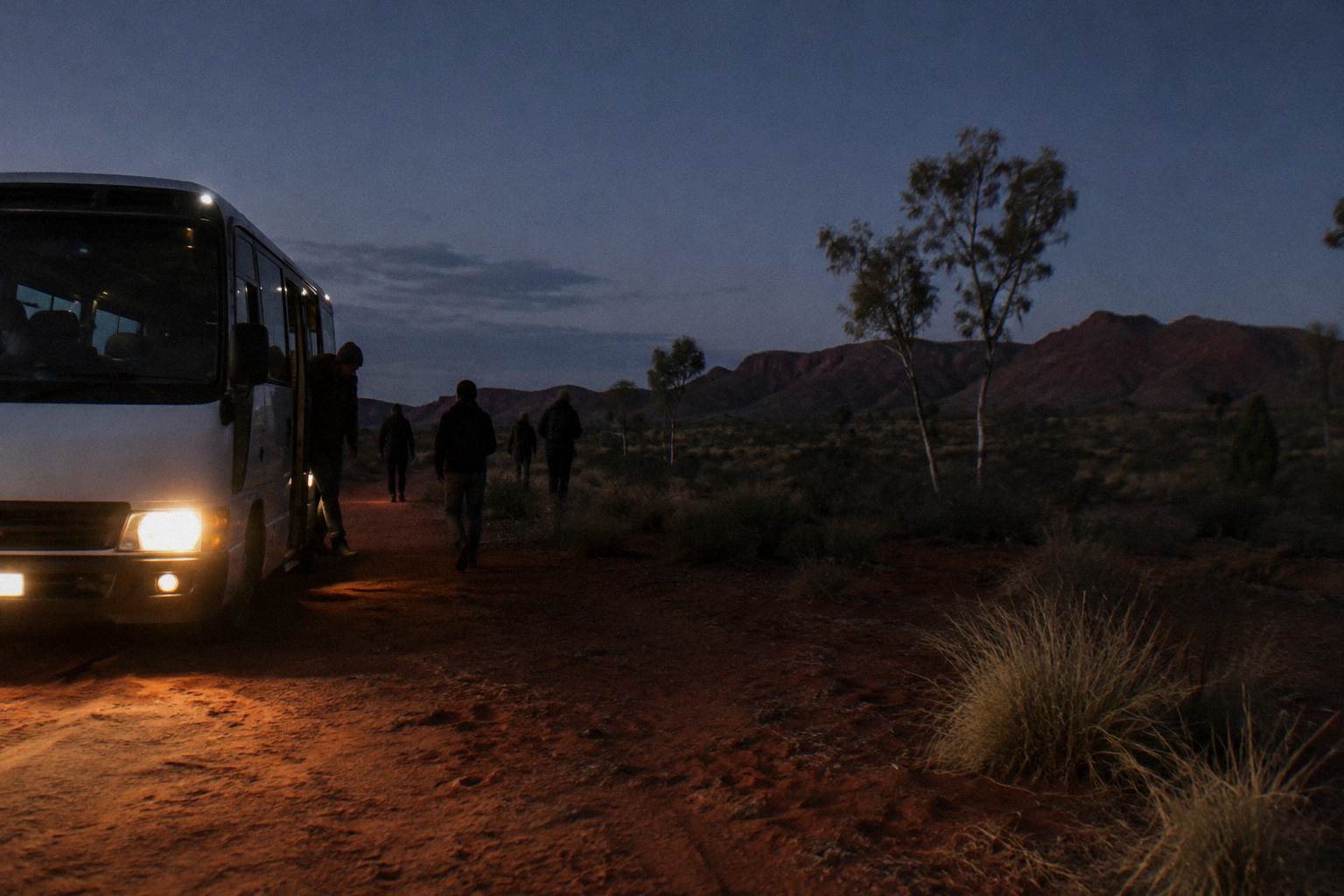
Pickup is approximately one hour before first light, which the operator anchors at about 4:15am in summer and about 5:45am in mid-winter, and the exact time is confirmed when you book and again the day before you fly. That makes the balloon pickup the earliest tourism commitment most visitors make in Alice Springs, earlier than any sunrise viewpoint drive and earlier than every other tour in town departs.
Return transfers from Alice Springs accommodation are included in the fare. Private addresses, Airbnbs and rural properties are not guaranteed pickup points, so if you are staying somewhere unusual you should confirm before booking. Rural and camping guests have a fixed alternative: meet at Crowne Plaza Lasseters reception, 93 Barrett Drive. There is no pickup from Uluru at all, roughly 450 km away, so the flight only works if you sleep the night in Alice Springs itself. The guide to where to stay before a dawn balloon flight covers the practical side of that choice.
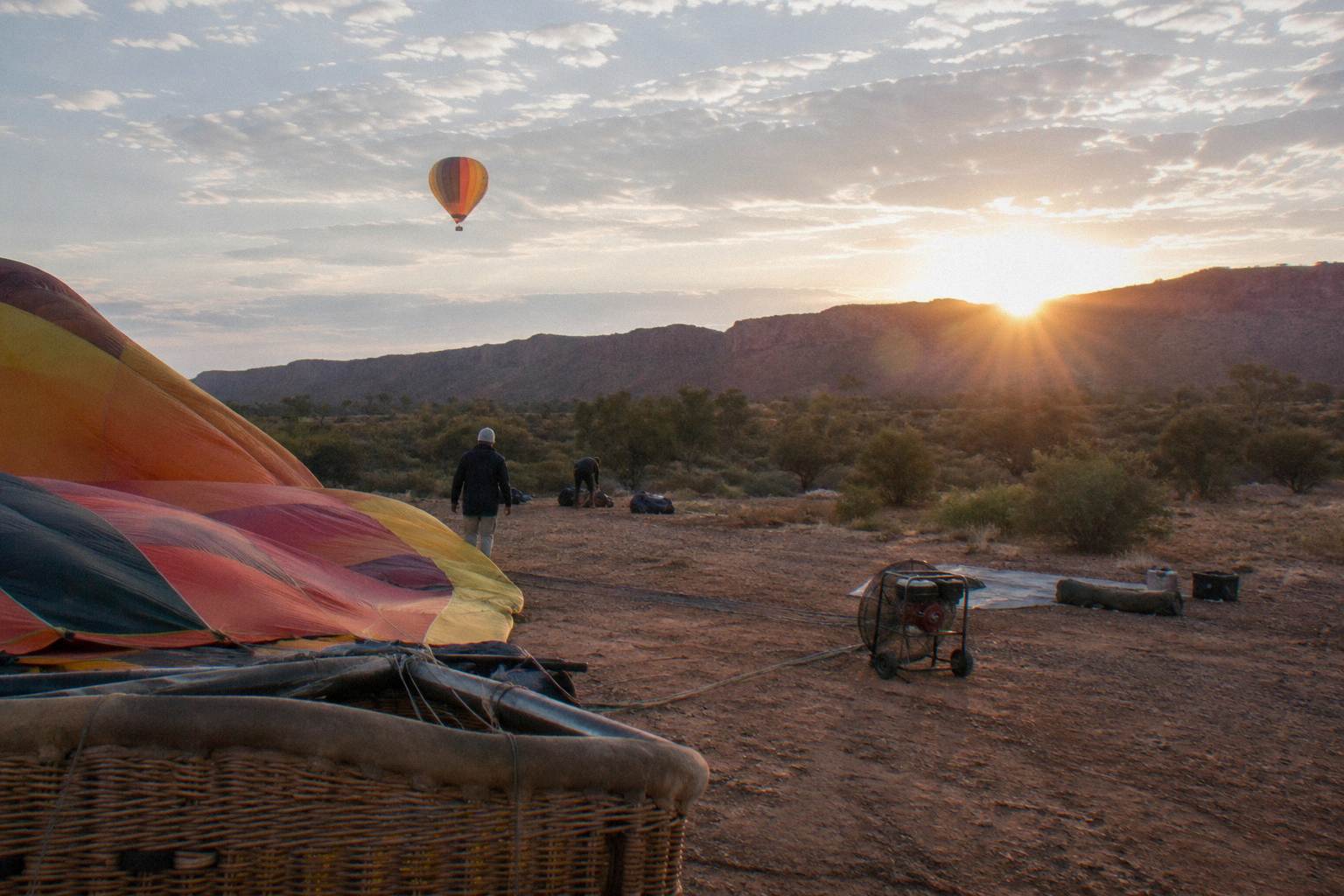
The timing is not arbitrary. The operator picks you up about an hour before first light because the balloon has to be unloaded, inflated and standing ready before the sky brightens, and inflation itself takes time with a crew working fans and burners in the dark. Flying later in the morning is not an option the operator offers, since heated desert air becomes turbulent and unsuitable for ballooning well before most people have finished breakfast. The pilot's judgement on conditions each dawn is final, and the whole schedule bends around it.
Two smaller time facts are worth knowing. The online check-in waiver is emailed five days before your flight, so watch your inbox that week rather than the night before. And if you have a flight out of Alice Springs that day, the operator can drop you at the airport on request, since the launch area sits near it and the airport is a 15 to 20 minute drive from where the morning ends.
When Is First Light Each Month?
First light in Alice Springs ranges from about 5:17am in mid-December to about 6:52am in mid-July, a spread of well over an hour and a half across the year, which is why the same flight means a 4:15am pickup in one season and a 5:45am pickup in the other. The table below is computed, not official, and each row is the approximate value for the 15th of the month.
It was calculated from the NOAA solar position algorithm for Alice Springs, latitude -23.698, longitude 133.883, on Australian Central Standard Time, UTC+9:30, since the Northern Territory has no daylight saving. Values are accurate to about two minutes, and this is not a Bureau of Meteorology table. Treat it as a planning guide rather than a schedule; the operator's confirmed pickup time the day before your flight always wins.
| Month | Sunrise (approx.) | First light (approx.) |
|---|---|---|
| January | 6:00am | 5:35am |
| February | 6:22am | 5:58am |
| March | 6:36am | 6:14am |
| April | 6:48am | 6:25am |
| May | 7:01am | 6:37am |
| June | 7:14am | 6:49am |
| July | 7:16am | 6:52am |
| August | 7:01am | 6:38am |
| September | 6:32am | 6:09am |
| October | 6:02am | 5:39am |
| November | 5:42am | 5:18am |
| December | 5:42am | 5:17am |
The table cross-checks neatly against the operator's own pickup anchors: one hour before the July first light of 6:52am gives about 5:52am, matching the stated mid-winter pickup of about 5:45am, and the December figures land within a couple of minutes of the stated 4:15am summer pickup. In other words, winter flying buys you nearly an hour and a half more sleep for the identical experience. Some travellers deliberately book June and July for exactly that reason, and the desert dawn is genuinely cold then, which brings its own considerations covered later in this guide.
The season matters less than you might think for availability, though. Outback Ballooning flies daily all year, excluding New Year's Day, Christmas Day and Boxing Day, weather and loadings permitting, and says it averages 250 to 300 flying days a year, a figure that is the operator's own claim. Flights can also be cancelled for minimum numbers, so a quiet Tuesday in the shoulder season carries a slightly different risk profile than a busy August morning.
The flight itself comes in two lengths, 30 minutes or 60 minutes, and either way the whole outing runs about four hours door to door. The main booking page for the Alice Springs dawn balloon flight lists both options, and the operator's published fares are A$380 adult for the 30 minute flight and A$450 adult for the 60 minute, with child fares of A$340 and A$405. Prices can change, so treat the operator's listing as the source of truth when you book.
What Happens Between Pickup And Launch?
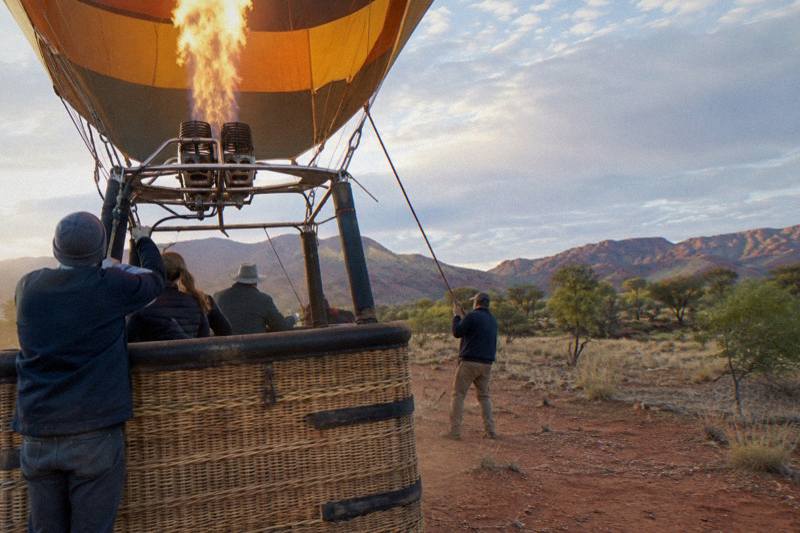
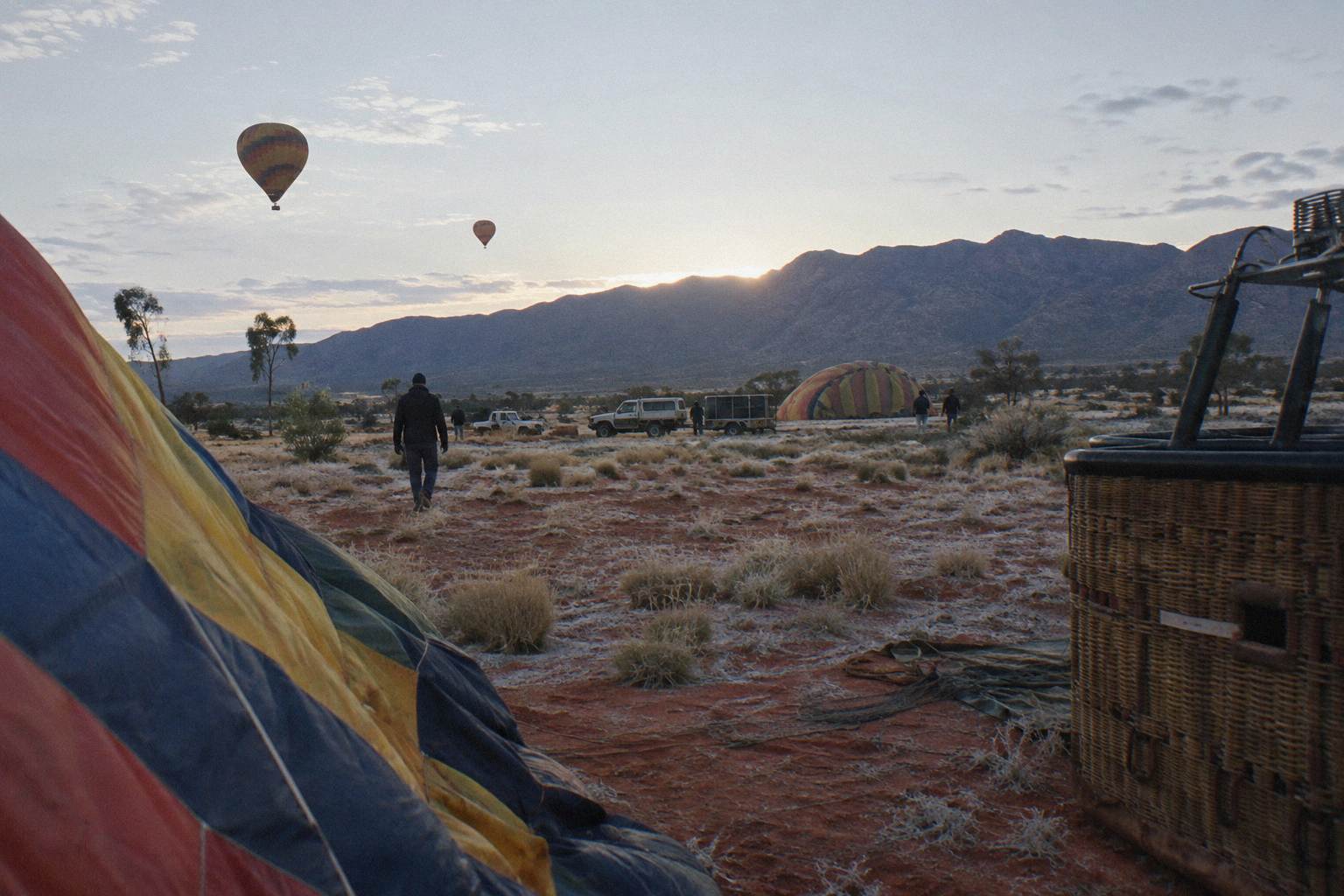
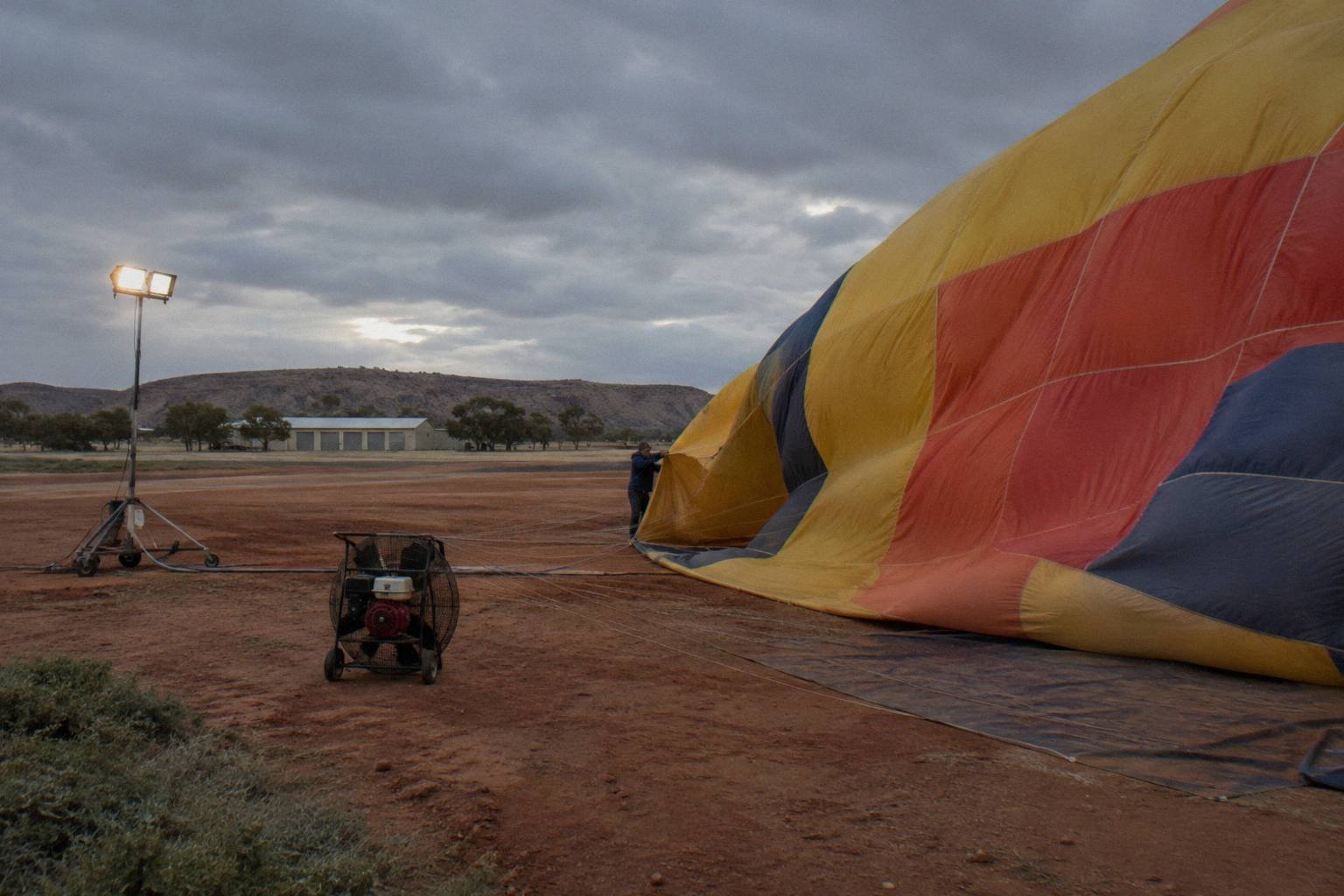
The bus drives about 15 km south of Alice Springs to a launch site adjacent to the MacDonnell Ranges, over historic Owen Springs Cattle Station, where the crew inflates the envelope and the pilot briefs passengers before climb-in. You stand in the dark for part of this, then watch the burner light the inside of the balloon like a lantern.
The exact launch field is not published in advance, and the operator does not commit to a single site: wind direction on the morning decides where the balloon can safely rise and roughly where it will drift. Spinifex Ballooning, the other brand flying from Alice Springs, says it uses about 20 launch sites within 30 km of town, chosen by wind on the morning. Both brands print the same CASA air operator's certificate number, CASA.AOC.0496, and appear to be one operator under two names, so do not read the two brands as fierce rivals flying separate fleets.
Passengers watch the inflation from a safe distance while the crew works. The basket is about 1.2 m high with compartments about 60 cm wide, and climbing in unaided, using the foot holes, is a stated requirement of flying: passengers must be able to step up and in on their own and stand for the duration. Group sizes run from as few as 2 to 4 up to 24 people per balloon by the operator's own figures, and the different operators give different group sizes, so treat the count as a range rather than a promise.
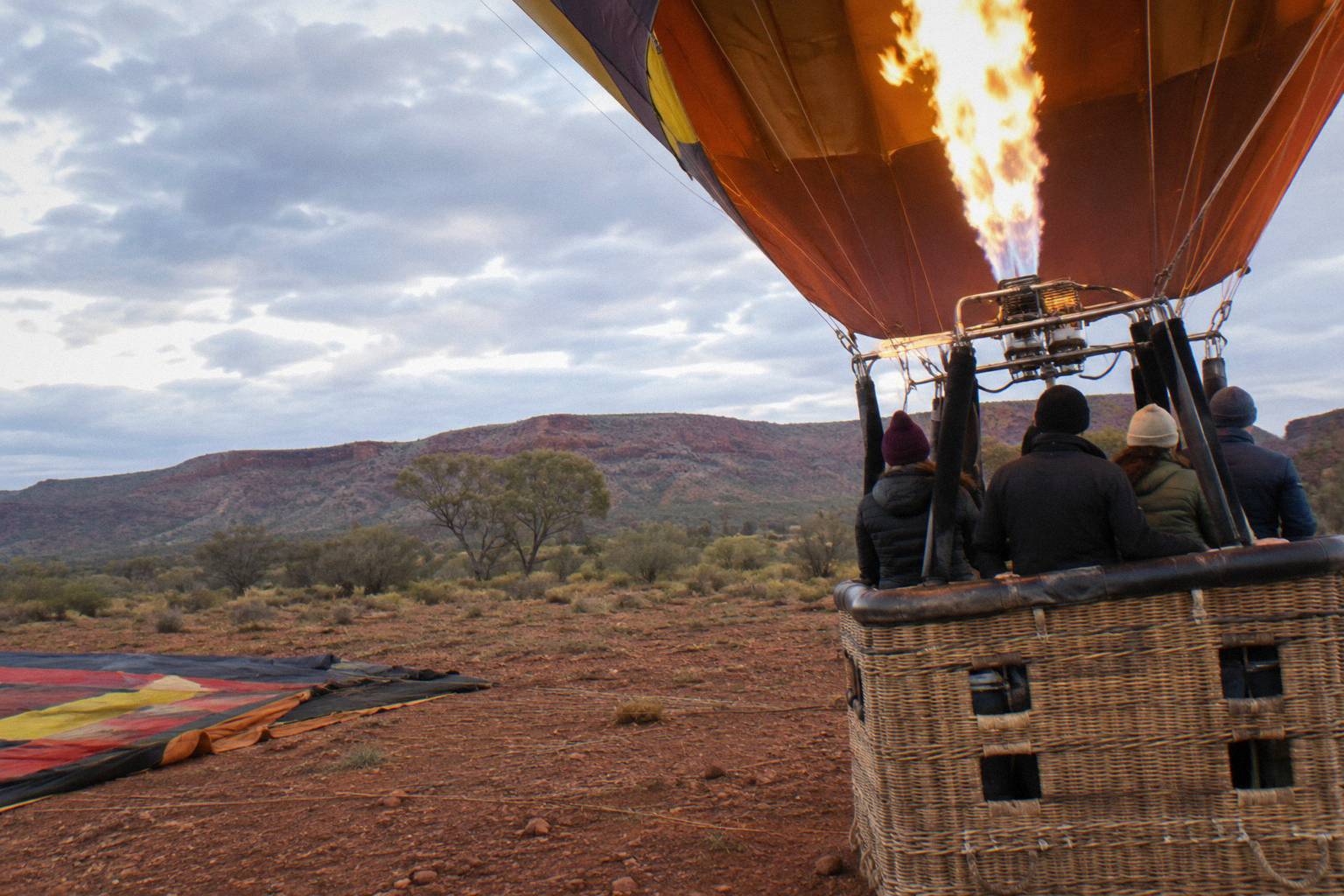
One detail from the operator's safety brief deserves repeating here because it has a documented history: no dangling jewellery or scarves at the launch site, and backpacks stay on the bus. That rule is not decorative. Outback Ballooning Pty Ltd was convicted and fined in July 2021 over the 2013 death of a passenger whose scarf became entangled in the inflation fan, a combined A$130,000 in fine, victim levy and contribution reported by NT WorkSafe. The operator's CASA regulation page{: rel="noopener"} sets out its licensing in full: a CASA Air Operator Certificate, approved maintenance organisation status, pilots holding Commercial Balloon Pilot Licences with aviation medicals and security clearances, and carriers' liability insurance.
If you want a fuller account of how the industry is regulated and what the record in Alice Springs includes, the longer piece on whether hot air ballooning is safe works through it. On the morning itself, the practical takeaway is simpler: dress so nothing loose can flap, tie back long hair, and follow the crew's instructions at the fan end of the field without exception.
The flight card above is the same Outback Ballooning departure this guide describes throughout, and the same flight appears on a second booking page under the name Early Morning Ballooning in Alice Springs, rated 4.8 there. It is one flight by one operator, not two competing products, so choose whichever listing you find and expect the same morning either way.
Will You Actually Be In The Air At Sunrise?
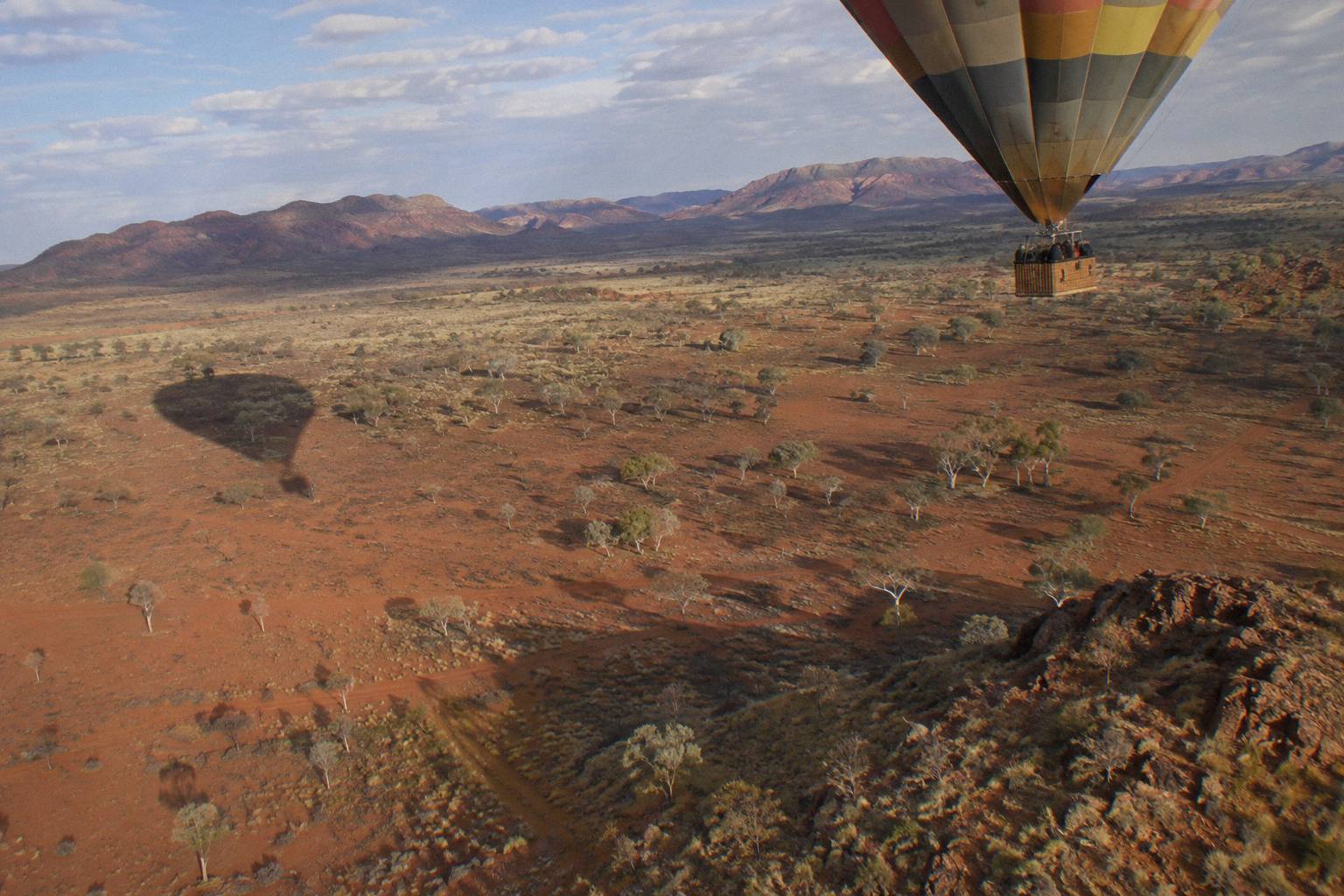
No flight is guaranteed to be in the air at sunrise, in the operator's own terms, and the balloon stays within the first 1000 ft above ground, drifting typically 10 to 20 km across the desert plain while the MacDonnell Ranges catch the early light as a backdrop rather than a flight path. What you get is a front-row seat to the desert waking up, not a ride over the mountains.
That distinction matters because it corrects the most common misconception about this flight. Outback Ballooning states plainly that it does not fly over the MacDonnell Ranges: the ranges are the scenery, lit pink and red by the rising sun on your flank, while the balloon travels over Owen Springs Cattle Station country. The operator's own description of the 30 minute flight is of floating silently above the Outback as the morning light begins to illuminate the MacDonnell Ranges, and its 60 minute wording points you toward kangaroos, spinifex grasses, mulga scrub and cattle stations below. The wildlife it names is red kangaroo, birds and wild camels.
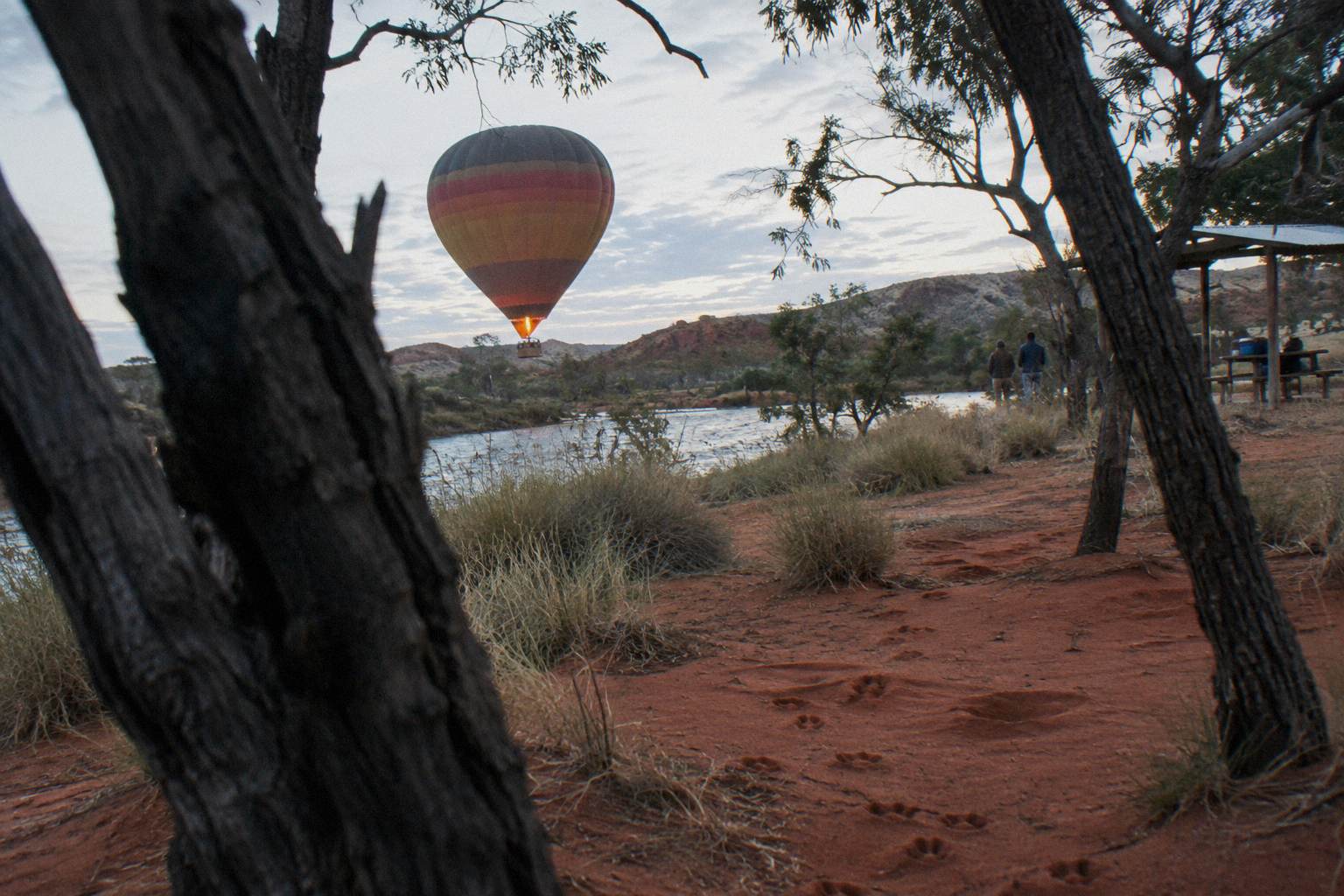
Durations are approximate, and the terms are blunt about it: there is no refund if the flight runs less than the booked 30 or 60 minutes, and a 60 minute flight cut short to 30 is charged as 30. Most passengers book the 30 minute option and find it enough, since the pre-dawn build-up and the post-landing celebration add far more time in the experience than the airborne portion alone. The hour aloft suits photographers and anyone who wants the landscape to unfold more slowly; the guide to hot air balloon photography goes into what the early light actually gives you.
The second booking page for the same flight is worth a look if you are comparing, since the two listings present the identical morning with different framing.
One more expectation to set straight: Uluru is about 450 km away and is not visible from the flight. Nobody sees it, from any altitude, on any morning. If your mental image of this ride involves the Rock on the horizon, replace it with cattle station, desert scrub and the long spine of the ranges beside you, which is a different and, in flat morning light, arguably better picture.
What Happens After Landing?
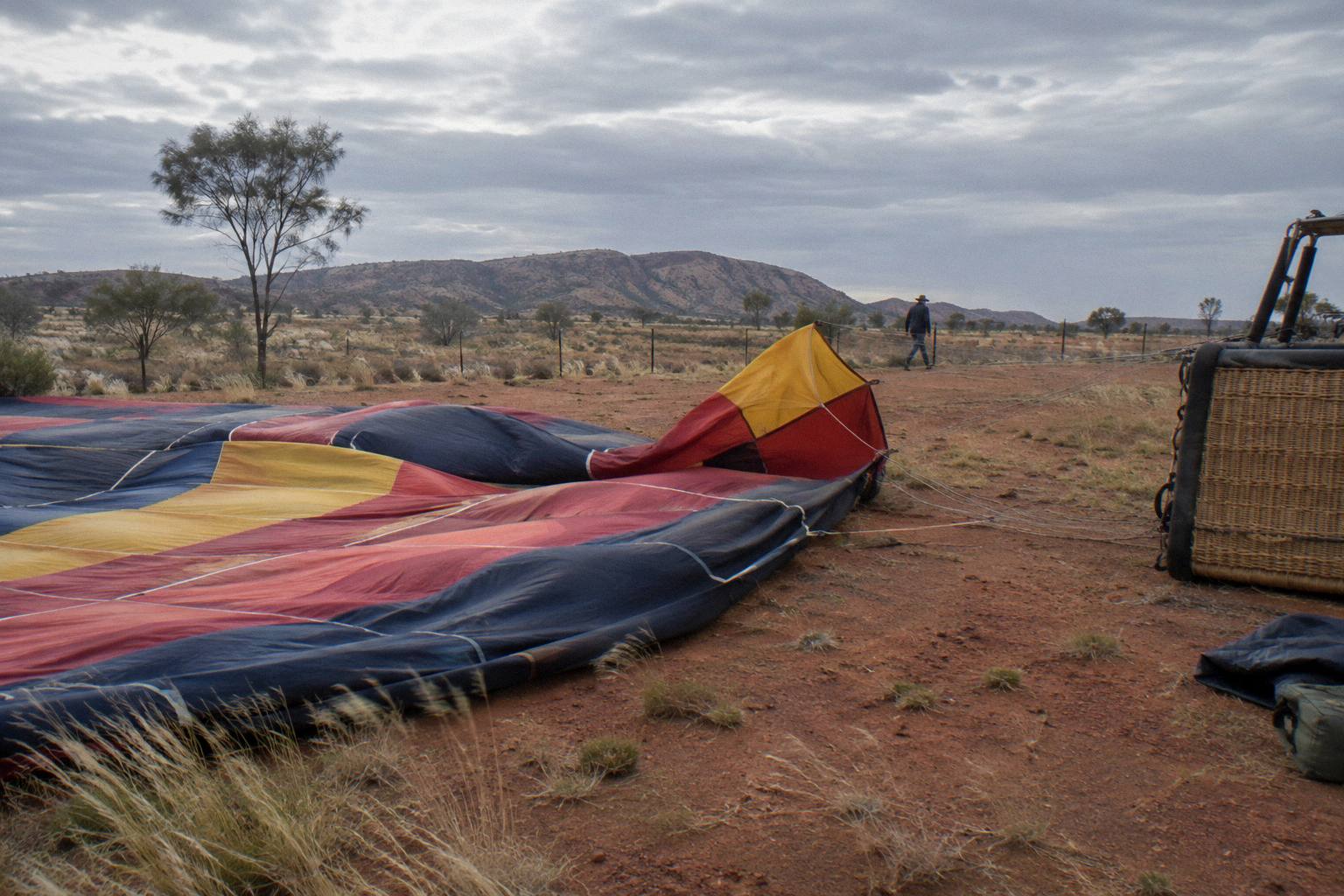
After landing there are light individually wrapped snacks, Australian sparkling wine and fruit juice, a commemorative certificate, and an open invitation to help the crew pack the balloon away before the bus returns everyone to their accommodation, roughly four hours after the pickup. Children who flew get the same celebration, and helpers of any age get a genuine workout.
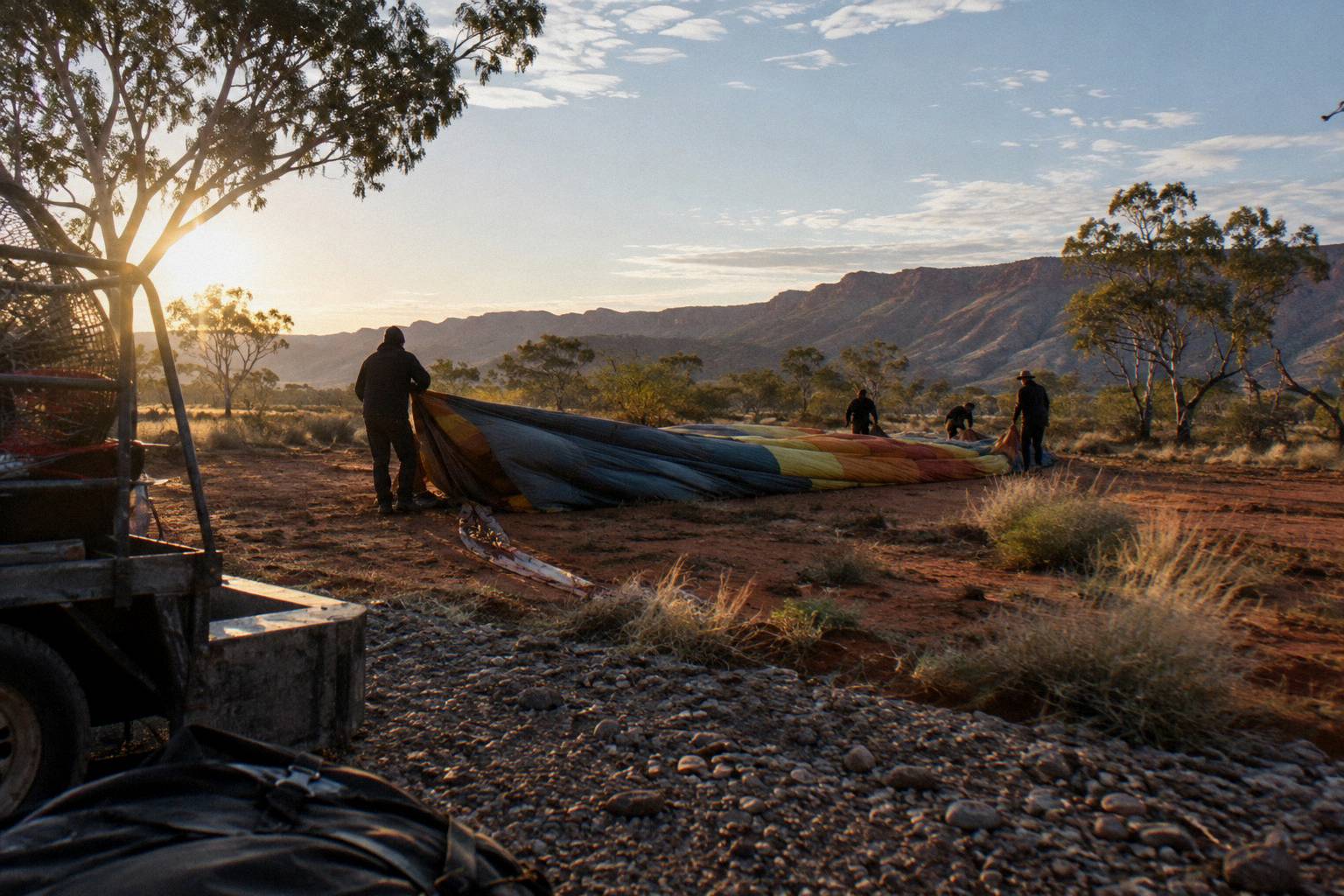
The pack-up is optional but quietly popular. Deflating a balloon, chasing the envelope across the ground and squeezing the air out of it is physical, social and strange in the best way, and it fills the wait while the crew readies the trailer. Passengers who skip it stand in the strengthening sun with a plastic cup of bubbles, which is also a perfectly good version of the morning. Either way, the certificate comes out at the end, a small printed memento that has clearly not changed design philosophy in decades.
Planning the rest of the day matters more than most visitors expect, because you will be back at your hotel within about four hours of pickup, awake since well before dawn, and facing a full Central Australian day. Some people nap through the middle hours and come alive for the evening. Others lean into the early start and book an afternoon activity while the momentum lasts. The roundup of things to do after a balloon flight in Alice Springs is built around exactly this problem.
Two of the options that pair well sit on separate days by design. The West MacDonnell Ranges Day Tour With Lunch by Wildlife Tours Australia runs about 10.5 hours from a morning departure with pickup and drop-off at selected inner-city Alice Springs points, lunch and snacks included. Its departure is early enough in the day that it cannot follow a dawn balloon flight the same morning, so the pairing works by placing it the day before or after.
If you would rather sleep in and spend the daylight on landscape rather than animals, the West MacDonnell Ranges day trip by Emu Run Experience is the other natural companion: about 9.5 hours, departing 7:45am and back around 5:30pm, with hotel pickup, a guide, Standley Chasm entry, morning tea and a bushman's lunch, rated 4.7 from 334 reviews. Note that its 7:45am departure is tight against a balloon morning that ends later in winter, so most people split these across two days rather than attempting both in one.
How Cold Will The Pre-Dawn Wait Be?
Pre-dawn temperatures in Alice Springs sit close to the Bureau's mean minimum row, which runs from about 21.6 °C in January down to about 3.9 °C in July, with the July record as low as -7.5 °C, so the difference between a summer flight and a mid-winter one is the difference between a t-shirt and a serious jacket, gloves and a beanie.
These are long-run averages from the Bureau of Meteorology's Alice Springs Airport climate statistics{: rel="noopener"}, station 015590, compiled over 85 years from 1941 to 2026. They are whole-day statistics, but the hours you will actually stand around in, before first light, track the minimum row closely, because that is when each day's coldest reading occurs. Layer accordingly.
| Month | Mean minimum C | Lowest recorded C |
|---|---|---|
| January | 21.6 | 10.0 |
| February | 20.8 | 8.5 |
| March | 17.7 | 6.1 |
| April | 12.6 | 1.4 |
| May | 8.1 | -2.7 |
| June | 4.9 | -6.0 |
| July | 3.9 | -7.5 |
| August | 5.9 | -4.1 |
| September | 10.3 | -1.0 |
| October | 14.9 | 1.3 |
| November | 17.9 | 3.5 |
| December | 20.3 | 9.3 |
The operator's clothing advice matches those numbers. It recommends warm layers about May to September, outdoor clothing that is not white, long pants, a hat and enclosed flat shoes with no high heels. Spinifex's version says a light jacket from April to October and very warm clothing in mid-winter. Neither is being fussy: standing still in the dark at 4 °C with a light desert wind is genuinely cold, and the burner only warms you in bursts once you are airborne. The full checklist, including the no-scarves rule and why you should ask the operator directly about camera and drone rules since its pages do not state a policy, lives in the guide on what to wear for a hot air balloon flight.
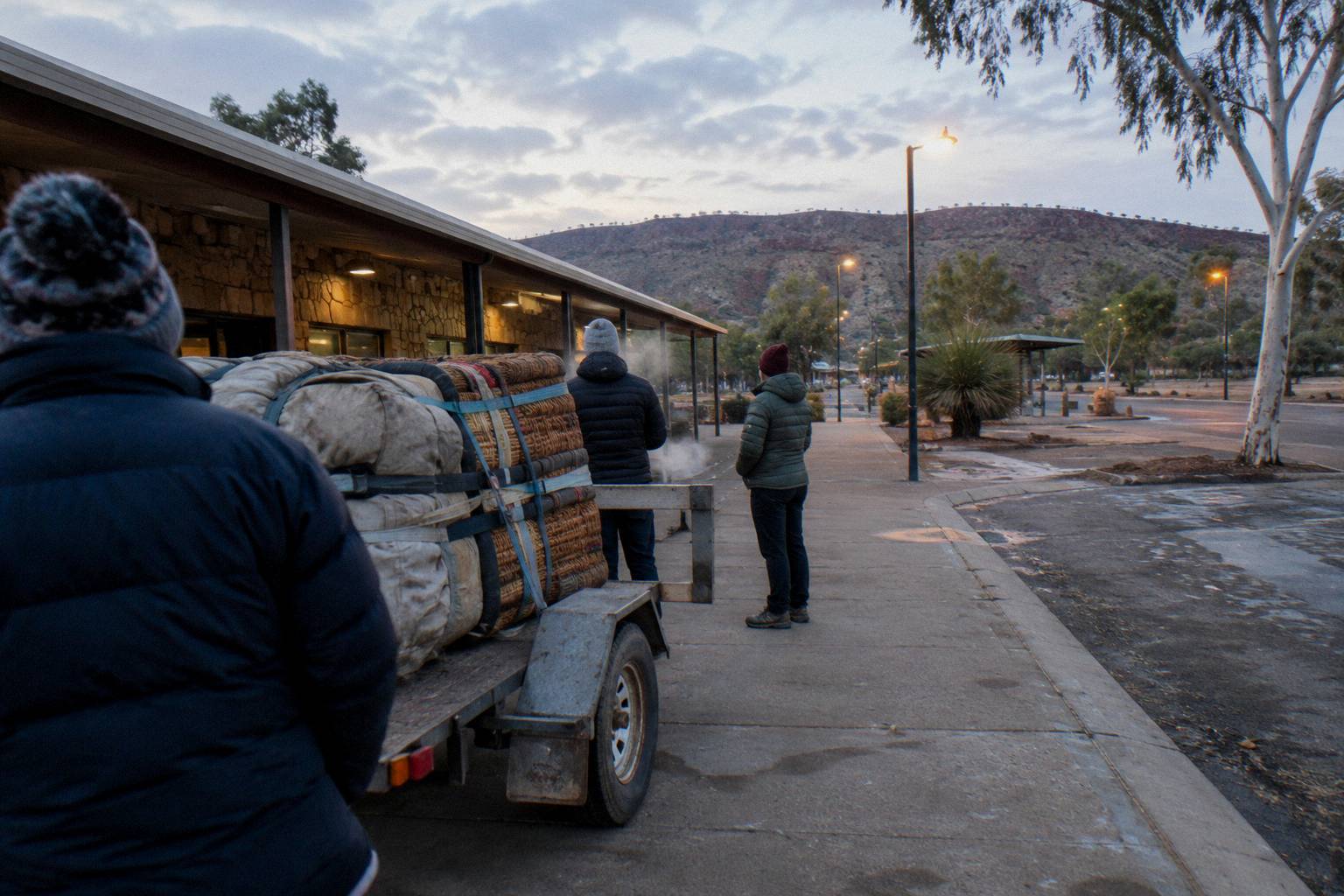
The same cold snap is worth budgeting for at the other end of the morning. After landing you may be standing in open country for 45 minutes or more during pack-up, by which time the sun is up but the desert warms slowly in winter. A layer you can shed and carry, rather than one thick coat, solves both ends of the morning neatly.
What If The Weather Turns?
If the pilot cancels for weather, the pilot's decision is final and you either rebook another day or take a full refund of anything prepaid, and a flight can also be cancelled for minimum numbers, so keep one spare morning free if your itinerary allows. Cancelling yourself is free more than 24 hours ahead; inside 24 hours or a no-show forfeits the full fare.
The 24-hour line is the one to diary. The operator's terms allow changes and cancellations at no fee up to 24 hours before the flight, after which the full fare is forfeited, and they even reserve the right to treat cold feet at the launch field as a forfeiture. Payment of the balance is taken directly on the morning of the flight, with a card securing the booking in the meantime, which is why the operator has your details but not yet most of your money if the sky misbehaves.
Rain is less often the problem in Central Australia than wind, but the averages give a rough sense of the odds. Alice Springs averages 43.1 rain days a year, and the wettest months by rain-day count are the summer half of the year: December averages 5.9 rain days and November 5.6, while August averages just 1.8. Wind normals are not in the published research, so no month can honestly be sold as the calm one.
| Month | Mean rainfall mm | Mean days of rain |
|---|---|---|
| January | 41.8 | 4.9 |
| February | 42.4 | 4.6 |
| March | 34.4 | 3.5 |
| April | 16.5 | 2.1 |
| May | 18.4 | 2.9 |
| June | 12.7 | 2.6 |
| July | 14.0 | 2.5 |
| August | 8.4 | 1.8 |
| September | 8.8 | 2.4 |
| October | 19.6 | 4.3 |
| November | 32.2 | 5.6 |
| December | 37.4 | 5.9 |
The deeper guide to balloon flight cancellations and weather covers the rebooking mechanics, including what changes if you booked through an agent rather than direct.
One practical habit closes the risk almost entirely: book your flight for your first morning in Alice Springs, not your last. If the pilot stands the morning down, you still have remaining days to rebook. Travellers who leave the balloon to their final morning and lose it to wind have no second chance, and every season produces a few of them at the launch field gate, watching an empty sky.
Common Questions About Sunrise Balloon Flights
What Time Is Pickup For A Sunrise Balloon Flight In Alice Springs?
Pickup is approximately one hour before first light, which works out to about 4:15am in summer and about 5:45am in mid-winter. The exact time is confirmed when you book and again the day before the flight, and the whole trip runs about four hours door to door.
Are You Guaranteed To Be In The Air At Sunrise?
No. The operator's terms state plainly that it does not guarantee passengers will be in the air at sunrise. Flights are timed to make the most of the dawn light, but launch timing, wind and conditions on the morning decide the final sequence.
Where Does The Balloon Launch From?
The launch area is about 15 km south of Alice Springs, adjacent to the MacDonnell Ranges, over historic Owen Springs Cattle Station. The exact launch field is chosen on the morning according to wind, and its location is not published in advance.
How Long Is The Flight And The Whole Morning?
The flight is selectable as 30 or 60 minutes, and the whole trip is about 4 hours from pickup, including transfers, inflation, the flight, the after-landing celebration with sparkling wine and juice, and pack-up. Durations are approximate and no refund applies if the flight runs short.
How Cold Is It Before Dawn?
Pre-dawn temperatures track the mean minimum, from about 21.6 °C in January down to about 3.9 °C in July, with the July record at -7.5 °C. The operator recommends warm layers from about May to September, plus a hat, long pants and enclosed flat shoes year-round.
What If The Flight Is Cancelled For Weather?
The pilot's decision is final. You can rebook another day or take a full refund of anything prepaid. If you cancel yourself, there is no fee more than 24 hours before the flight; inside 24 hours or a no-show forfeits the full fare.