Hot Air Balloon Photography: Settings And Tips For A Dawn Flight
A dawn balloon flight over the country south of Alice Springs is one of inland Australia's most photographed half hours, and the light that makes it worth photographing also makes it tricky. Here is what the operator states, what the sky actually does month by month, and how to plan around both.
Short answer
Hot air balloon photography at Alice Springs works best when you plan around first light, not sunrise: pickup runs about 4:15am in summer and about 5:45am in mid-winter. The launch is about 15 km south of town over Owen Springs Cattle Station, with the MacDonnell Ranges as a lit backdrop rather than the flight path.
What Can You Actually Photograph From An Alice Springs Balloon?
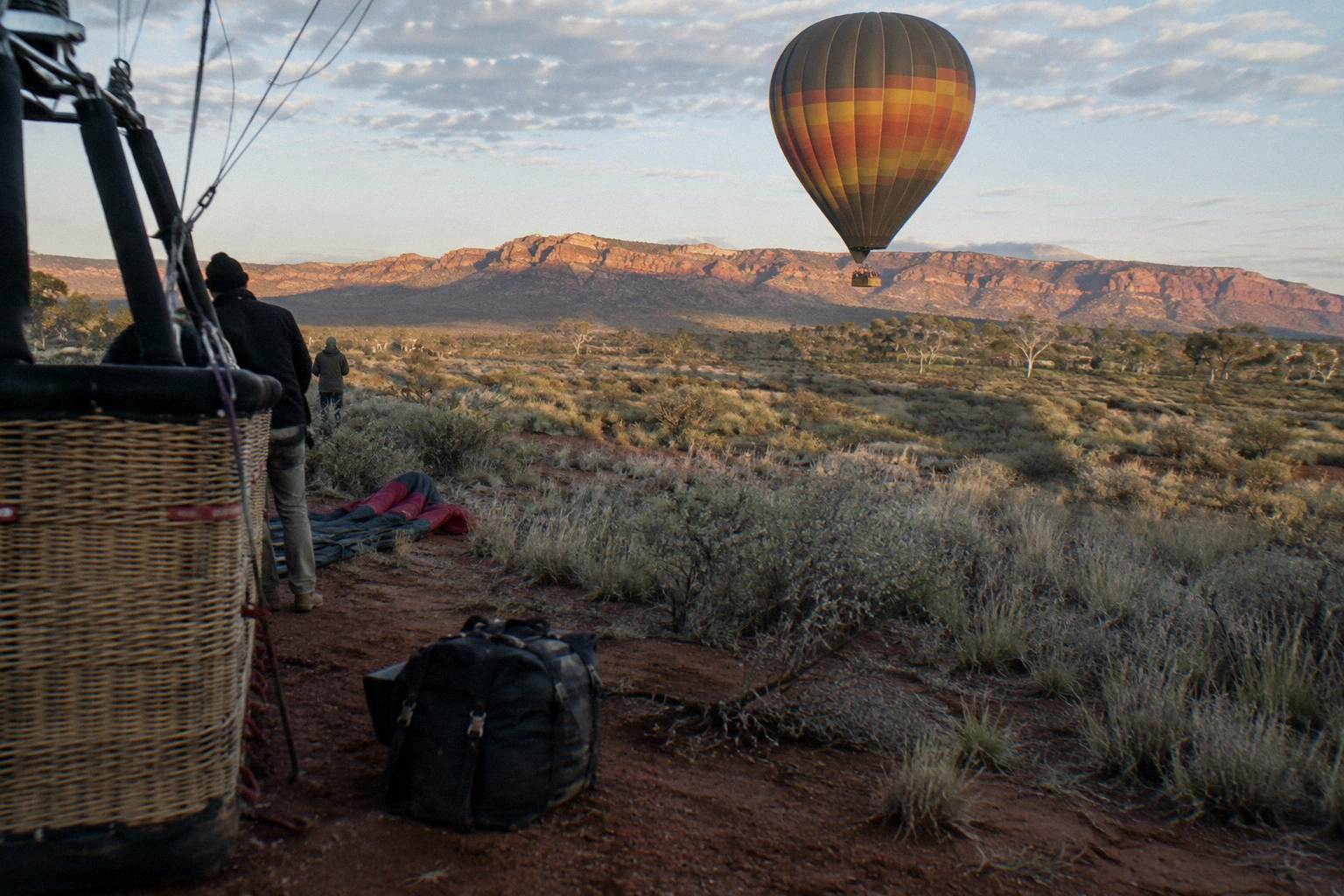
The photographic subject is the country between the launch site and the landing: the launch happens about 15 km south of Alice Springs, adjacent to the MacDonnell Ranges, over historic Owen Springs Cattle Station, with a typical flight distance of 10 to 20 km. The Ranges are the backdrop, lit by early light, not the flight path, and Uluru is about 450 km away and not visible.
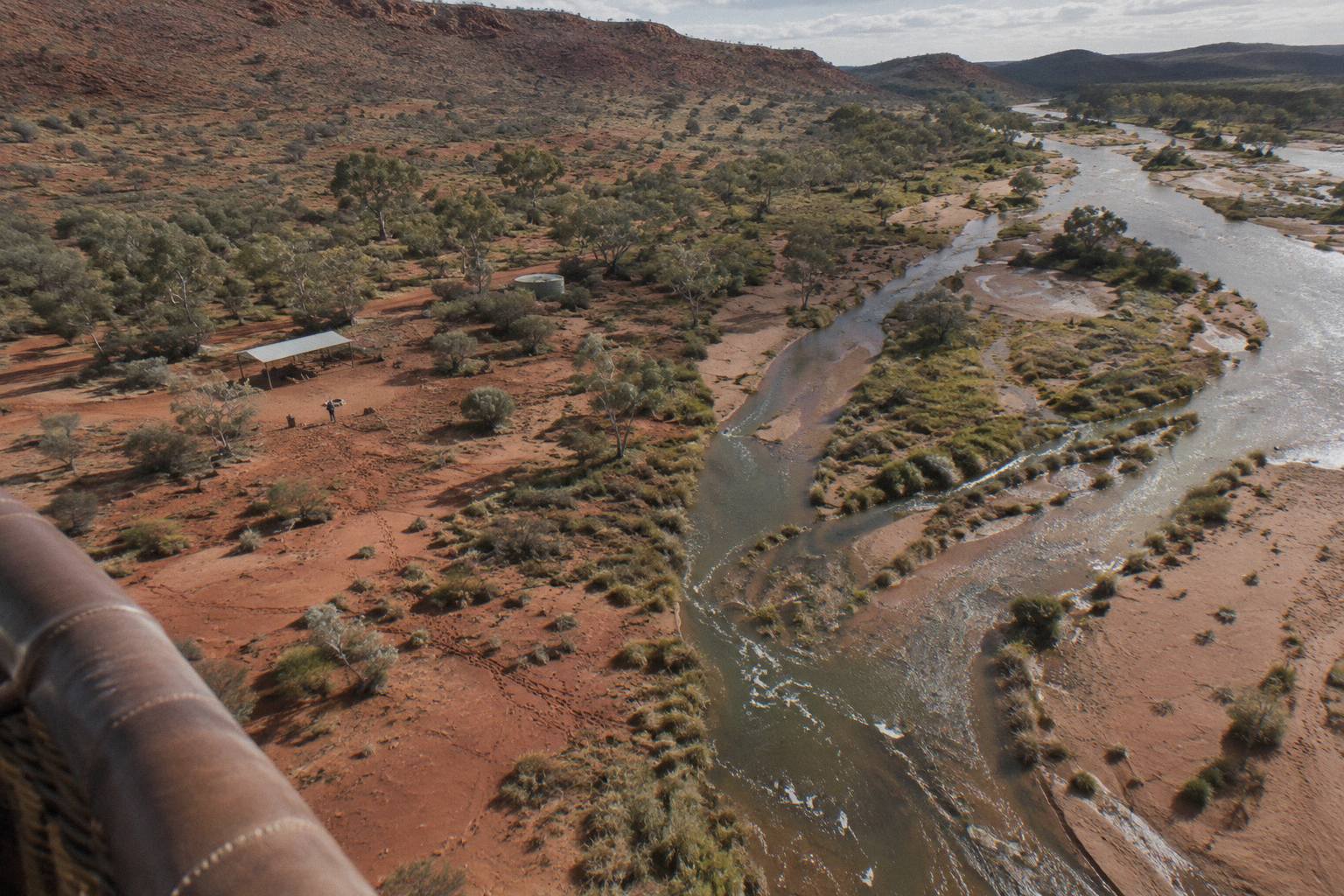
That framing matters more than any camera setting. Balloons fly with the wind, so what passes beneath you is grazing country, spinifex grasses, mulga scrub and cattle stations, not a scenic corridor anyone can promise in advance. Outback Ballooning's own wording on the shorter flight is "floating silently above the Outback as the morning light begins to illuminate the MacDonnell Ranges", and on the longer flight it points passengers toward "kangaroos, spinifex grasses, mulga scrub and cattle stations". Wildlife the operator names is red kangaroo, birds and wild camels, all of which appear as shapes and shadows at dawn rather than as close-ups.
Flights stay within the first 1000 ft above ground, which is unusually low compared with many commercial balloon operations elsewhere. For a photographer that is a gift: texture in the scrub resolves, kangaroo trails read as lines across the dirt, and the long shadows of early light have real direction. It also means your foreground changes constantly, so the useful habit is shooting in short bursts as the terrain turns, rather than waiting for one perfect composition that may not arrive.
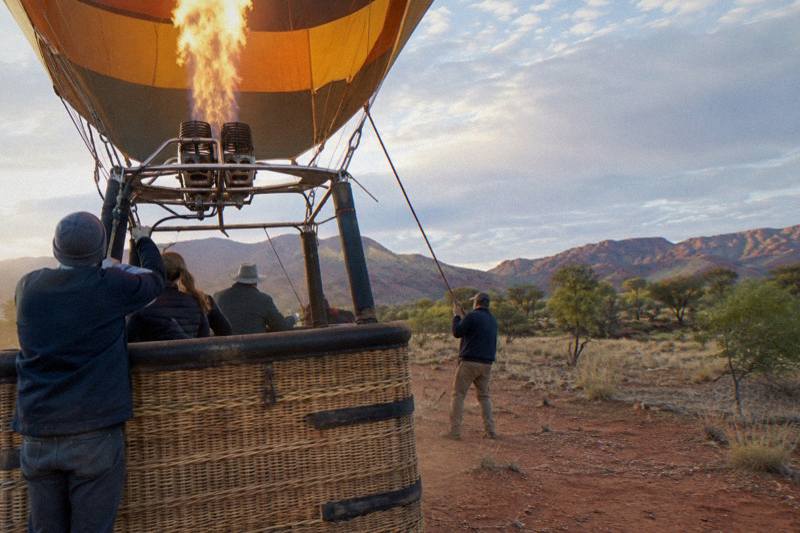
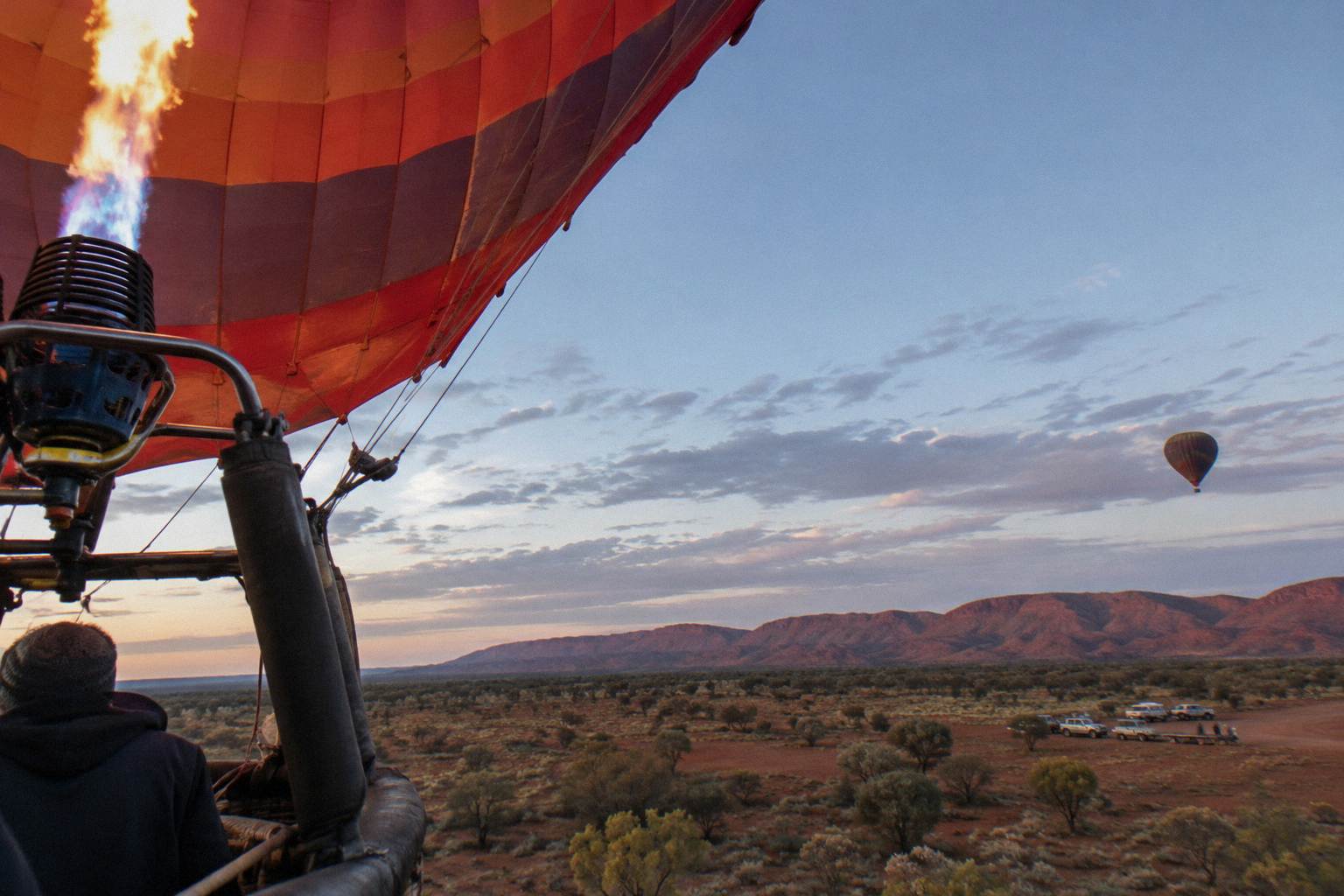
The other subject, of course, is the balloon itself. The envelope above you catches the first colour of the day, and the burner flame against a dark sky is the single most dramatic frame most passengers bring home. If you want the fuller picture of how a flight unfolds from pickup to pack-up, the guide to what a sunrise balloon flight involves covers the timeline in detail.
One expectation to set early: the operator's terms state plainly that flights are not guaranteed to be in the air at sunrise. You will be at the launch field before first light, and the airtime around it is where the best light lives, but "in the basket at the exact moment the sun clears the horizon" is not something any Alice Springs operator promises.
When Is The Light Best, Month By Month?
Pickup is approximately one hour before first light, about 4:15am in summer and about 5:45am in mid-winter, and the exact time is confirmed on booking and again the day before. That means your photographic window is set by the calendar: a July flight starts in the dark of a 7:16am sunrise, while a December flight is airborne before a 5:42am one.
The table below is approximate, computed from the NOAA solar position calculation for Alice Springs (latitude -23.698, longitude 133.883, ACST which is UTC+9:30 with no daylight saving in the NT), for the 15th of each month, accurate to about 2 minutes. It is not an official Bureau of Meteorology table, and the operator's own pickup anchors are the numbers to trust for your booking.
| Month | Sunrise (ACST) | First light (approx.) |
|---|---|---|
| Jan | 6:00 | 5:35 |
| Feb | 6:22 | 5:58 |
| Mar | 6:36 | 6:14 |
| Apr | 6:48 | 6:25 |
| May | 7:01 | 6:37 |
| Jun | 7:14 | 6:49 |
| Jul | 7:16 | 6:52 |
| Aug | 7:01 | 6:38 |
| Sep | 6:32 | 6:09 |
| Oct | 6:02 | 5:39 |
| Nov | 5:42 | 5:18 |
| Dec | 5:42 | 5:17 |
Read the table as a planning tool, not a prediction. In the June to August shoulder, the gap between first light and sunrise is 25 to 32 minutes, which suits a slower, more deliberate start: you stand at the launch field in near-dark, watch the envelope inflate by burner flame, and climb as the sky brightens. In November through January the same sequence compresses, first light sits barely 25 minutes ahead of sunrise and both arrive before 6:00am, so the inflation and launch themselves happen in the richest part of the light. Photographers who love burning-blue twilight generally prefer winter; those who want colour in the sky while already airborne lean summer.
Weather, not the calendar, has the final word. The operator says it flies an average of 250 to 300 days a year, its own claim, and the pilot's decision on the morning is final. If you are travelling specifically for photographs, build a spare morning into the itinerary and treat the first attempt as provisional. The guide to balloon flight cancellations and weather explains the rebooking and refund mechanics.
What Are The Camera, Phone And Drone Rules?
Here is the honest answer: the research on this operator states no camera policy at all. Whether cameras, phones or drones are allowed or restricted is not stated on any fetched official page, so ask the operator directly when you book. Do not assume a drone is welcome, and do not assume a large camera bag is either.
That gap in the published terms is unusual in an industry where operators often specify equipment, and it cuts both ways. Nothing in the operator's material prohibits a phone or a camera, and passengers photograph these flights constantly; the 4.9 rating from 288 reviews on the main booking page sits alongside plenty of guest images. Equally, nothing grants you a strap, a case or floor space in a basket with up to 24 people in it.
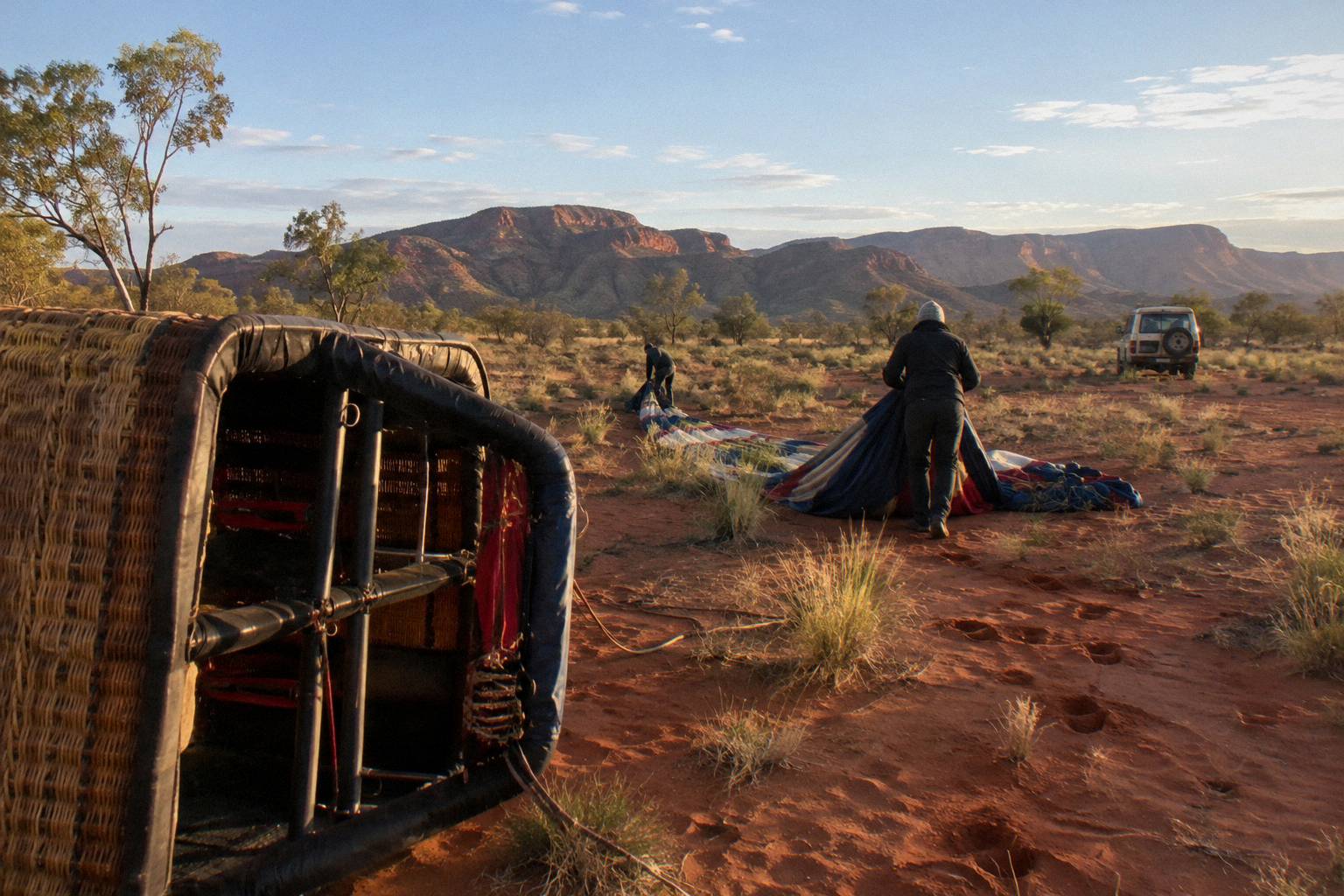
What the operator does state, in its clothing and launch-field guidance, shapes your gear choices more than any rule: backpacks stay on the bus, and no dangling jewellery or scarves at the launch site. A camera strap left flapping in a basket is in the same category as a scarf, and the operator's reasons for the scarf rule are serious ones. NT WorkSafe records that Outback Ballooning Pty Ltd was convicted and fined in July 2021, a combined A$130,000, over the 2013 death of a passenger whose scarf became entangled in the inflation fan. Treat anything loose around your body at the launch field as a hazard, full stop.
Practically, that points photographers toward a minimal kit: one body, one lens, nothing that needs a bag at your feet, and batteries and a spare card in zippered pockets rather than loose. If you want to bring more than that, email the operator before booking and get the answer in writing. The safety and licensing background is on the operator's own page about being CASA regulated, and the broader question of whether hot air ballooning is safe is covered in its own guide.
How Does The Basket Shape What You Can Shoot?
Baskets are about 1.2 m high with compartments about 60 cm wide, carrying 2 to 4 up to 24 people per balloon by the operator's figures, while the other local brand quotes 4 to 24 or up to 16 depending on the source, so the operators give different group sizes. You Must climb in unaided, using foot holes, and stand throughout the flight.
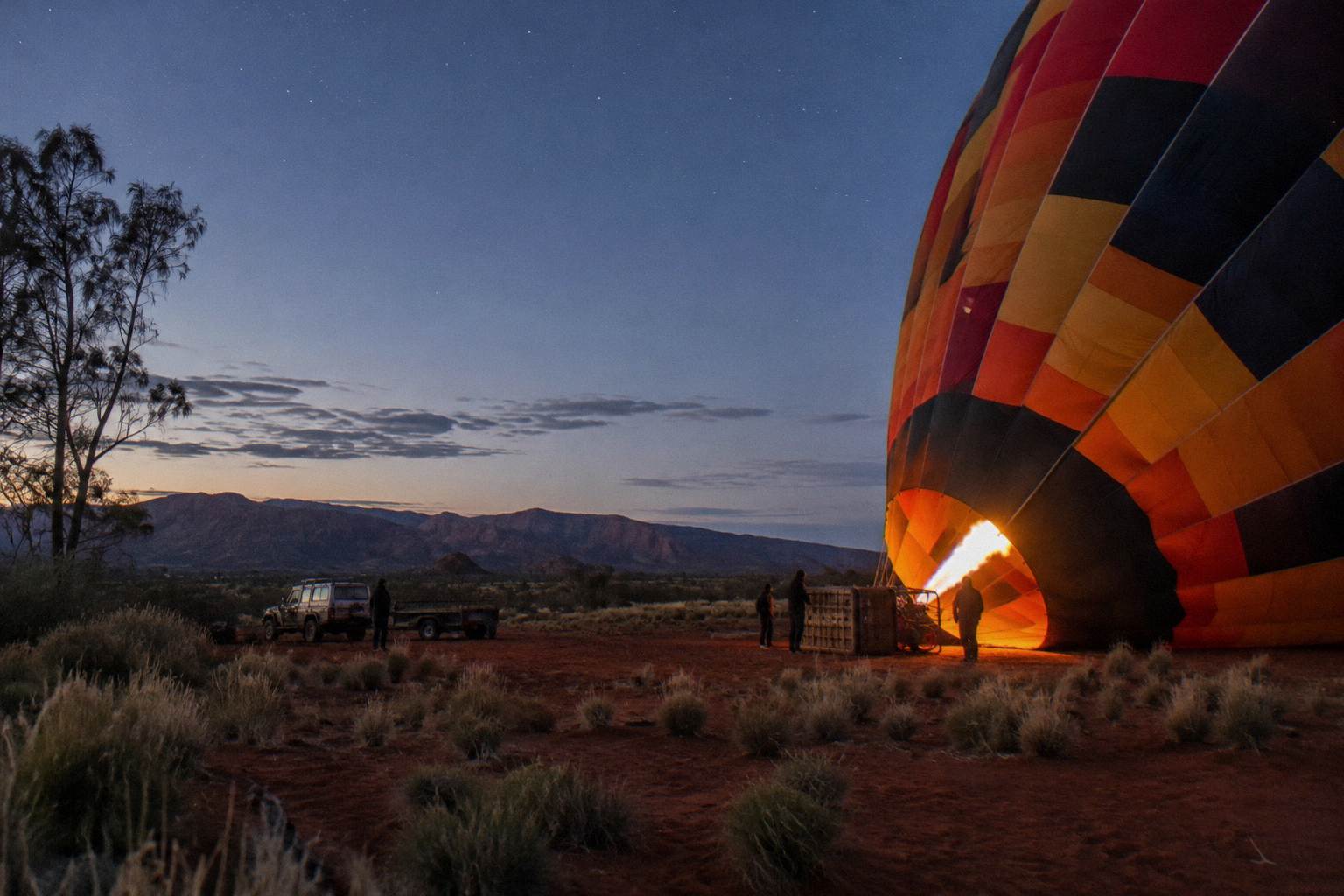
Every one of those facts constrains a photographer. A 1.2 m wall means your sightline over the edge is fixed by your own height; there is no stepping back for a wider view, and no crouching for a lower one. Compartments about 60 cm wide mean your personal space is roughly a phone booth shared with one to three other passengers, all of whom want the same edge at the same moment. Shooting over someone's shoulder is normal on these flights, and the people beside you are often the better subject anyway: faces lit by burner flame are the classic frame.
Climbing in unaided is the part photographers underestimate. Both hands go to the basket rail and the foot holes, which is why the keep-hands-free advice in the next section matters so much. If you cannot comfortably climb a 1.2 m wall with a camera secured to your body, that is a real problem to solve before the morning, not at the field. The question of how many people fit in a hot air balloon is worth reading alongside this, because basket crowding is the single biggest difference between a photography flight and a sightseeing one.
The same flight is listed on a second booking page under the name Early Morning Ballooning in Alice Springs, rated 4.8 on that page, and it is the identical Outback Ballooning experience, not a different operator or a different basket. Whichever listing you book through, the group size on your morning will be whatever the loading allows, and the operator's terms permit flights to be cancelled for minimum numbers too.
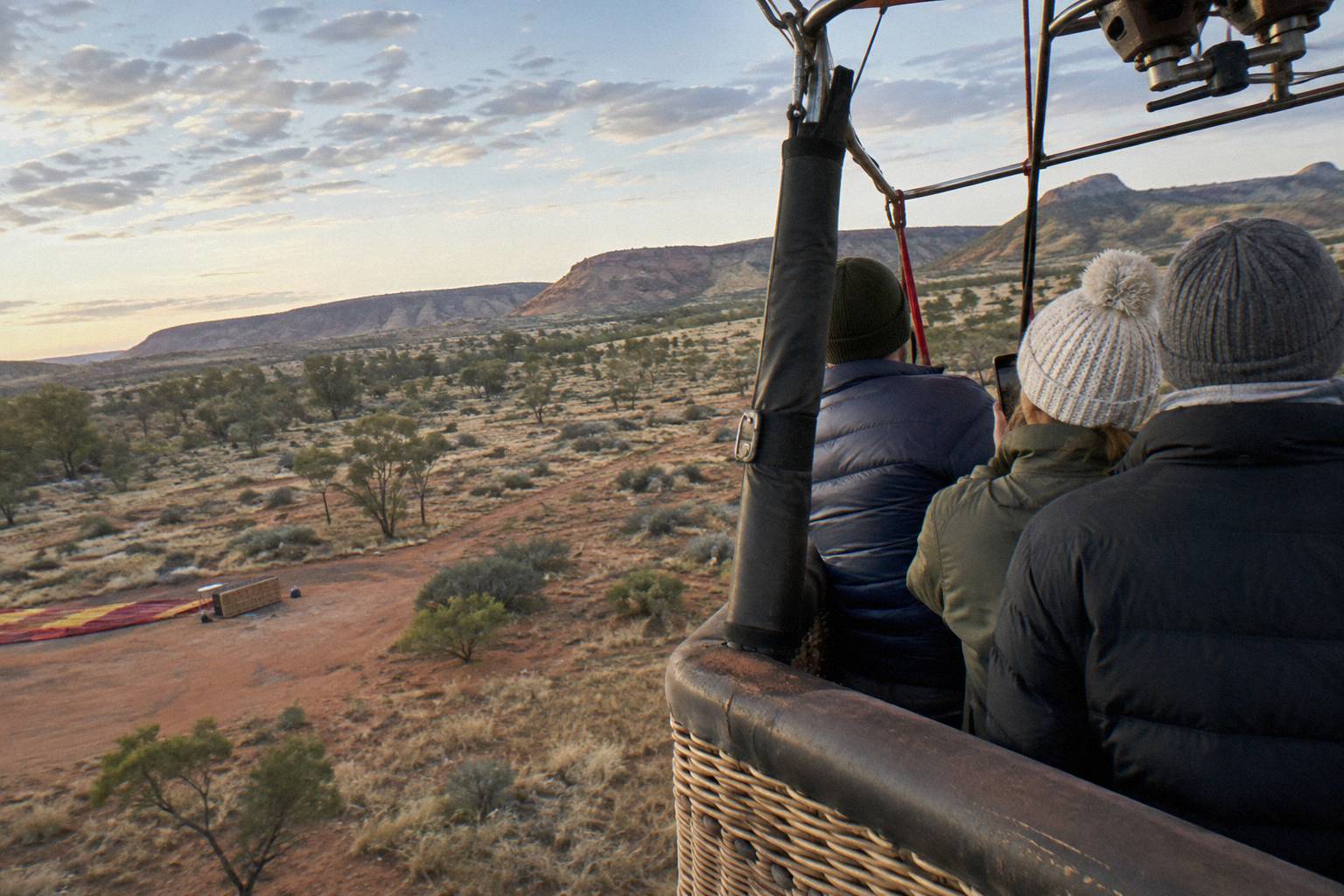
These numbers shape your gear as much as your framing. Your bag rides on the bus while you fly, so one camera body and one or two lenses in pockets or on a harness is the practical limit, and a tripod is pointless in a 60 cm compartment. Carry spare batteries in an inside pocket, since cold drains them quickly on mid-winter mornings, and pick gloves you can still work your controls with.
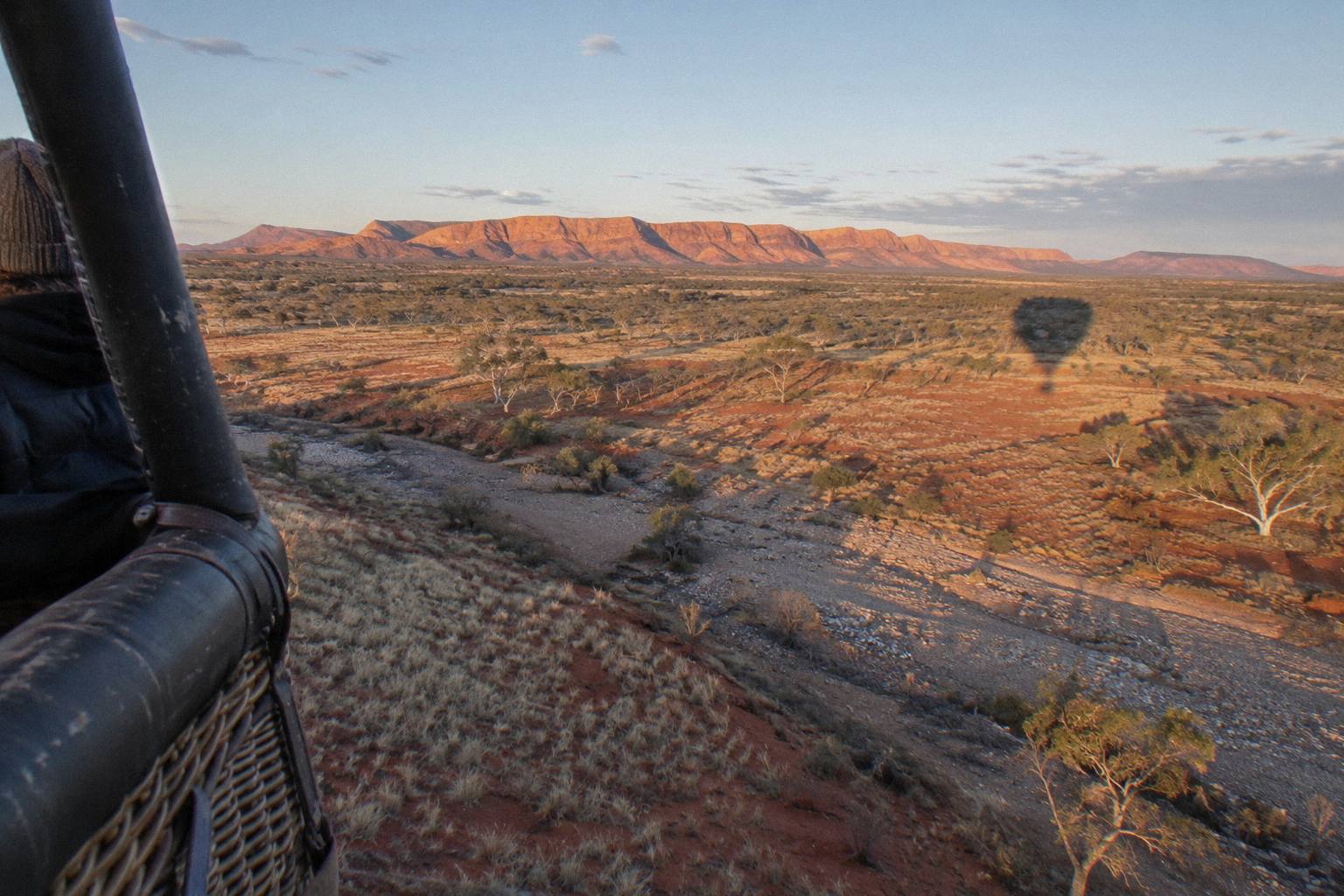
The rim is your only support. Brace your forearms on the 1.2 m edge between frames, and keep shutter speeds up to absorb the small movements of a shared, standing platform. For landscapes, the flight holds below 1000 ft and drifts 10 to 20 km over Owen Springs Cattle Station, so the ground perspective changes constantly; shoot early while the sun is low and shadows across the country are long.
What Should A Photographer Wear And Carry?
The operator's clothing list is: outdoor clothing (not white), long pants, a hat, and enclosed flat shoes with no high heels; warm layers about May to September; and a light jacket April to October with very warm clothing in mid-winter by the other local brand's advice. No dangling jewellery or scarves at the launch site, and backpacks stay on the bus.
The operator gives no reason for the "not white" instruction, and none should be invented here; the fact is simply that the instruction exists, and dust, burner soot and the red soil make its practical case for it. For a photographer, the clothing list doubles as a gear list. Every pocket you can zip is storage; everything that hangs is a hazard. A hat with a cord is worth checking against the no-dangling rule before you rely on it. The wider set of guides lives on Alice Springs Hot Air Balloon.
The layering advice maps directly onto the temperature data. Bureau of Meteorology averages for Alice Springs Airport (station 015590, 1941 to 2026) put the July mean minimum at 3.9 °C, with June nearly as cold, and the lowest recorded July temperature at -7.5 °C, and pre-dawn temperatures sit close to that minimum row because these are whole-day statistics. A winter launch means standing in the dark for close to an hour at temperatures near or below 5 °C, with fingers that need to work camera controls. The mean minimum in January, by contrast, is a mild 21.6 °C. The full cold-weather picture, including what the numbers mean for comfort rather than photography, is in will you be cold on a hot air balloon ride, and the month-by-month clothing detail is in the guide on what to wear for a hot air balloon flight.
| Season | Mean minimum at dawn | Operator clothing guidance | Photographer's practical read |
|---|---|---|---|
| Dec to Feb | 17.9 to 21.6 °C | Standard outdoor kit | Light gloves optional; dawn is mild |
| Mar, Nov | 17.7 to 17.9 °C | Standard outdoor kit | Comfortable; layers for standing still |
| Apr, Oct | 12.6 to 14.9 °C | Light jacket range | Thin gloves worth packing |
| May to Sep | 3.9 to 10.3 °C | Warm layers; very warm in mid-winter | Warm gloves that still work controls; spare battery kept warm |
Batteries deserve their own sentence: cold drains them, and a battery that was full at the hotel can read low over the scrub. A spare kept in an inside pocket, warm against you, is the cheapest insurance on the flight.
What Are The Best Photo Moments Before And After The Flight?
The whole trip runs about 4 hours from pickup, and the photographic highlights bracket the airtime: a dark pre-dawn drive, the envelope inflating under burner flame, the flight itself, then after landing light individually wrapped snacks, Australian sparkling wine and fruit juice, a commemorative certificate, and optional help packing up the balloon.
The inflation is arguably the best photography of the morning, and it is the part people sleep through by arriving mentally unprepared. The fan-driven cold inflation happens in near-darkness, then the burner turns the envelope into a lantern the size of a building. Guests stand well back, so a longer view is usually available here even though it is not in the basket. The no-scarves, no-dangling rule applies most strictly at this moment, for the reason the NT WorkSafe record makes plain.
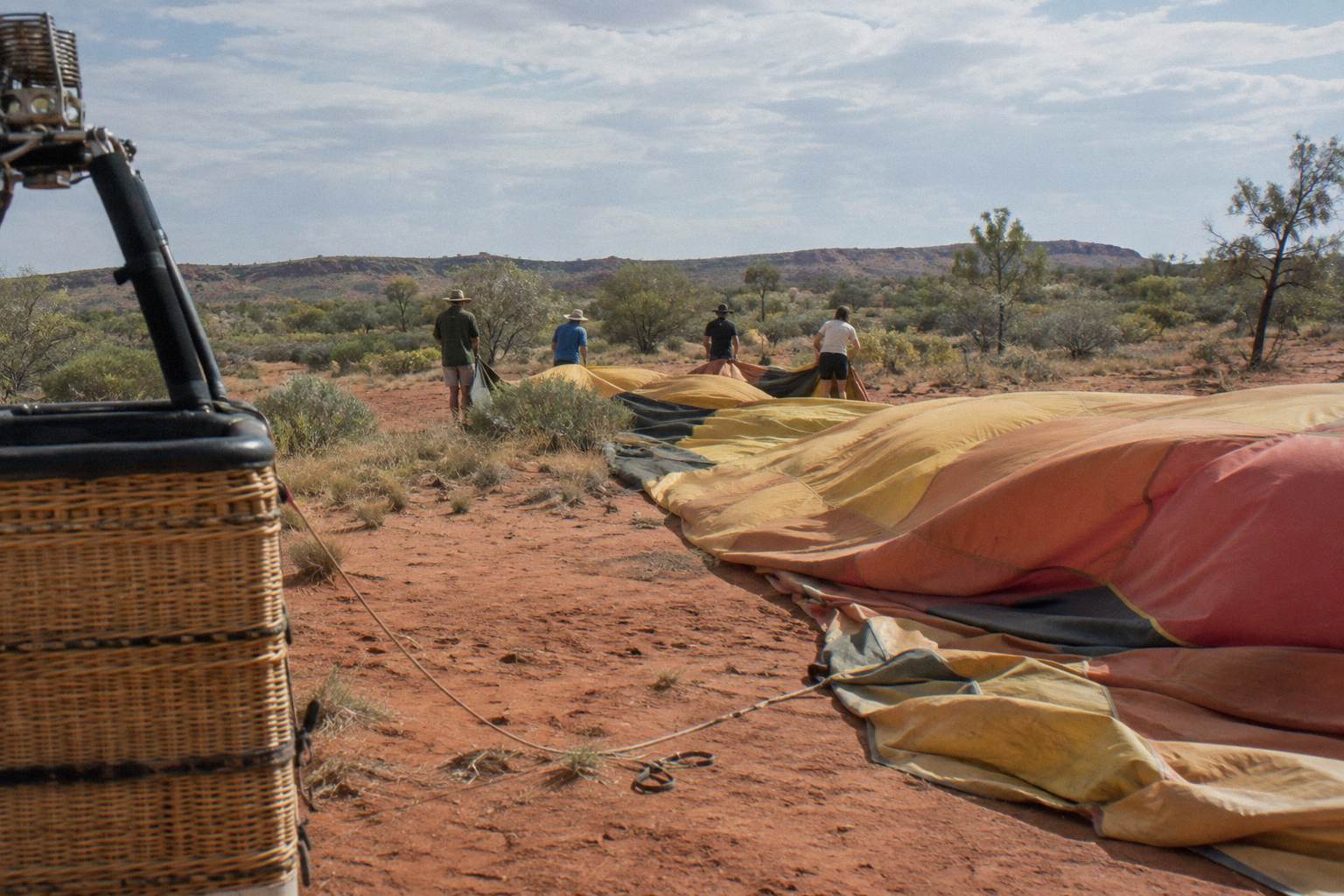
Landing and pack-up are the second underused window. The balloon settling onto the scrub, the crew rolling the envelope, and passengers invited to help pack up give a documentary sequence that most albums skip. The ceremony afterwards, sparkling wine in hand with the deflated envelope behind you, is the shot your certificate ceremony will be measured against. For the flight itself, the timing realities, including that sunrise-in-the-air is not guaranteed, are laid out in the guide to how long hot air balloon rides usually last, because durations are approximate and no refund applies if a flight runs under its nominal 30 or 60 minutes.
What Should You Photograph With The Rest Of The Day?
The flight ends early enough that the same day can carry a second photographic subject: the West MacDonnell Ranges day trip runs about 9.5 hours with a 7:45 am departure and returns about 5:30 pm with hotel pickup, while the West MacDonnell Ranges Day Tour With Lunch from Wildlife Tours Australia runs about 10.5 hours and departs in the morning, so it belongs on a separate day.
This is the decision logic that turns a thin photography morning into a full day of images. The ranges you saw lit from a distance at dawn become, on the Emu Run Experience trip, a corridor of chasms and gaps with the sun climbing through them, rated 4.7 from 334 reviews and including a guide, Standley Chasm entry, morning tea and a bushman's lunch. Remember the direction of the relationship: the balloon does not fly over the MacDonnell Ranges, so the day trip is your only way to photograph them up close. The overlap between the two is covered in the guide to West MacDonnell Ranges tours with a balloon flight.
The West MacDonnell Ranges Day Tour With Lunch, run by Wildlife Tours Australia, does a different job: a full-day, air-conditioned mini-coach trip with stops at Simpsons Gap, Standley Chasm, Ellery Creek Big Hole, the Ochre Pits, Glen Helen and Ormiston Gorge, guided bush walks of 3-4 km (moderate fitness needed), lunch, snacks and Standley Chasm entry included, and pickup from selected inner-city Alice Springs points. A dawn balloon, a midday ranges trip and this full-day coach cannot all share one day, but balloon plus the ranges trip fits easily and the coach suits the day before or after, and the broader menu is in the guide to things to do after a balloon flight in Alice Springs.
| Option | Length | Timing | Photographic strength |
|---|---|---|---|
| Balloon flight | 30 or 60 min selectable, about 4 hrs door to door | Pickup about 1 hr before first light | Twisted terrain, low light, the balloon itself |
| West MacDonnell day trip | About 9.5 hrs | 7:45 am to about 5:30 pm | Chasms and range walls through midday sun |
| West MacDonnell Ranges Day Tour With Lunch | About 10.5 hrs | Morning departure, suits a separate day | Gorge walls and chasm light through the day |
How Do You Book A Photography-First Flight?
The featured flight on this site is the Outback Ballooning dawn experience, booked as a 30 or 60 minute flight, with the operator's published fares at A$380 adult and A$340 child for 30 minutes and A$450 adult and A$405 child for 60 minutes, child fares covering ages 6 to 14, and return transfers from most Alice Springs accommodation plus light refreshments included.
Fares are as the operator lists them and can change, so check the booking page rather than any secondhand figure, since even the listed price can differ from one visit to the next. For a photographer choosing between the two durations, the decision is about time in the changing light rather than distance: both fly the same country, and a 60 minute flight simply keeps you in it longer, with the operator pointing to kangaroos, spinifex and cattle stations on that version.
Age and body limits matter if you are planning for a family shoot: minimum age is recommended at 6 years, ages 3 to 5 are accepted on an individual basis but not recommended, and the main booking page says age 6+ with an adult. There is no weight limit as such, though passenger weights are collected and passengers over 110 kg receive an extra safety email; pregnancy beyond 12 weeks is not flown. Those edges, including the climb-in requirement, are detailed in the guides on the hot air balloon age limit and the hot air balloon weight limit.
Cancellation terms are photographer-friendly in one specific way: free cancellation more than 24 hours before, with the balance paid directly on the morning of the flight and a card securing the booking. That means a weather-risky booking costs you nothing to hold while you watch the forecast, though cancelling inside 24 hours, or getting cold feet at the launch field, forfeits the full fare. When you are ready, you can check availability on the booking page, and the planning essentials for the whole morning are in the guide to first hot air balloon flight tips.
Common Questions About Hot Air Balloon Photography
Are There Rules About Cameras, Phones Or Drones On The Flight?
The operator does not state a camera, phone or drone policy on its published pages, so ask directly when booking. Backpacks stay on the bus and no dangling jewellery or scarves are allowed at the launch site, which implies keeping gear minimal and secured to your body.
When Is The Light Best For Hot Air Balloon Photography In Alice Springs?
Pickup runs about 4:15am in summer and about 5:45am in mid-winter, roughly an hour before first light. Winter flights climb as the sky brightens toward a 7:14 or 7:16am sunrise; summer flights are airborne well before a 5:42am sunrise, with less pre-dawn standing time.
Will I Be In The Air At Sunrise?
Not guaranteed. The operator's terms state that passengers are not guaranteed to be in the air at sunrise, and the pilot's decision on timing and weather is final.
Can You Photograph Uluru From The Balloon?
No. Uluru is about 450 km from Alice Springs and is not visible from the flight, and there is no balloon pickup from Uluru. The flight covers country about 15 km south of Alice Springs over Owen Springs Cattle Station.
Is A Winter Flight Too Cold For Photography?
The mean minimum in July is 3.9 °C, with June nearly as cold, and pre-dawn temperatures near those figures, so warm gloves that still operate camera controls and a spare battery kept warm in an inside pocket are the practical answers.
What Should Photographers Wear On The Flight?
Outdoor clothing that is not white, long pants, a hat and enclosed flat shoes, with warm layers from May to September. Nothing dangling, no scarves, and no backpack at the launch site or in the basket.