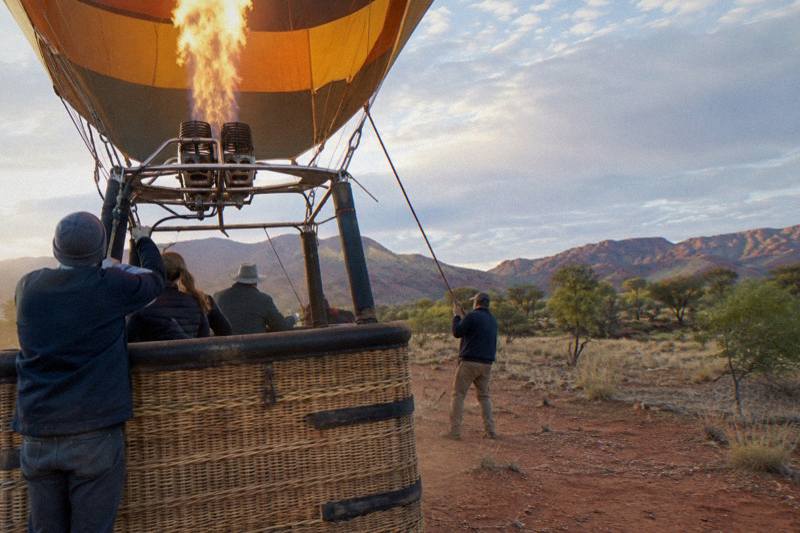
How High Do Hot Air Balloons Go: Altitude Over The Outback
Outback Ballooning states its Alice Springs flights stay within the first 1000 feet above ground. Here is what that altitude means for the view, the photos and the decision to book.
Short answer
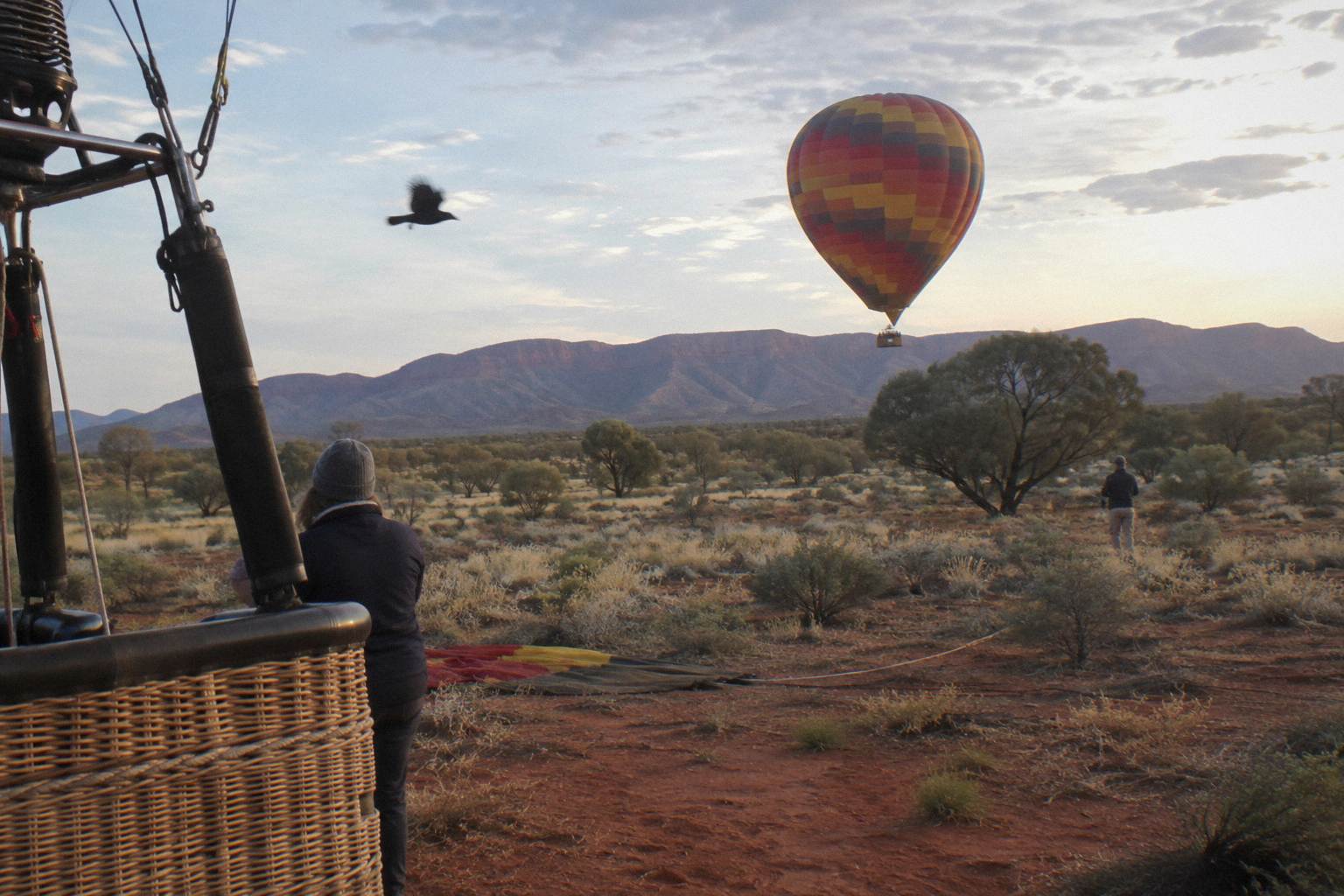
Alice Springs balloon flights stay within the first 1000 feet above ground, according to the operator, Outback Ballooning. That is roughly 300 metres, low enough to see red kangaroos, wild camels and cattle station country clearly, with the MacDonnell Ranges lit up as a backdrop rather than flown over.
Outback Ballooning, the operator behind the Alice Springs dawn flights sold on this site, states that its flights stay within the first 1000 feet above ground. That single figure is the honest answer to the altitude question for this region, and everything else on this page builds around it: what 1000 feet looks like from a basket, why the pilot keeps the balloon in that band, and what the height means for wildlife spotting, photography and the booking decision. Fares, ratings and cancellation rules on this page come from the operator's own published material and the site's verified research, nothing else.
How High Do Hot Air Balloons Go In Alice Springs?
Flights over Alice Springs stay within the first 1000 feet above ground, roughly 300 metres, according to the operator Outback Ballooning. The launch happens about 15 km south of town, adjacent to the MacDonnell Ranges, over historic Owen Springs Cattle Station, and the balloon typically covers 10 to 20 km during the flight.
That is the whole altitude story for this region in one paragraph, and it is worth being precise about why. Some balloon destinations market record-breaking heights or long distance journeys. Alice Springs does not. The operator's own material describes the experience as floating silently above the Outback as the morning light begins to illuminate the MacDonnell Ranges, and that visual, low light across a horizontal landscape, is exactly what the first 1000 feet delivers. The Ranges are the backdrop, lit by the early sun, not the flight path: Outback Ballooning states plainly that it does not fly over the MacDonnell Ranges.
The altitude also shapes what you can and cannot see. Uluru sits about 450 km away and is not visible from the flight, whatever a brochure headline might imply. What is visible at this height is close country: spinifex grasses, mulga scrub, cattle station land, and the wildlife the operator names, red kangaroos, birds and wild camels. At 1000 feet those animals read clearly rather than as specks, which is one reason the low band suits this landscape.
For readers weighing the practical questions around the same booking, the age rules and the weight questions are covered in detail elsewhere on this site, in the guides on the hot air balloon age limit and the hot air balloon weight limit.
What Does 1000 Feet Look Like From The Basket?
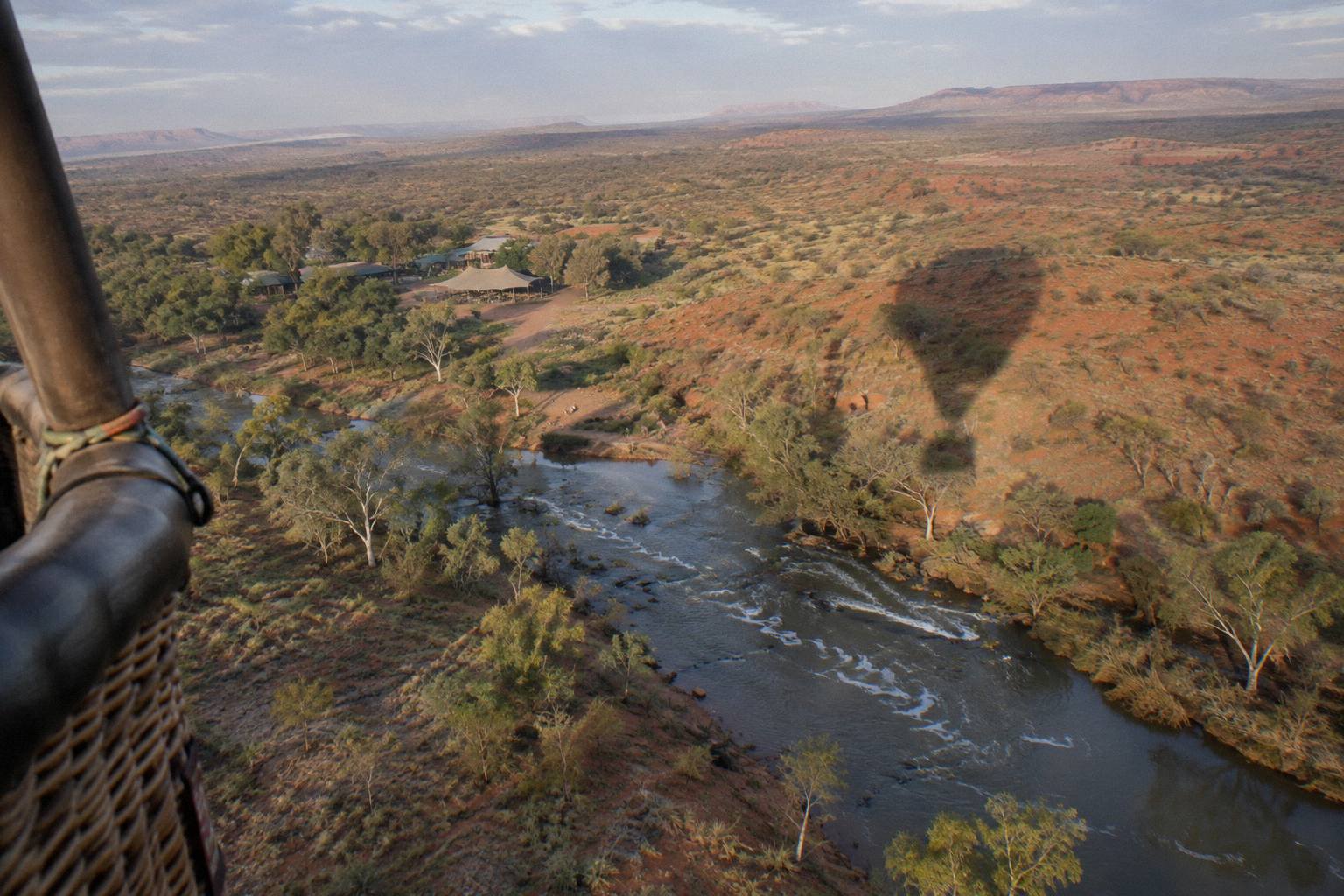
At the top of the band, roughly 300 metres up, a hot air balloon passenger looks down on cattle station country with enough height to see the MacDonnell Ranges as a lit ridge on the horizon, but low enough that red kangaroos and wild camels are still identifiable shapes moving through the scrub. The basket itself sits about 1.2 m high with compartments about 60 cm wide.
The frame of reference matters more than the number. A passenger standing in the basket is already about 1.2 m off the ground before the balloon leaves the launch field, and the floor of the basket stays at whatever height the pilot chooses within the band. The operator gives group sizes of 2 to 4 up to 24 people per balloon, while Spinifex, the other brand flying from Alice Springs, is listed at 4 to 24 by Tourism NT and up to 16 on a third-party page. The operators give different group sizes, so treat the exact headcount as variable and check the listing.
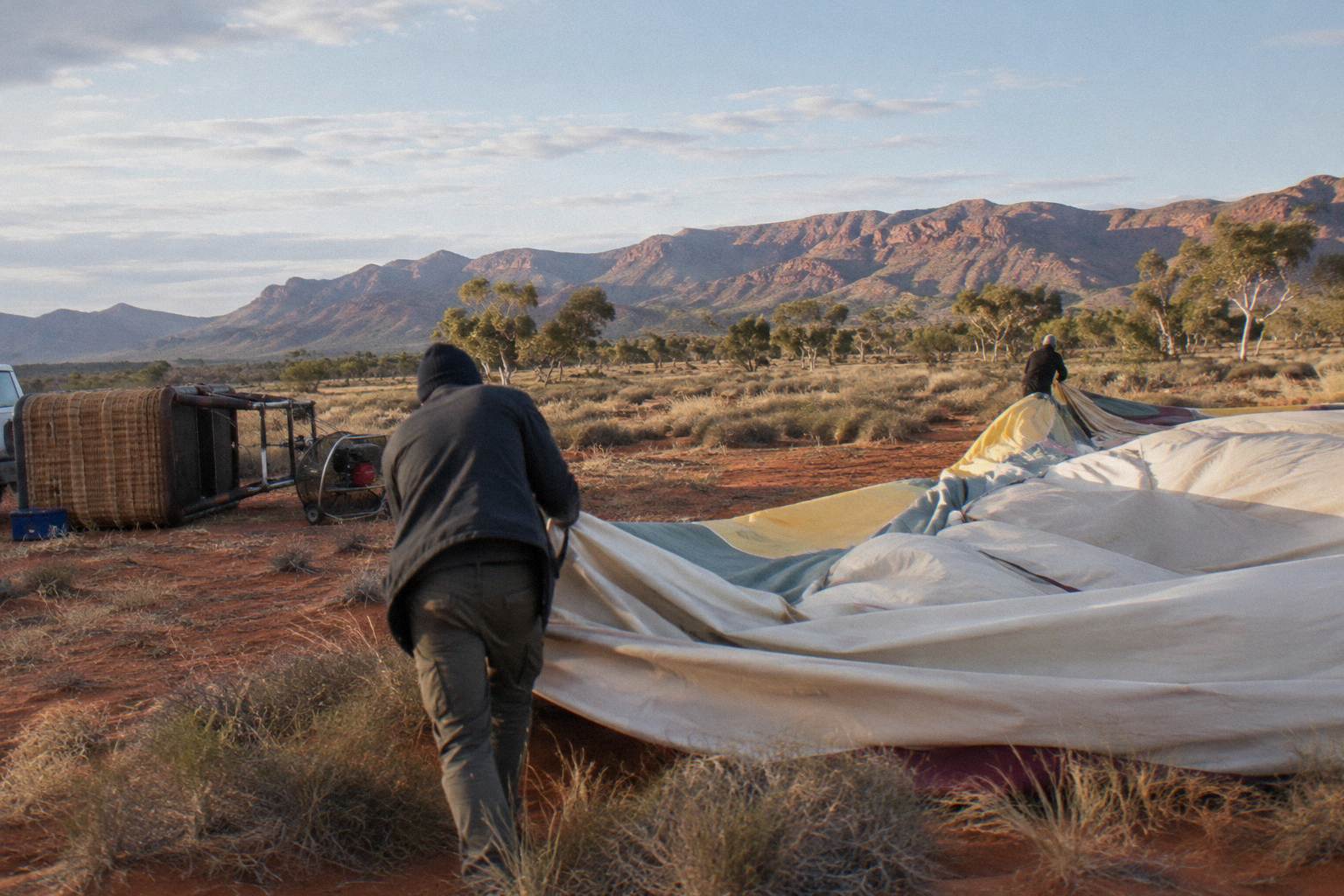
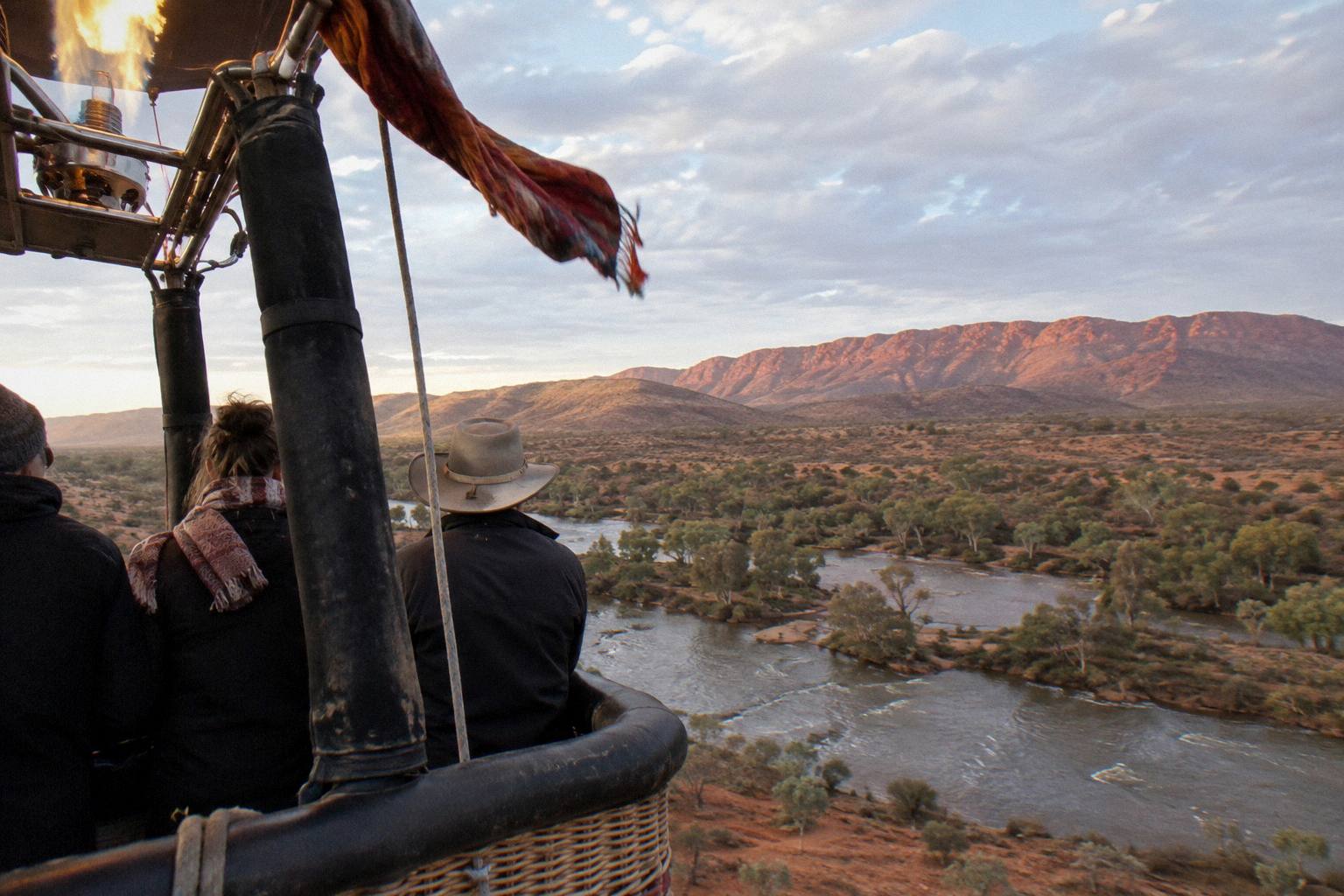
From inside the band, the landscape of Owen Springs Cattle Station reads in layers. Near the ground, the texture is everything: spinifex in tussocks, mulga scrub, the tracks of cattle. Higher in the band, the geometry takes over, creek lines and station fences drawing patterns across the red earth, and the Ranges catching the first light along their full length. The operator's 60 minute flight copy tells passengers to keep an eye out for kangaroos, spinifex grasses, mulga scrub and cattle stations, which is a fair summary of the view vocabulary at this altitude.
Weather and season affect the experience as much as height. The Bureau of Meteorology's long-term averages for Alice Springs Airport, drawn from 85 years of records, put the July mean minimum at 3.9 °C and the record low at minus 7.5 °C, while January nights average a mild 21.6 °C. Pre-dawn temperatures at the launch field sit close to those minimum figures, which is why the site's guide on what to wear on a hot air balloon flight recommends warm layers from May to September. The same long-term record shapes the whole pre-dawn experience, and the table below shows how sharply the launch-window cold varies across the year.
| Month | Mean minimum (C) | Lowest recorded (C) | Mean days of rain |
|---|---|---|---|
| January | 21.6 | 10.0 | 4.9 |
| April | 12.6 | 1.4 | 2.1 |
| July | 3.9 | -7.5 | 2.5 |
| October | 14.9 | 1.3 | 4.3 |
The two balloon cards above are the same flight by the same operator, Outback Ballooning, sold on two booking pages, so the altitude discussion applies identically to both. The main booking page carries a rating of 4.9 from 288 reviews, and the same flight on its second booking page shows 4.8. The West MacDonnell Ranges Day Tour With Lunch is a different kind of day entirely, a full-day trip that departs in the morning, so it suits travellers who want the Outback at ground level on the day before or after a dawn flight.
Why Do Alice Springs Flights Stay In The First 1000 Feet?
The operator states the altitude band plainly, and the reasons behind it are practical: low flying over open cattle station country gives the best close-up view of wildlife and terrain, keeps the flight inside the airspace and operating conditions the pilot works with each morning, and matches the wind layers that drift the balloon 10 to 20 km across the country. No regulator altitude figure for this route appears in the site's research beyond the operator's own statement.
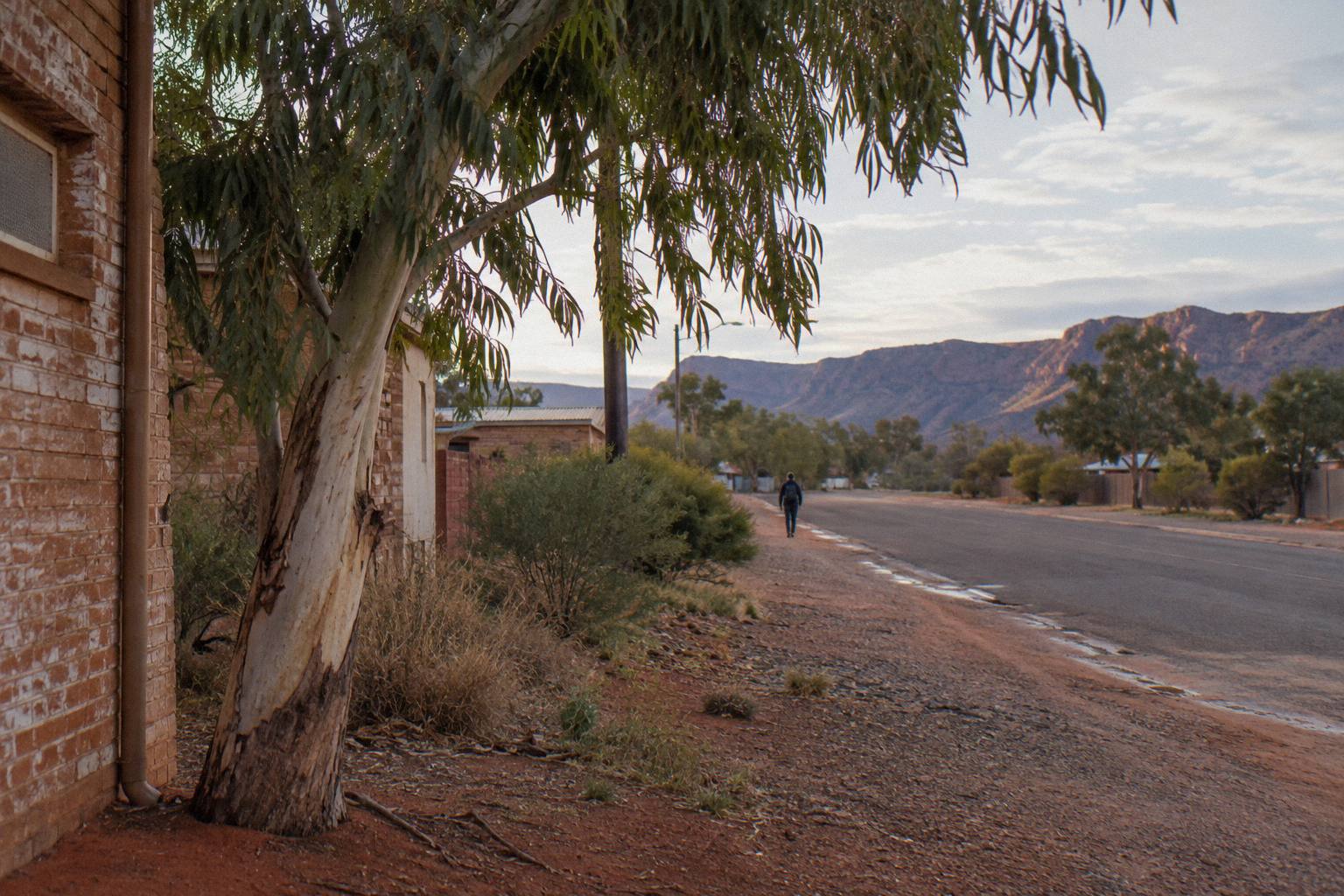
Honesty first: the operator does not explain its choice, so the reasoning above is practical observation, not operator policy. What is certain is that the pilot makes the calls. The launch site is chosen on the morning, Spinifex says it uses about 20 launch sites within 30 km selected by wind, and Outback's terms allow a substitute CASA-approved operator on the day. The exact launch field and its coordinates are never published, so ask when you book.
The wind-layer point deserves a plain explanation. Balloons cannot steer in the conventional sense. The pilot changes height to find air moving in different directions, and in a landscape like Owen Springs the useful layers for a 10 to 20 km drift sit low. Flying the band means the pilot can ride one layer out, shift height, and ride another back toward a workable landing field, all while keeping the passengers close enough to the ground for the view the flight is sold on.
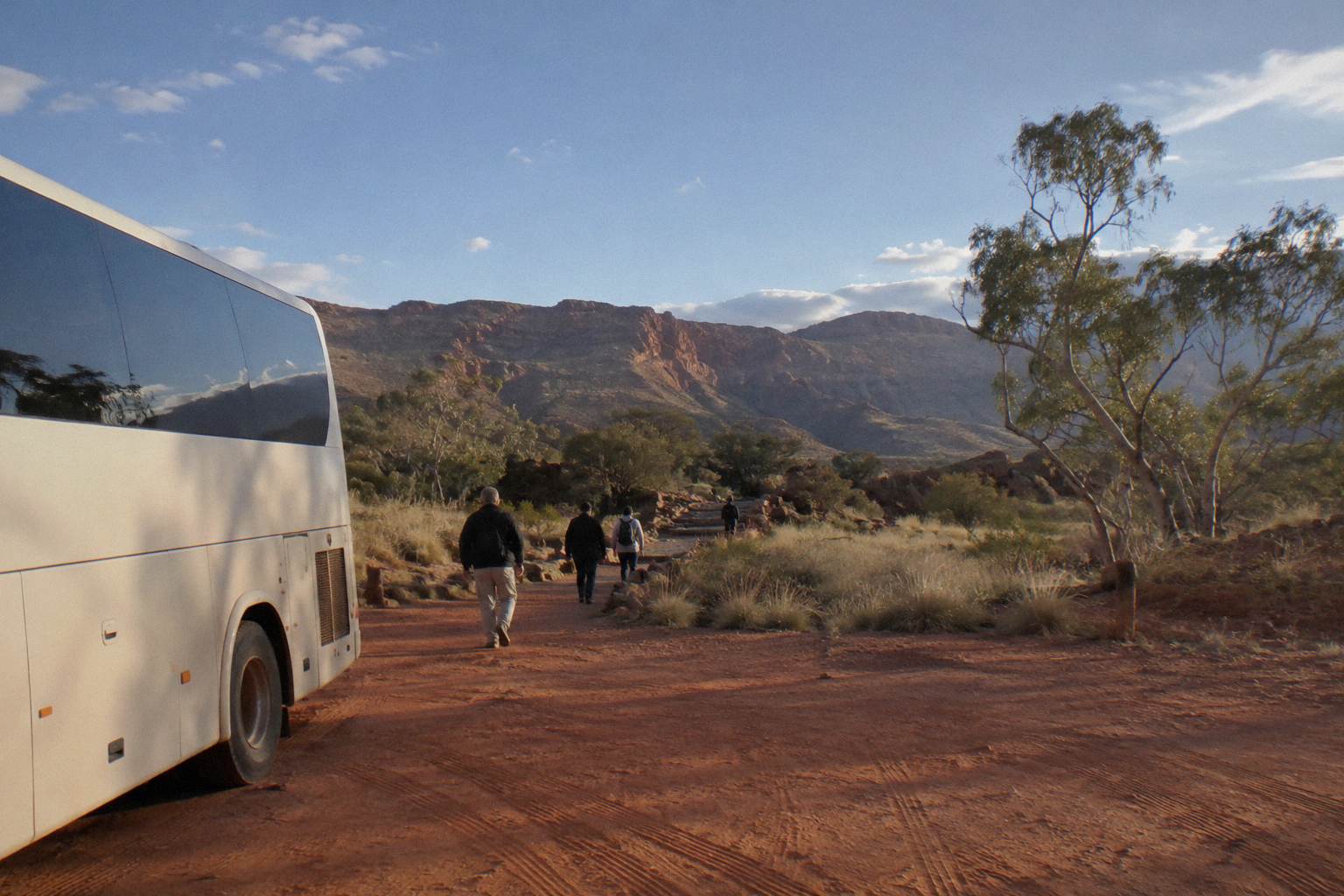
Durations are approximate by the operator's own terms. There is no refund if a flight runs less than 30 minutes, or less than 60 on the longer option, and a 60 minute flight cut to 30 minutes is charged as the 30 minute fare. Altitude and duration are separate variables, but both are set by conditions on the morning, which is a good reason to read the site's guide on balloon flight cancellations and weather before booking a tight itinerary.
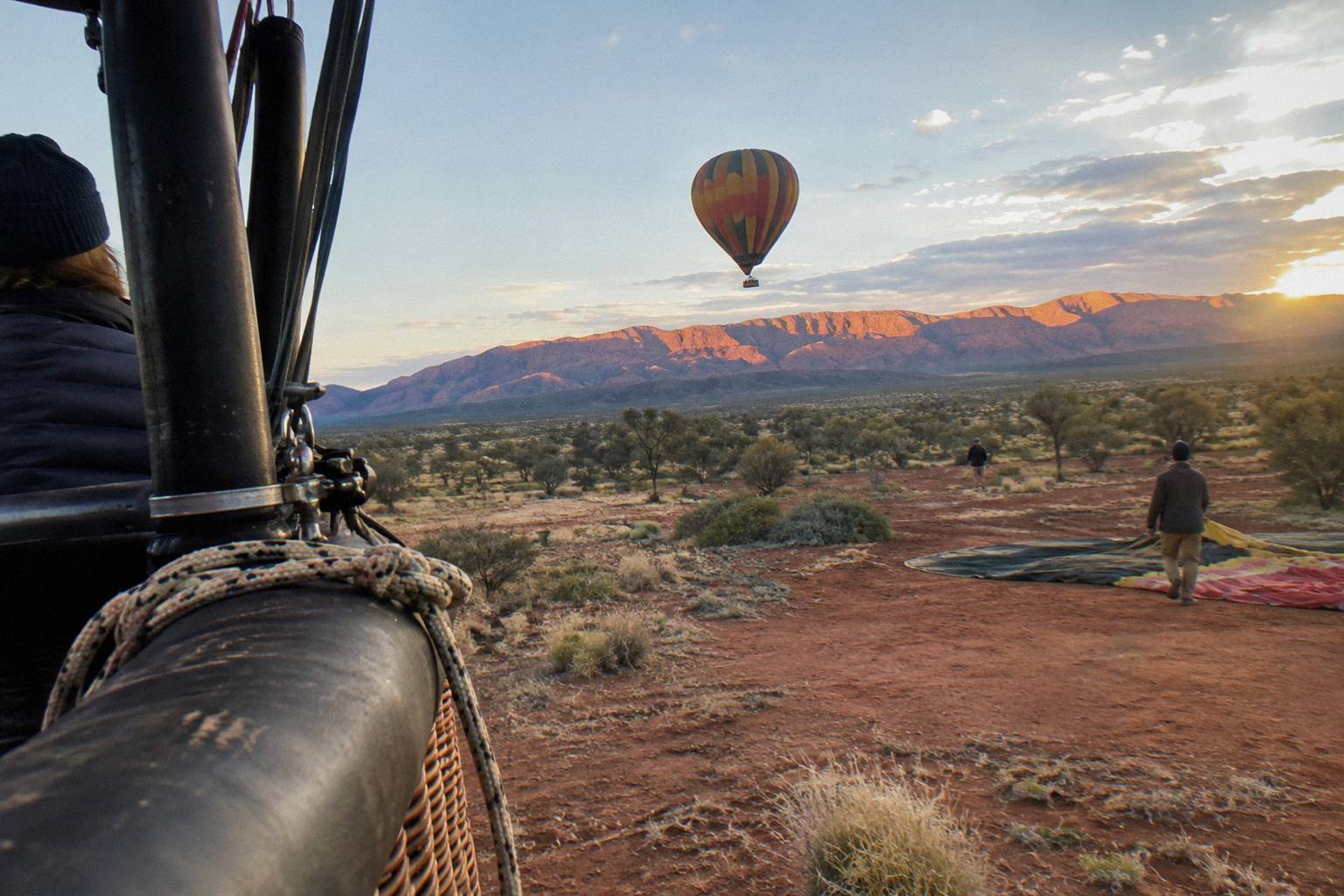
The altitude band also explains a common disappointment, and it is better to set expectations here than after booking. The Ranges are never a flyover. If the picture in your head is a balloon cresting a ridge, adjust it: the actual sight is the ridge glowing for its full length while the balloon floats in the flat country beside it, which most passengers find more cinematic than a summit view, but it is a different picture.
What Can You Actually See From That Altitude?
From within the first 1000 feet, passengers reliably see red kangaroos, birds and wild camels, the three species the operator names, along with the working patterns of Owen Springs Cattle Station and the full lit length of the MacDonnell Ranges on the horizon. Uluru, about 450 km away, is never visible, and no launch site, road or coordinates are published.
Wildlife spotting at this height is genuinely better than at higher altitudes, and the operator's own flight copy leans on it. Red kangaroos move at dawn and show as unmistakable shapes against red earth. Wild camels, less famous but well established in Central Australia, stand out against the scrub. Birds work the morning thermals below and beside the balloon. None of this is guaranteed on any given morning, wildlife being wildlife, but the altitude band is chosen in part because it makes these sightings possible rather than probable-only-from-a-distance.
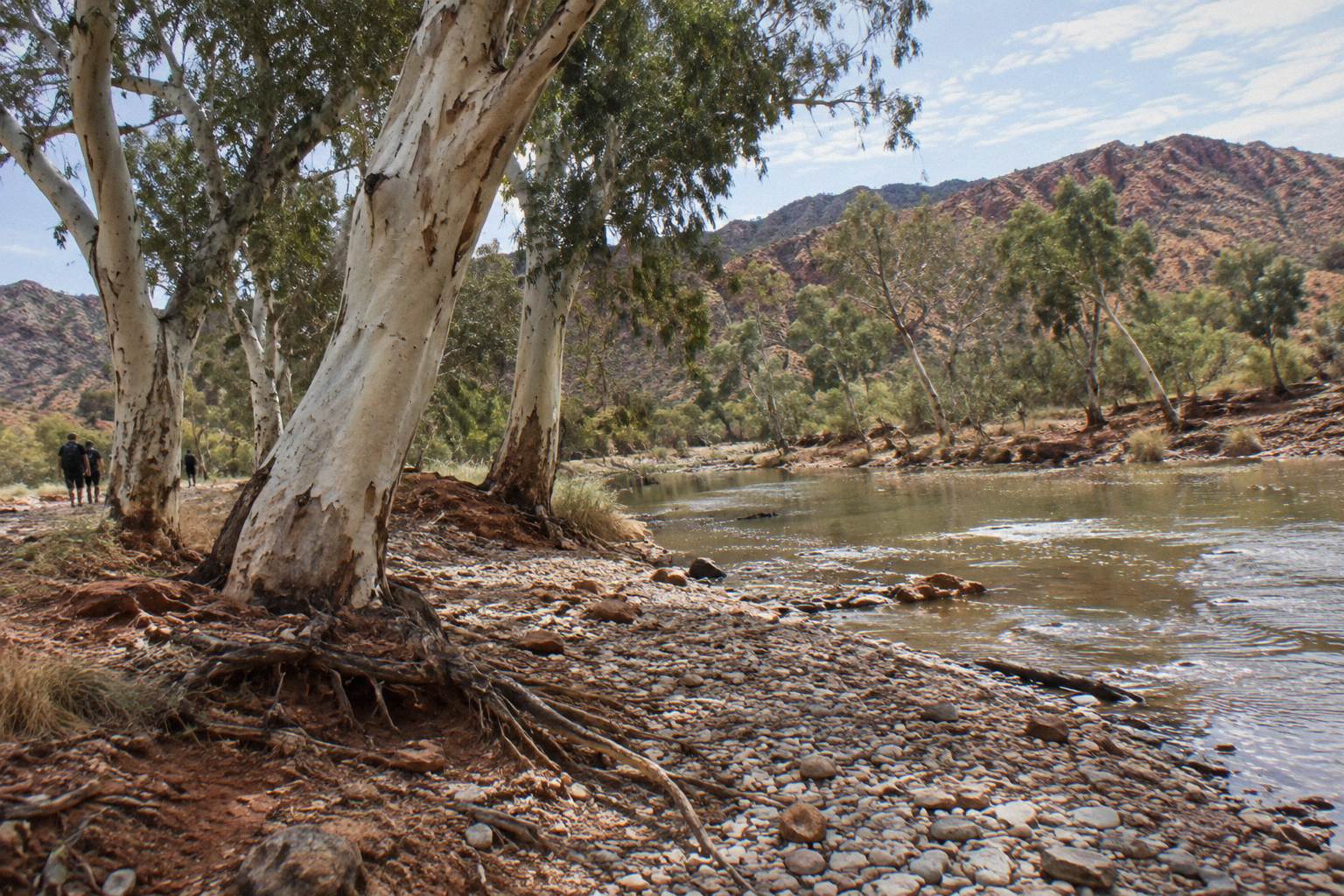
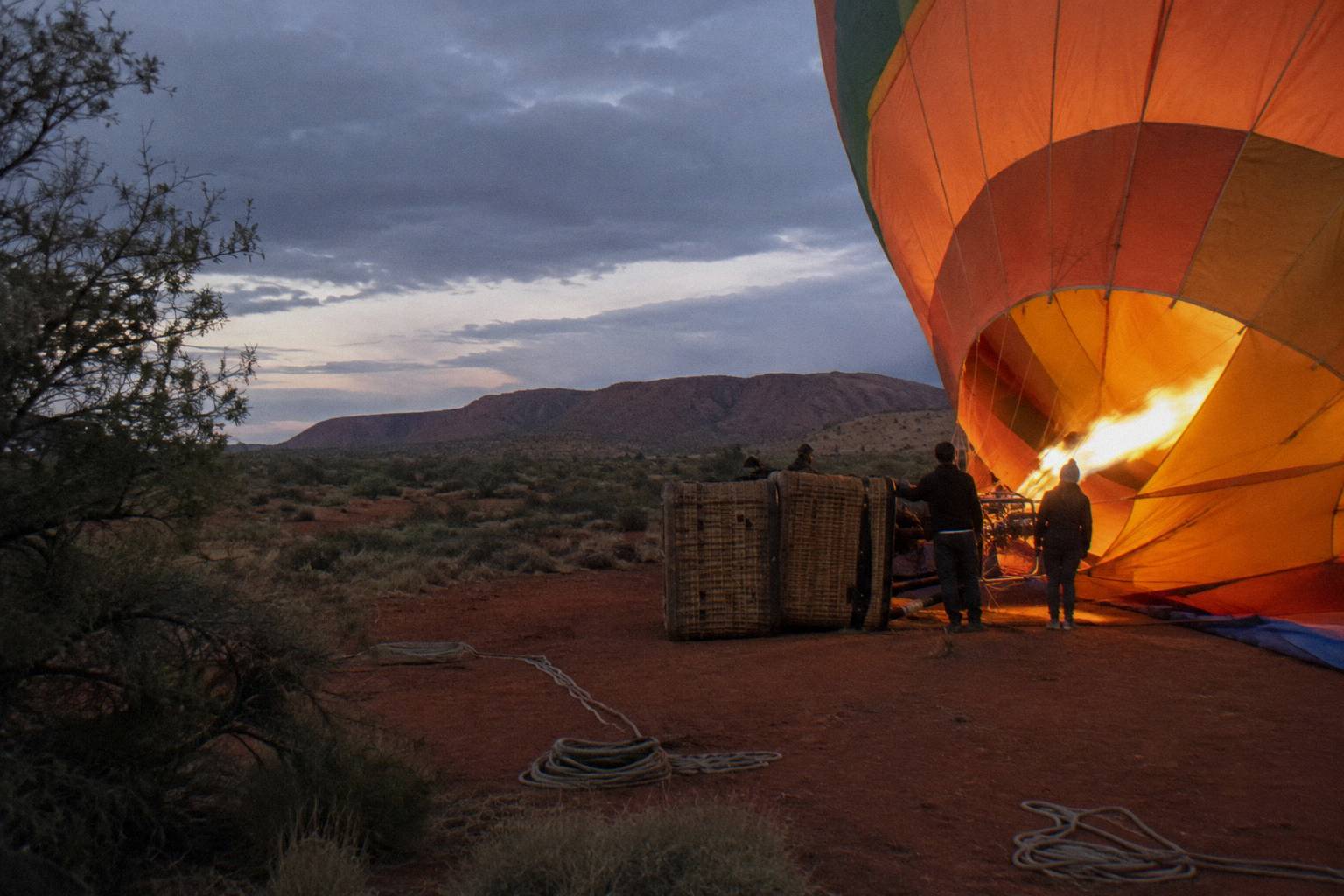
The station country itself is a subject. Fencelines, stock routes, dams and creek lines read like a map from inside the band, and the morning light does most of the work, raking across the relief at an angle that flattens out within an hour of sunrise. This is why flights start before first light: pickup is approximately one hour before first light, about 4:15am in summer and about 5:45am in mid-winter, confirmed on booking and again the day before.
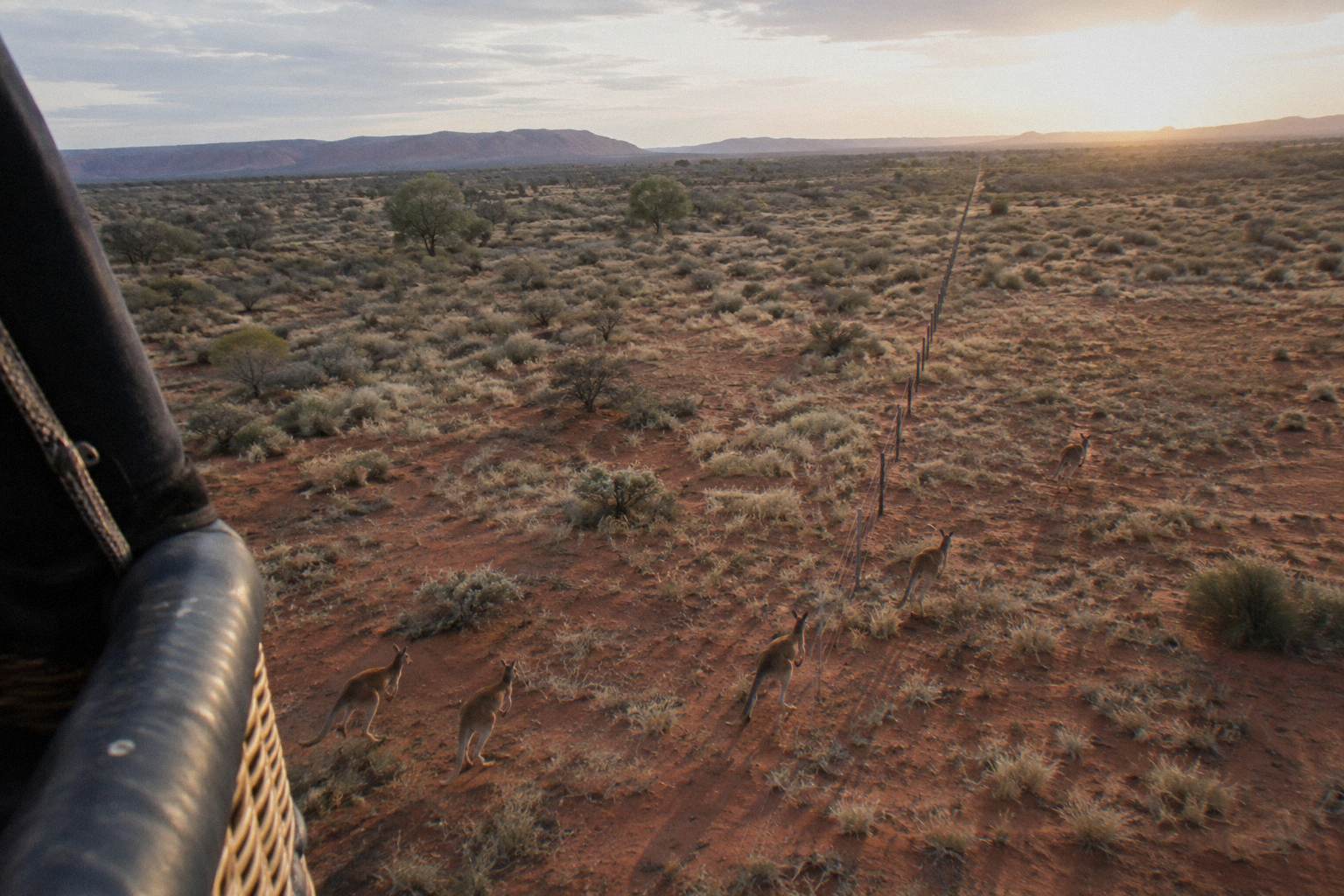
For photographers, altitude is the variable that changes most during a flight, and it rewards attention. The site's guide on hot air balloon photography covers the practical side; the short version is that the low passes over wildlife and the long-lit horizon shots are the two frames this altitude band delivers best. Whether cameras, phones or drones face any restriction is not stated in the operator's material, so ask the operator directly before flying.
Does The Altitude Affect Safety On An Alice Springs Flight?
Altitude itself is not the safety variable the operator's documentation emphasises. Outback Ballooning holds CASA Air Operator Certificate CASA.AOC.0496, is a CASA Approved Maintenance Organisation, and its pilots hold a Commercial Balloon Pilot Licence, an aviation medical and a security clearance, with carriers' liability insurance under the Civil Aviation (Carriers' Liability) Act 1959. The operator's history also includes a record that should be stated plainly.
That record: Outback Ballooning Pty Ltd was convicted and fined in July 2021 over the 2013 death of a passenger, a combined A$130,000, in a matter reported by NT WorkSafe, which said the passenger's scarf became entangled in the inflation fan. That fact connects directly to the dress rules: no dangling jewellery or scarves at the launch site.
The aviation credentials are published on the operator's CASA regulation page. Australian Ballooning Federation membership is not mentioned on any page the research fetched, so this site does not claim it. The broader safety picture for balloon flying, including common worries about height and falling, is treated in the guide on whether hot air ballooning is safe.
One more operational note that touches both safety and altitude: the pilot's decision on the morning is final. If weather cancels the flight, guests rebook another day or take a full refund if prepaid, and flights can also be cancelled for minimum numbers. The operator says it flies an average of 250 to 300 days a year, its own claim, which is a fair indication of how often conditions cooperate in Central Australia, but it is not a promise about any particular date. The full index of guides sits on Alice Springs Hot Air Balloon.
The flight sold through this site's featured card is the Alice Springs early morning balloon flight, with a 30 or 60 minute flight selectable and the whole trip running about four hours door to door, return transfers included. Check availability
How High Is The Flight Compared With The Alternatives?
There is no altitude comparison available in the verified research: no figure exists for helicopter tours over Alice Springs, no other balloon operator's operating band is published, and this page will not invent one. The only altitude figure for this region is the operator's own first 1000 feet statement, and any comparison with other places or aircraft would be guesswork.
That is an unusually direct paragraph for a travel site, and it is deliberate. Readers searching for altitude information often find pages that stack impressive-sounding numbers from other countries, record attempts or generic physics. None of that applies to a booking decision in Alice Springs, and printing it would only blur the one figure that matters here. The honest comparison is horizontal, not vertical: the same operator offers a 30 minute and a 60 minute flight over the same country at the same altitude band, and the 60 minute option simply spends longer in it, with the operator's longer-flight copy emphasising kangaroos, spinifex, mulga and cattle stations.
The fares are published by the operator and are listed here as the operator's fares, in Australian dollars. Prices can change, and the booking page is the place to confirm the current figure.
| Operator product | Adult fare | Child fare (6-14) | Notes |
|---|---|---|---|
| Outback Ballooning 30 minute flight | A$380 | A$340 | Return transfers and refreshments included |
| Outback Ballooning 60 minute flight | A$450 | A$405 | Same launch area, longer in the altitude band |
| Outback Ballooning Balloon Chase | A$110 | A$99 | Ground follow, limited space, needs at least one adult flying |
| Spinifex Ballooning 30 minute flight | A$355 | A$320 | Comparison only, not sold on this site |
Both operators' brochures set the child fare for ages 6 to 14, with the minimum flying age recommended at 6 years and ages 3 to 5 accepted on an individual basis but not recommended. No family fare is published by either operator, though Outback's terms say senior and family discounted pricing exists at unpublished rates, so this site prints none. Fares are as the operators list them.
If the morning starts with the balloon, the afternoon can stay Outback-shaped. The West MacDonnell Ranges day trip from Emu Run Experience runs about 9.5 hours from a 7:45 am departure and is rated 4.7 from 334 reviews, a natural pairing with a dawn landing, and the site's guide to things to do after a balloon flight lays out the timing.
The pairing works because of the clock, not despite it. The balloon trip runs about four hours from pickup, landing mid-morning with sparkling wine and juice after landing and a commemorative certificate, and the Ranges coach leaves at 7:45 am from hotel pickup. The operator can transfer guests to other tours on request, so flag it at booking rather than assuming.
Does A Higher Balloon Flight Cost More In Alice Springs?
No altitude-based pricing exists here. The operator prices by duration, not height: A$380 adult for the 30 minute flight and A$450 adult for the 60 minute flight, with child fares at A$340 and A$405 for ages 6 to 14. Both options fly the same first 1000 feet band over the same launch area, so the extra money buys time aloft, not altitude.
This is worth stating because travellers arriving from other ballooning regions sometimes expect a tiered product, a low scenic flight and a higher long-distance one. Alice Springs does not work that way. The altitude band is a condition of the airspace and the landscape, not a menu option, and the pilot moves within it continuously through the flight as wind layers and terrain dictate. A passenger who books the 30 minute flight and one who books the 60 minute flight will both experience the full band, low passes included.
| Question | Answer for Alice Springs flights |
|---|---|
| How high do the flights go? | Within the first 1000 feet above ground, operator-stated |
| Is a higher option available to buy? | No, pricing is by duration only |
| Does altitude vary during one flight? | Yes, the pilot changes height for wind layers and viewing |
| Can you see Uluru from the top of the band? | No, Uluru is about 450 km away and not visible |
| Do flights go over the MacDonnell Ranges? | No, the operator states it does not fly over the Ranges |
Booking mechanics matter more than altitude tiers. A card secures the reservation and payment of the balance is taken directly on the morning of the flight. Cancellation is free more than 24 hours before; cancelling within 24 hours or a no-show forfeits the full fare, and cold feet at the launch field may also forfeit the fare. Alterations are free up to 24 hours before, per the operator's website. The full policy detail, including weather cancellations, sits in the site's guide on balloon flight cancellations and weather, and gift options are covered in the guide to hot air balloon gift vouchers.
For travellers stacking the morning, one caution belongs here rather than buried in a footnote: the pickup is early, roughly 4:15am in summer and 5:45am in mid-winter, and the whole trip runs about four hours from pickup. Guests flying out the same day can ask the operator about a drop at the airport on request, since flights end near it and the airport is a 15 to 20 minute drive. There is no pickup from Uluru, so stay the night in Alice Springs.
Which Flight Should You Book For The Best Altitude Experience?
Neither balloon option changes the altitude, so choose by time and budget: the 30 minute flight at A$380 adult covers the signature low pass and the lit Ranges, while the 60 minute flight at A$450 adult spends longer inside the band with more chances at wildlife sightings. Both include return transfers, sparkling wine and juice after landing, and a commemorative certificate.
The featured 30 minute dawn flight, highly rated on its booking page, suits most first-time visitors: it delivers the altitude band, the light and the landing celebration in a four hour door-to-door trip, and leaves the day free. The 60 minute option suits photographers and wildlife watchers who want more passes over the scrub country, accepting that no sighting is guaranteed. Age rules are the same for both, 6 and over flying with an adult.
Travellers who love the idea of the Outback but not the 4:15am start can spend a full day on the ground-level version instead. The West MacDonnell Ranges Day Tour With Lunch from Wildlife Tours Australia runs about 10.5 hours with a morning departure, lunch and snacks included, pickup and drop-off at selected inner-city Alice Springs points, and it is well rated on its booking page. No price is printed there.
The comparison is not really balloon versus camel, it is dawn versus dusk, air versus ground, and many visitors do both across one stay. The site's guide to Alice Springs day trips with a balloon flight builds full itineraries around exactly that question. Whatever the mix, book the balloon first: it is the product with the fixed pre-dawn window, the weather dependency and, occasionally, the minimum-numbers cancellation, so give it the day with the most slack.
For a deeper look at how the whole morning unfolds from pickup to landing, read the site's guide to a first hot air balloon flight and the overview of sunrise balloon flights from Alice Springs. The essential altitude facts travel with you either way: the first 1000 feet, the country it reveals, and the light that makes it worth the early alarm.
Common Questions About Balloon Altitude
How High Do Hot Air Balloons Go In Alice Springs?
Flights stay within the first 1000 feet above ground, roughly 300 metres, according to the operator Outback Ballooning. That band sits over Owen Springs Cattle Station, about 15 km south of Alice Springs and adjacent to the MacDonnell Ranges.
Is There A Higher Altitude Option I Can Pay For?
No. The operator prices by duration, not height: A$380 adult for the 30 minute flight and A$450 adult for the 60 minute flight, with child fares of A$340 and A$405 for ages 6 to 14. Both flights use the same altitude band over the same country.
Can You See Uluru From The Balloon?
No. Uluru is about 450 km from Alice Springs and is not visible from the flight. There is also no pickup from Uluru, so stay the night in Alice Springs before a dawn flight.
Does The Balloon Fly Over The MacDonnell Ranges?
No. Outback Ballooning states that it does not fly over the Ranges. They form the backdrop, lit by the early light, while the balloon drifts 10 to 20 km across the cattle station country beside them.
Does Altitude Change During The Flight?
Yes. The pilot moves within the band throughout the flight to find wind layers and the best viewing, since balloons steer by height rather than a wheel. Durations are approximate, and no refund applies if a flight runs shorter than its nominal 30 or 60 minutes.
How Many People Are In The Balloon At That Altitude?
Outback Ballooning gives 2 to 4 up to 24 people per balloon. Spinifex, the other brand flying from Alice Springs, is listed at 4 to 24 by Tourism NT and up to 16 on a third-party page, so the operators give different group sizes and the exact number varies.