Hot Air Balloon Pilot: Qualifications And What They Decide On The Day
A balloon pilot in Alice Springs holds a Commercial Balloon Pilot Licence, an aviation medical and a security clearance, and on the morning of your flight their word is final on weather, launch site and who flies.
Short answer
Outback Ballooning pilots hold a CASA Commercial Balloon Pilot Licence, an aviation medical and a security clearance, flying under Air Operator Certificate CASA.AOC.0496. The pilot alone decides whether weather permits flight, where to launch and whether any passenger's medical condition is acceptable. Fares run from A$380 adult for a 30 minute flight.
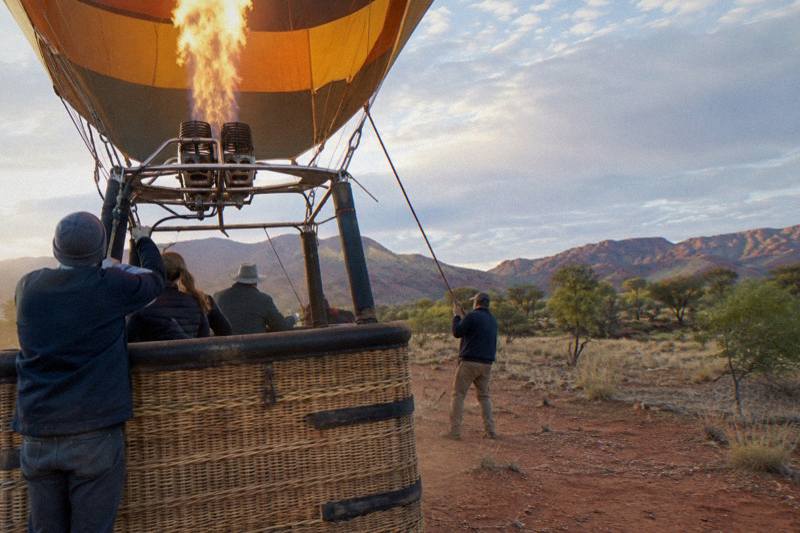
The person standing in the basket with you at dawn over Alice Springs holds more paperwork than most passengers expect. Balloons in Australia are regulated aircraft, and the pilot at the controls of an Outback Ballooning flight operates under a Civil Aviation Safety Authority framework that is close in kind to what governs an airline captain: a commercial licence, a current aviation medical, a security clearance, and an operator's certificate that ties them to one approved company. That framework, published on the operator's own CASA regulation page, is the backbone of how a balloon flight here is run.
But licensing is only half the story. On the morning itself, the pilot makes a chain of judgement calls that no brochure can pre-empt: whether the wind and temperature allow a safe flight, which launch field to use, how many passengers the balloon can carry, and whether any individual medical condition or physical limitation is compatible with standing in a 1.2 metre basket for half an hour. This guide sets out what a hot air balloon pilot in Alice Springs is qualified to do, what they decide on the day, and what those decisions mean for your booking.
What Qualifications Does A Hot Air Balloon Pilot Need In Australia?
To fly paying passengers in Australia, a balloon pilot must hold a CASA-issued Commercial Balloon Pilot Licence, maintain a current aviation medical, and pass an aviation security clearance. At Outback Ballooning, pilots additionally fly under the company's Air Operator Certificate, CASA.AOC.0496, and the operator is itself a CASA Approved Maintenance Organisation, so the aircraft and the pilot are audited under separate regimes.
Those four elements are worth unpacking separately, because passengers often assume a balloon ride is a lighter form of aviation than it legally is. The licence is the base credential: a commercial balloon licence permits a pilot to carry fare-paying passengers, and it sits inside the same CASA regulatory family as other commercial pilot licences. The aviation medical confirms the pilot themselves is fit to command an aircraft, renewed on a cycle CASA sets. The security clearance matters because balloons departing from towns like Alice Springs enter controlled airspace coordination with other traffic, and cleared crew are part of that system.
The operator's certificate is the layer passengers rarely see. An AOC is granted to a company, not an individual, and it commits the operator to maintenance, training and operational standards that CASA audits. Outback Ballooning states it holds CASA.AOC.0496 and is a CASA Approved Maintenance Organisation, meaning the balloons are maintained under an approved system rather than ad hoc. The company also states it carries carriers' liability insurance under the Civil Aviation (Carriers' Liability) Act 1959, and claims tourism accreditation on its home page.
| Requirement | What it covers | Who holds it |
|---|---|---|
| Commercial Balloon Pilot Licence | Authority to fly fare-paying passengers | Each pilot |
| Aviation medical | Ongoing fitness to command an aircraft | Each pilot, renewed periodically |
| Security clearance | Cleared aviation crew status | Each pilot |
| Air Operator Certificate CASA.AOC.0496 | Company-level operating, training and maintenance standards | Outback Ballooning |
| CASA Approved Maintenance Organisation | Approved maintenance system for the balloons | Outback Ballooning |
| Carriers' liability insurance | Passenger liability cover under the 1959 Act | Outback Ballooning |
One claim to treat with caution: membership of the Australian Ballooning Federation. No operator page mentions it, so ask when you book if it matters to you. For a fuller treatment of the safety picture, including how balloon licensing compares with the wider industry, the guide to whether hot air ballooning is safe covers it in detail.
Who Is Flying You Over Alice Springs?
The flight sold through this site's tour cards is operated by Outback Ballooning, which has flown from Alice Springs since 1986 and holds certificate CASA.AOC.0496. The booking pages you may see for the same dawn flight, including one listing it at 4.9 from 288 reviews and another at 4.8, are the same flight by the same operator, not two competing companies.
That last point trips up a lot of researchers. Outback Ballooning's flight appears on more than one booking page, with slightly different review scores attached, because they are two listings of one product. Spinifex Ballooning, the other brand you will find when searching Alice Springs ballooning, has operated in the area since April 1992, but here is the detail a first page of search results will not hand you: both brands print the same CASA air operator's certificate number, CASA.AOC.0496, on their own websites, and third-party business registries list both names under the same operating entity. The safe, accurate wording is that both brands operate under the same certificate and appear to be one operator. Neither should be booked in the belief you are choosing between independent companies.
No individual pilot names, career biographies or flying-hours figures appear in the verified research for this page, and one caution applies to hours claims in general: Spinifex's own home page contains two different flying-hours figures that disagree with each other, so no hours figure from that source is printed here at all. What can be stated is structural rather than personal. Outback Ballooning's terms also allow a substitute CASA-approved operator to fly on the morning if needed, which is a standard contingency in the industry rather than a red flag.
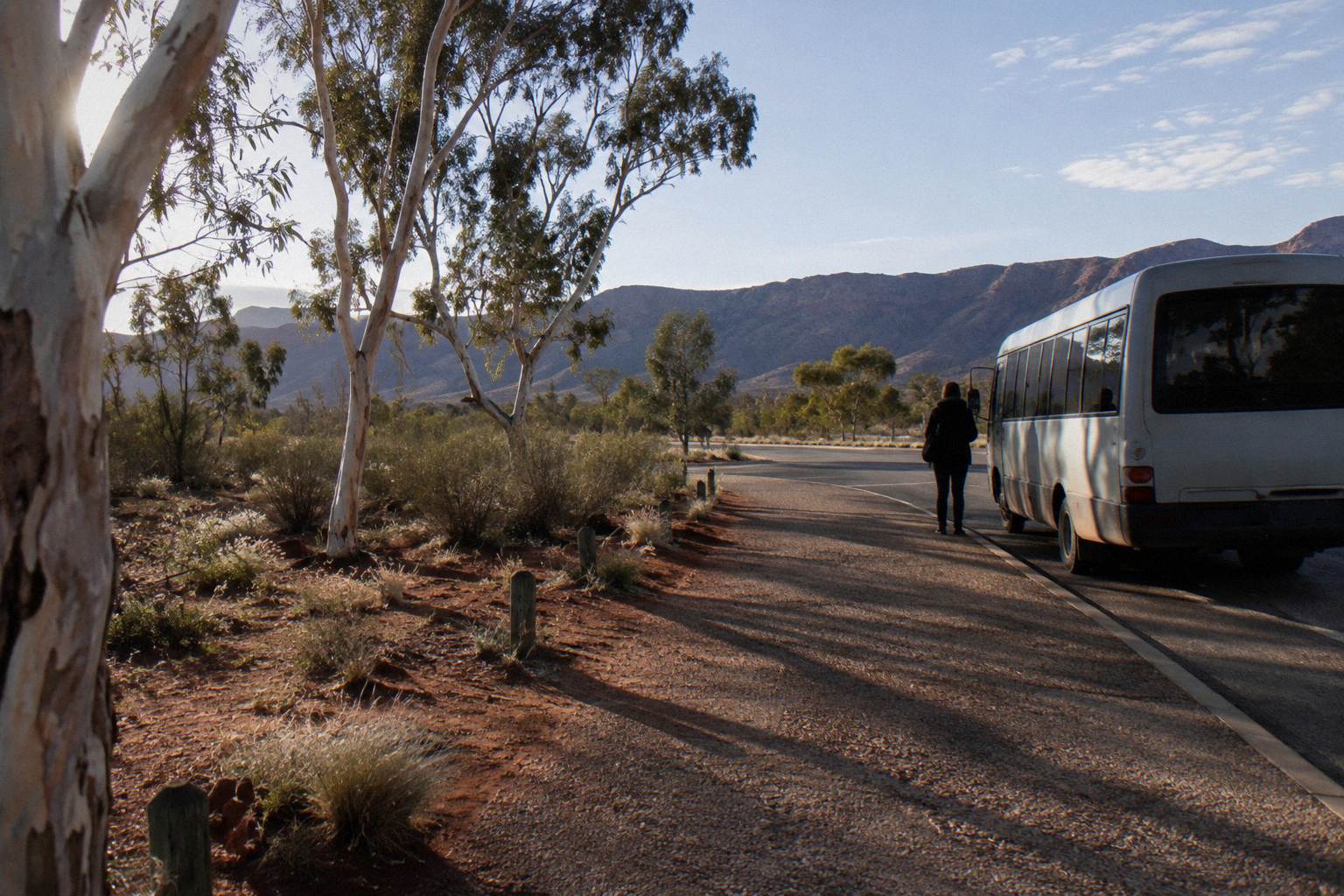
The practical reading for a buyer: the pilot who greets you at 4:15am in summer or 5:45am in mid-winter, roughly an hour before first light, is a commercial licence holder flying under an audited certificate that has been in continuous local use for decades. A fuller account of the local operator landscape, including how the two brands relate, is in the Outback Ballooning operator guide.
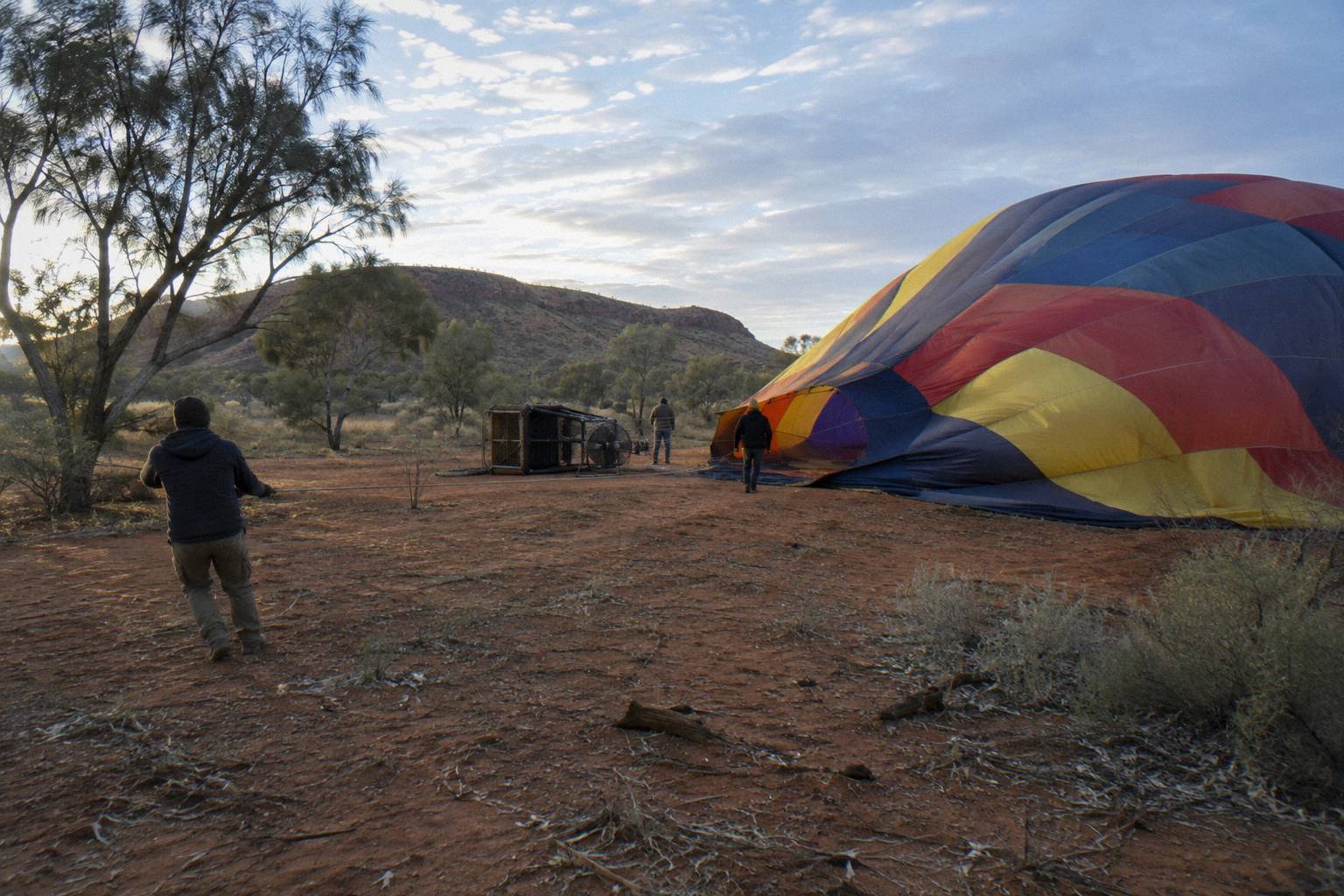
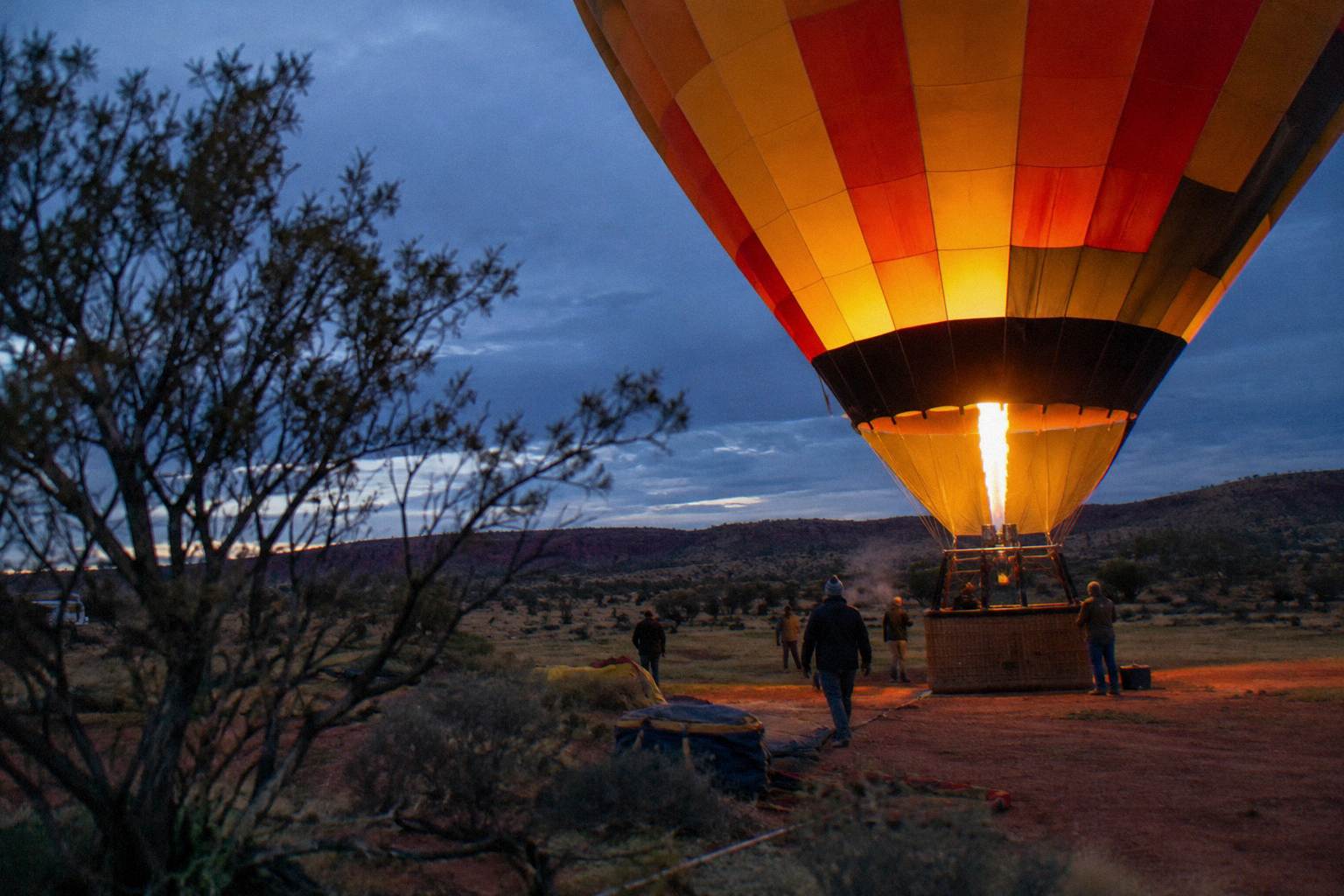
After the drive out to the launch area, about 15 km south of Alice Springs near the MacDonnell Ranges, the pilot takes command of the site. Passengers can opt to help with the pack-up after landing, and the certificate, snacks, sparkling wine and fruit juice that close the morning are part of the fare rather than extras.
Why The Pilot's Weather Decision Is Final
Outback Ballooning's conditions state plainly that the pilot's decision on weather is final, and that if a flight is cancelled guests rebook for another day or take a full refund if prepaid. Neither the booking office nor the passengers can overrule a pilot who judges the wind unflyable, and the same wording appears in Spinifex's terms. Flights can also be cancelled for minimum numbers.
This is the single most consequential power a balloon pilot holds, and it is worth understanding why it is absolute. A balloon has no steering wheel and no engine; it travels with the wind and descends when the air around it allows. A pilot launching into unsuitable conditions is not taking a manageable risk, they are surrendering the ability to choose where the aircraft goes. Australian operators therefore write the pilot's veto into their conditions of carriage, and both Alice Springs brands use near-identical wording. Never book a balloon flight on the assumption it will definitely fly: no honest source will promise that.
For the buyer, the refund mechanics matter as much as the veto. Weather-cancellation refunds are full for prepaid bookings, and guests booked through a third-party agent are told to contact that agent, who may retain a booking fee. Ordinary cancellations by you, the passenger, follow a different rule: no fee more than 24 hours before the flight, but a cancellation inside 24 hours or a no-show forfeits the full fare. The cancellation and weather guide works through every scenario.
The climate explains why the veto gets used at all. Alice Springs mornings range from a mean minimum of 3.9 degrees in July to 21.6 in January, with a July record low of minus 7.5, according to Bureau of Meteorology normals for Alice Springs Airport covering 85 years of records. The operator itself says it flies an average of 250 to 300 days a year, which is its own claim, and it flies daily all year except New Year's Day, Christmas Day and Boxing Day, weather and loadings permitting.
| Month | Mean minimum (C) | Mean rain days | Approximate first light | Typical pickup |
|---|---|---|---|---|
| January | 21.6 | 4.9 | 5:35 | About 4:15am |
| April | 12.6 | 2.1 | 6:25 | Between anchors |
| July | 3.9 | 2.5 | 6:52 | About 5:45am |
| October | 14.9 | 4.3 | 5:39 | Between anchors |
First-light times above are computed from the NOAA solar position calculation for Alice Springs and are approximate; the operator's published pickup anchors, about an hour before first light, are the figures to rely on when planning. Which month gives the best odds overall is a separate question with its own analysis in choosing the best time for an Alice Springs balloon flight.
What Passenger Limits Does The Pilot Enforce?
The pilot, backed by the operator's terms, enforces every passenger restriction on the day: no flying beyond 12 weeks of pregnancy, medical conditions assessed case by case with the pilot's discretion absolute, passenger weights collected with follow-up for anyone over 110 kg, and a requirement that every passenger climbs into the roughly 1.2 metre basket unaided and stands for the whole flight.
These rules sound stern in a brochure and matter enormously on a launch field. A balloon basket is not a cabin: it has no seats, no restraints beyond the basket walls, and compartments about 60 cm wide. Someone who cannot climb in using the foot holes, or who cannot stand comfortably for the flight duration, cannot be flown safely, which is why the main booking page lists the flight as unsuitable for pregnant passengers beyond 12 weeks and for mobility-impaired travellers. Medical conditions and disabilities are not an automatic no: the operator's terms require advance notification, and each case is assessed individually, with the pilot's discretion described as absolute.
Weights are collected at booking rather than judged at the field, because balloon loading is a weight-and-balance calculation the pilot must complete before launch. Passengers over 110 kg receive an extra safety email from Outback Ballooning; that is the operator's own stated figure. Some third-party pages quote 100 kg instead, and because that contradicts the operator's own terms it is not printed here, and neither is any hard weight limit, since the operator publishes none. Whether anyone is weighed on the morning is not stated in the research.
Age works on a sliding scale. The minimum age is recommended at 6 years, with the child fare band running 6 to 14 in both local operators' brochures, and the main booking page saying age 6 and over with an adult. Ages 3 to 5 are accepted on an individual basis but not recommended, and child fares apply. A widely repeated 6 to 16 figure from a third-party site is wrong and should be ignored.
| Limit | The rule | Source |
|---|---|---|
| Pregnancy | Not flown beyond 12 weeks | Outback and Spinifex terms |
| Medical conditions | Notify in advance, assessed individually, pilot's discretion absolute | Outback terms |
| Weight | Weights collected; extra safety email over 110 kg | Outback FAQ and terms |
| Boarding | Climb into the 1.2 m basket unaided, stand throughout | Outback terms |
| Age | Recommended 6 plus; child fare 6 to 14; 3 to 5 by individual basis | Both brochures |
Practical preparation for these rules, including clothing choices the pilot will care about such as enclosed flat shoes and no dangling scarves or jewellery near the inflation fan, is covered in the first balloon flight tips guide. The best-known case for why loose items near the fan matter is covered below.
The 30 minute dawn flight applies these same limits, and booking it well ahead gives the operator time to work through any weight or medical questions by email rather than on a dark launch field.
What Does The Pilot Actually Do During The Flight?
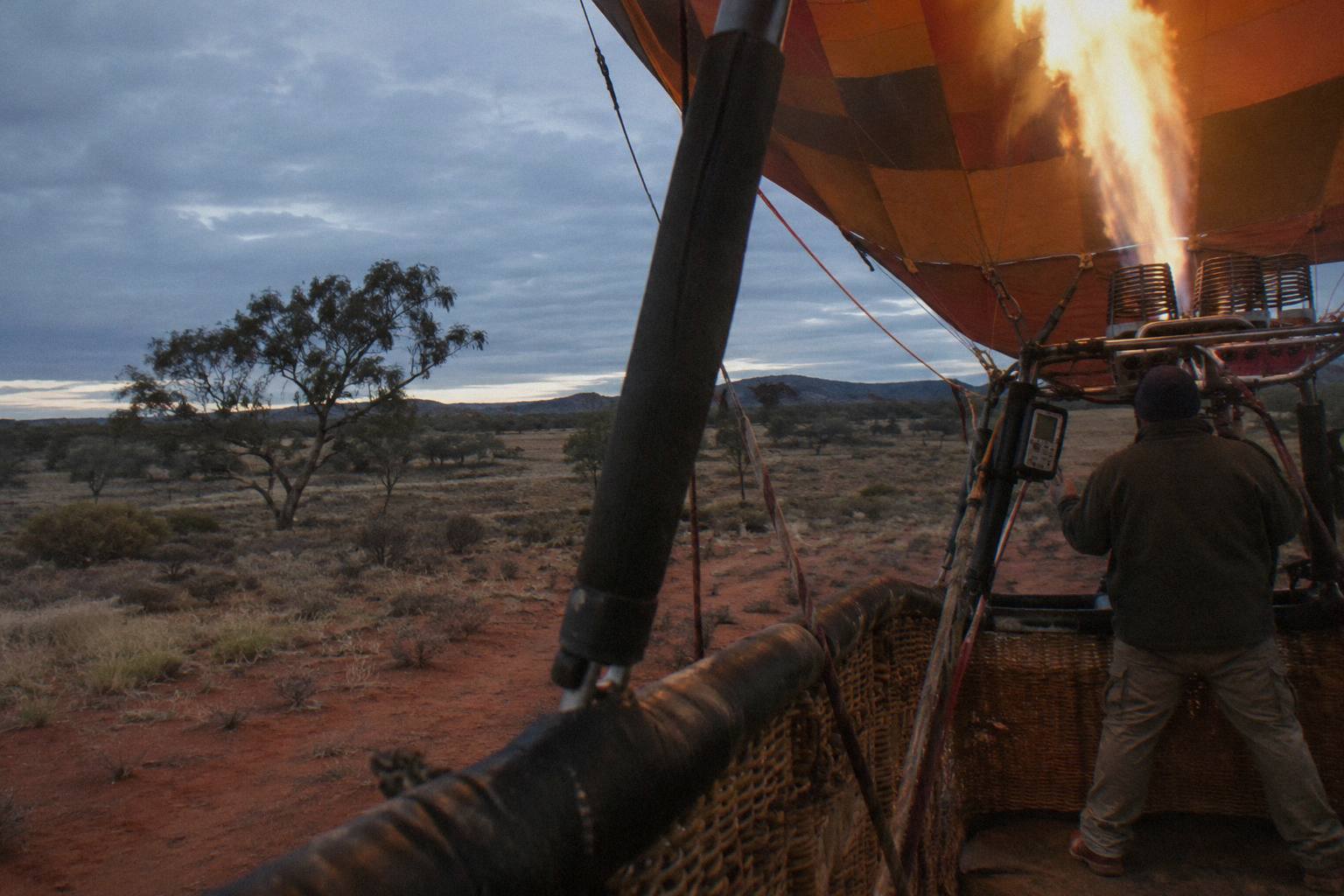
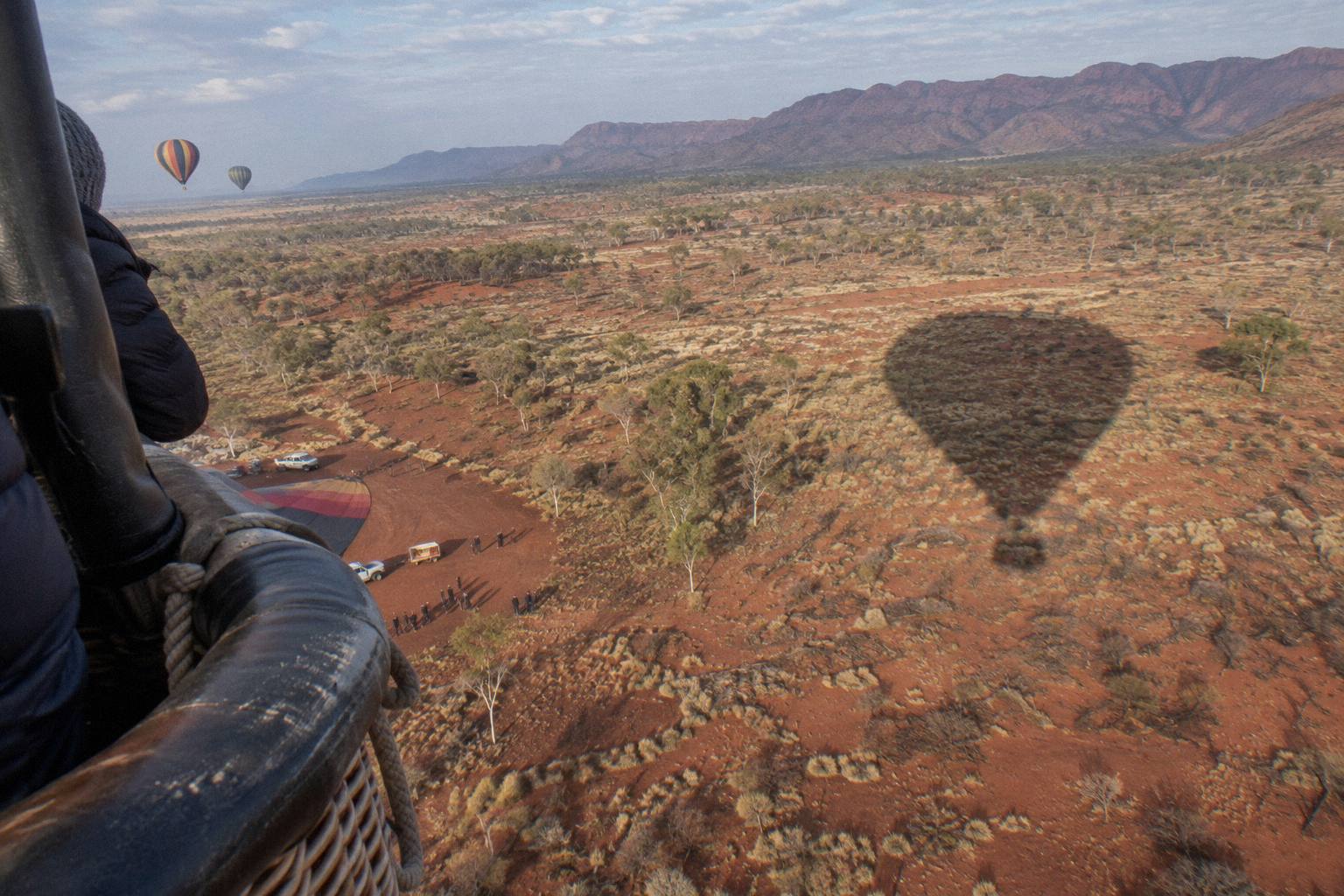
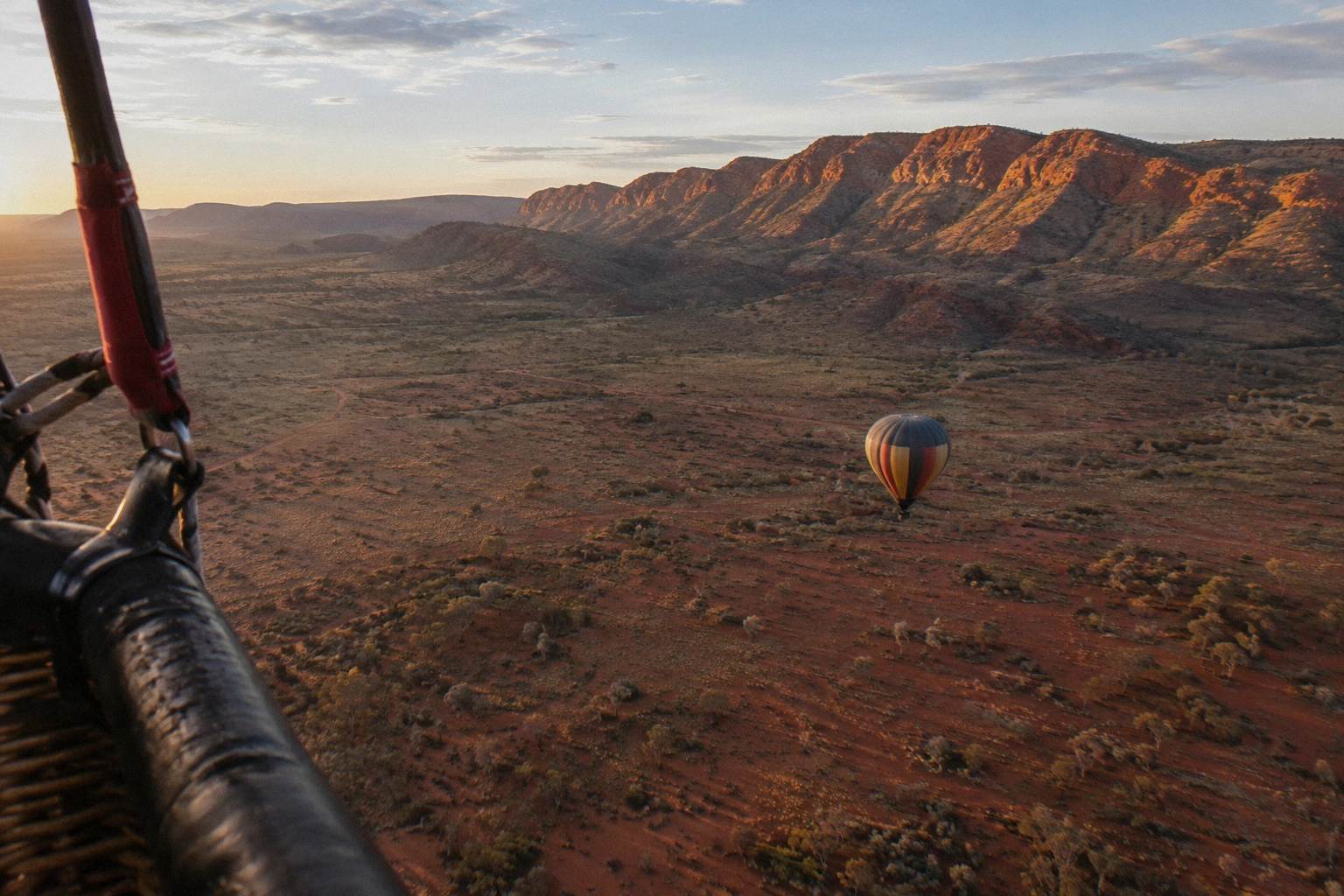
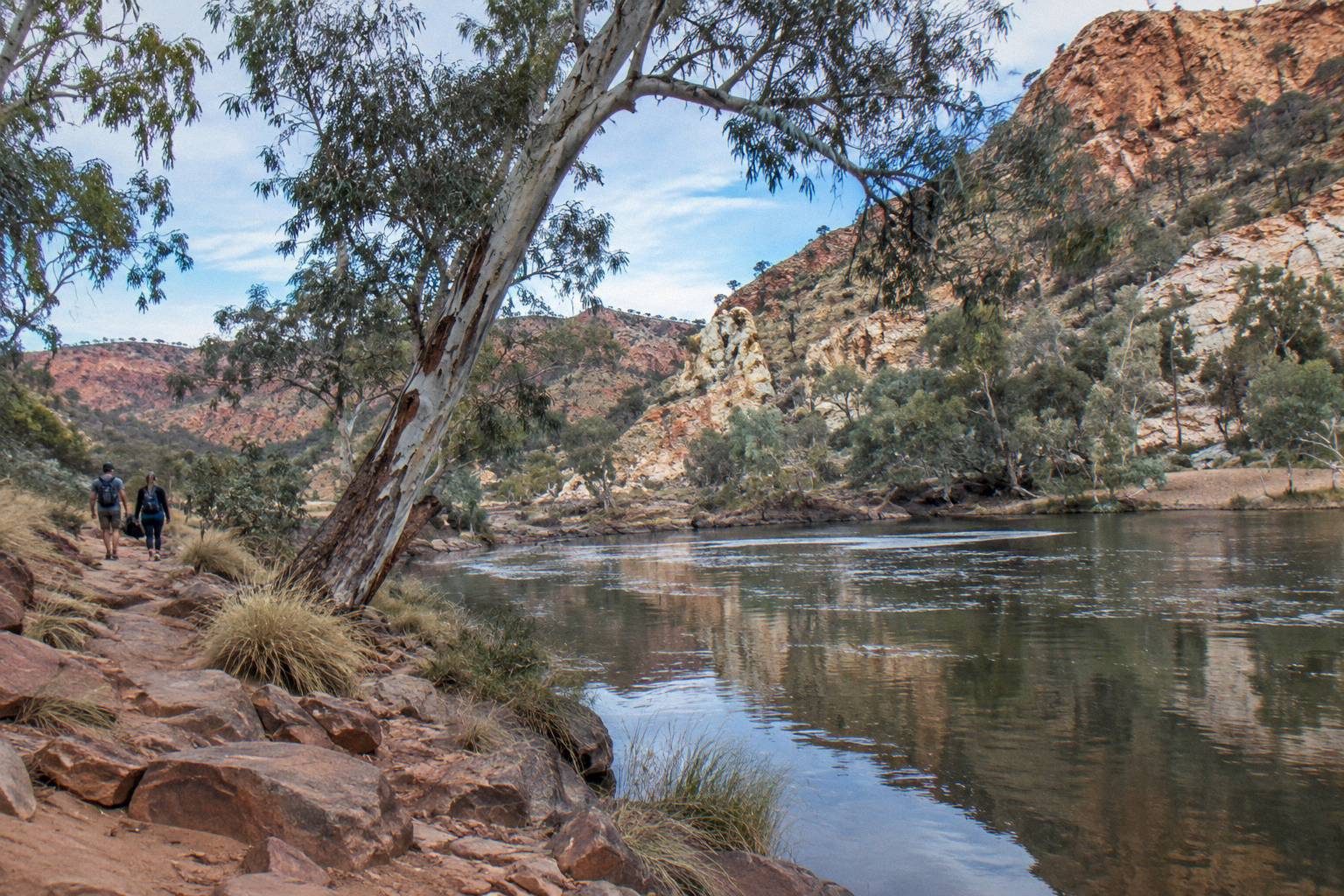
The pilot controls altitude and drift, keeping the flight within roughly the first 1000 feet above ground across historic Owen Springs Cattle Station, typically covering 10 to 20 km, with the MacDonnell Ranges as the lit backdrop rather than a flyover route, since the operator states it does not fly over the Ranges themselves.
Ballooning is often described as not steering, which is true only in the crude sense. A pilot cannot point the balloon left or right, but winds at different altitudes move in different directions and at different speeds, so altitude selection is steering. Climb a few hundred feet and the balloon may drift toward one boundary of the approved area; descend and it settles into a slower layer. Over a 30 or 60 minute flight the pilot works through that layered air to keep the aircraft inside the area chosen for the morning, stay clear of obstacles, and find a landing site the chase vehicle can reach. Other pages covering the same trip are gathered on Alice Springs Hot Air Balloon.
The launch site itself is a morning decision. The operator launches about 15 km south of Alice Springs, adjacent to the MacDonnell Ranges, and the pilot picks the specific field for the wind on the day. Spinifex describes using about 20 launch sites within 30 km chosen the same way, which gives a picture of how fluid the decision is across the local area. No exact coordinates or road names are published for any launch site, so treat any third-party pin with suspicion. The 30 minute dawn flight lifts off from whichever field the pilot chooses that morning.
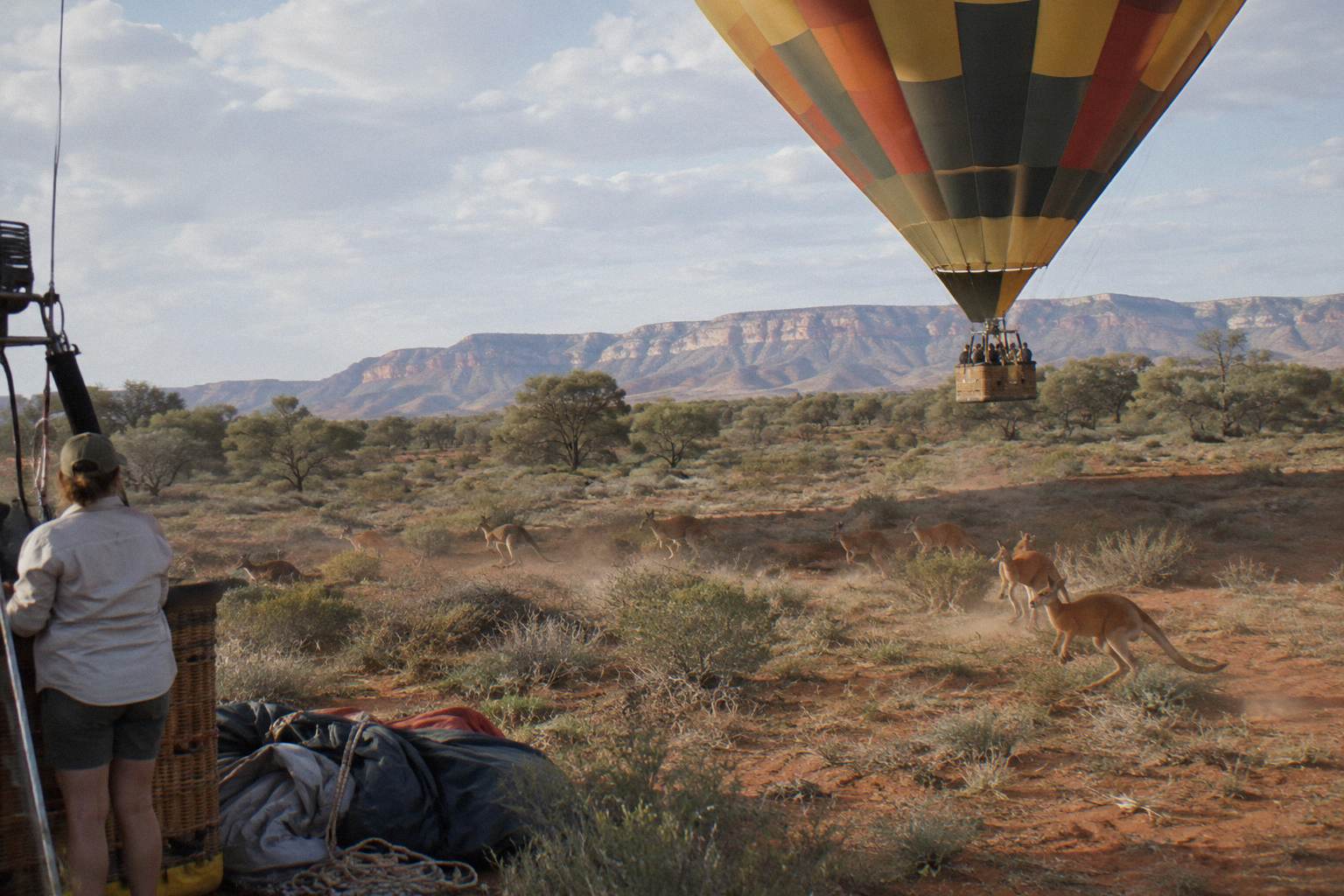
Two expectations worth resetting before you book. First, the operator does not guarantee you will be airborne exactly at sunrise: terms say so plainly, and the flight is timed to the best air rather than to a photo. Second, flight durations are approximate, with no refund if a flight runs under its booked 30 or 60 minutes, and a 60 minute flight cut short is charged as the 30 minute fare. The 60 minute option, per the operator's own description, is the one to pick if spotting red kangaroos, wild camels, spinifex grasses, mulga scrub and cattle country from above is the priority.
How high a balloon flies and why the ceiling here sits around 1000 feet is explained in how high hot air balloons go. If the lower-altitude, longer-ground-view experience appeals, the 60 minute flight can be selected on the flight's own listing, which also shows the second booking page's rating for the identical product.
Does The Pilot Hold The Best Safety Record?
The verified record includes a serious matter: NT WorkSafe reported that Outback Ballooning Pty Ltd was convicted and fined in July 2021 over the 2013 death of a passenger, a combined A$130,000, after the passenger's scarf became entangled in the inflation fan. The operator otherwise states a full CASA compliance stack, and no fatality statistics or industry-wide odds exist in this research to print.
That sentence is stated plainly and without softening because a page about balloon pilots and safety has no business hiding it. The NT WorkSafe media release records the conviction, the combined A$130,000 penalty and the fan-entanglement finding. Legal-entity continuity between the convicted company and the current operating entity, which has a different ABN, is not established, so nothing beyond the conviction as recorded is claimed here.
What the same honesty requires on the other side: this is also why the pre-flight rules about scarves and dangling jewellery exist, and why the operator's terms are strict about loose items at the launch site. The regulatory frame around the current operation is verifiable and current: the AOC, the maintenance organisation approval, licence and medical requirements for pilots, and the insurance mandated by the Civil Aviation (Carriers' Liability) Act 1959. No source supports any claim of an unblemished record for anyone, and none is made. For the industry-wide question of balloon risk, the article on balloon fatality rates treats the numbers that do and do not exist.
Can A Non-Flyer Join The Pilot's Morning?
Yes, as a chase passenger: Outback Ballooning's Balloon Chase follows the flight from the ground for about 4 hours at A$110 adult and A$99 child, with limited space, at least one adult booked on the flight required, and children unable to chase alone. It is the one way to take part in the pilot's morning without leaving the ground.
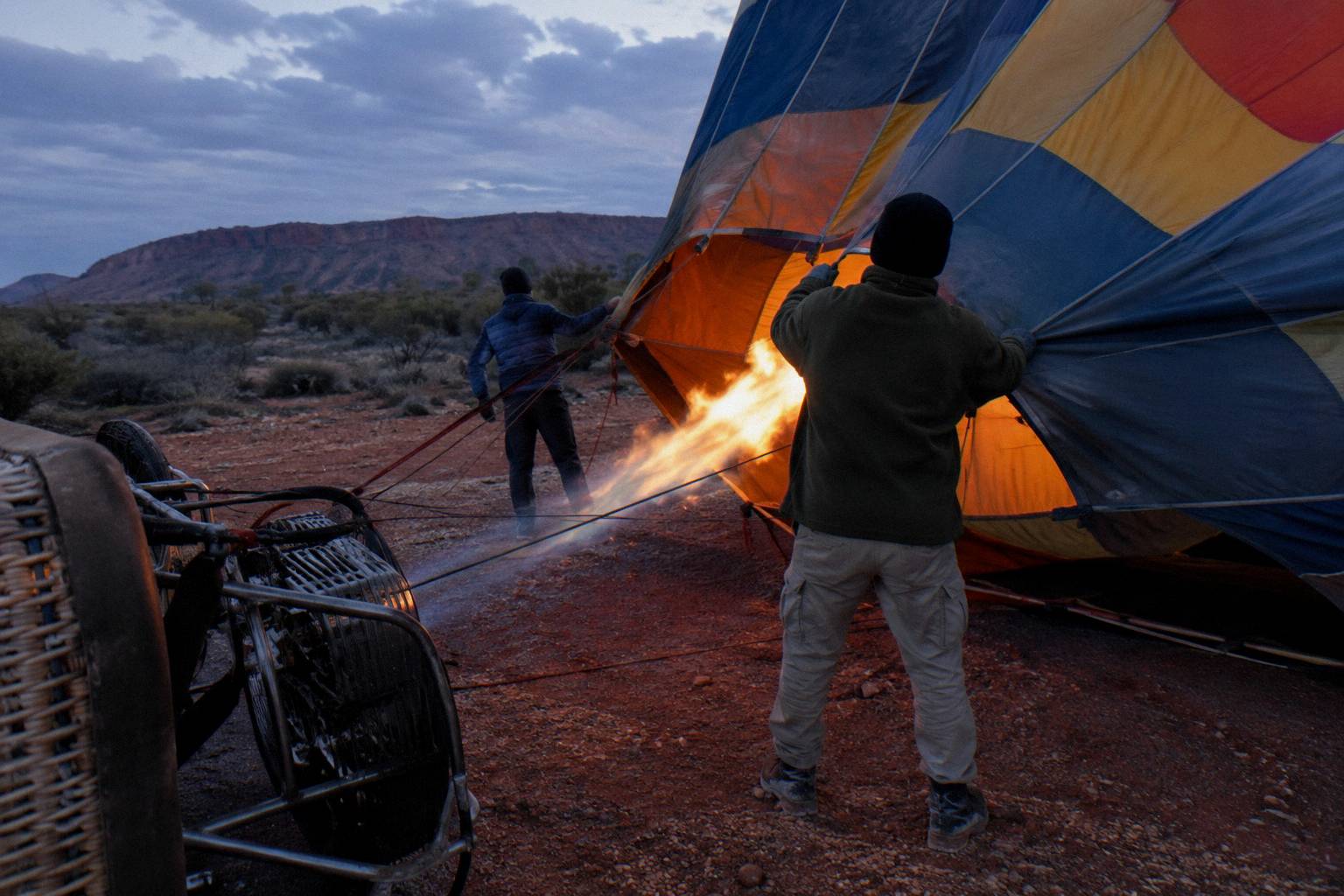
The chase is the under-used option among the experiences on offer. Someone in your party who cannot fly, whether for pregnancy, mobility or preference, can still experience the launch, the radio chatter between pilot and crew, and the landing, riding with the retrieval vehicle that shadows the balloon across the cattle station. The conditions are firm: space is limited, the chase exists on a request basis, and at least one adult must hold a flight booking for the chase to attach to. Solo child chasers are not accepted.
Pricing across the operator's published fares is simple enough to lay out in full. These are the operator's own brochure fares; booking pages can differ from them, and prices can change, so treat the booking page as the deciding figure.
| Product | Adult | Child (6-14) |
|---|---|---|
| 30 minute flight | A$380 | A$340 |
| 60 minute flight | A$450 | A$405 |
| Balloon Chase (ground) | A$110 | A$99 |
Every flight fare includes return transfers from most Alice Springs accommodation, light refreshments with sparkling wine and fruit juice after landing, and the commemorative certificate. Senior and family discounted pricing is said to exist in the operator's terms but no rates are published, so none are quoted. If a gift rather than a booking is the goal, the voucher details are in the gift voucher guide.
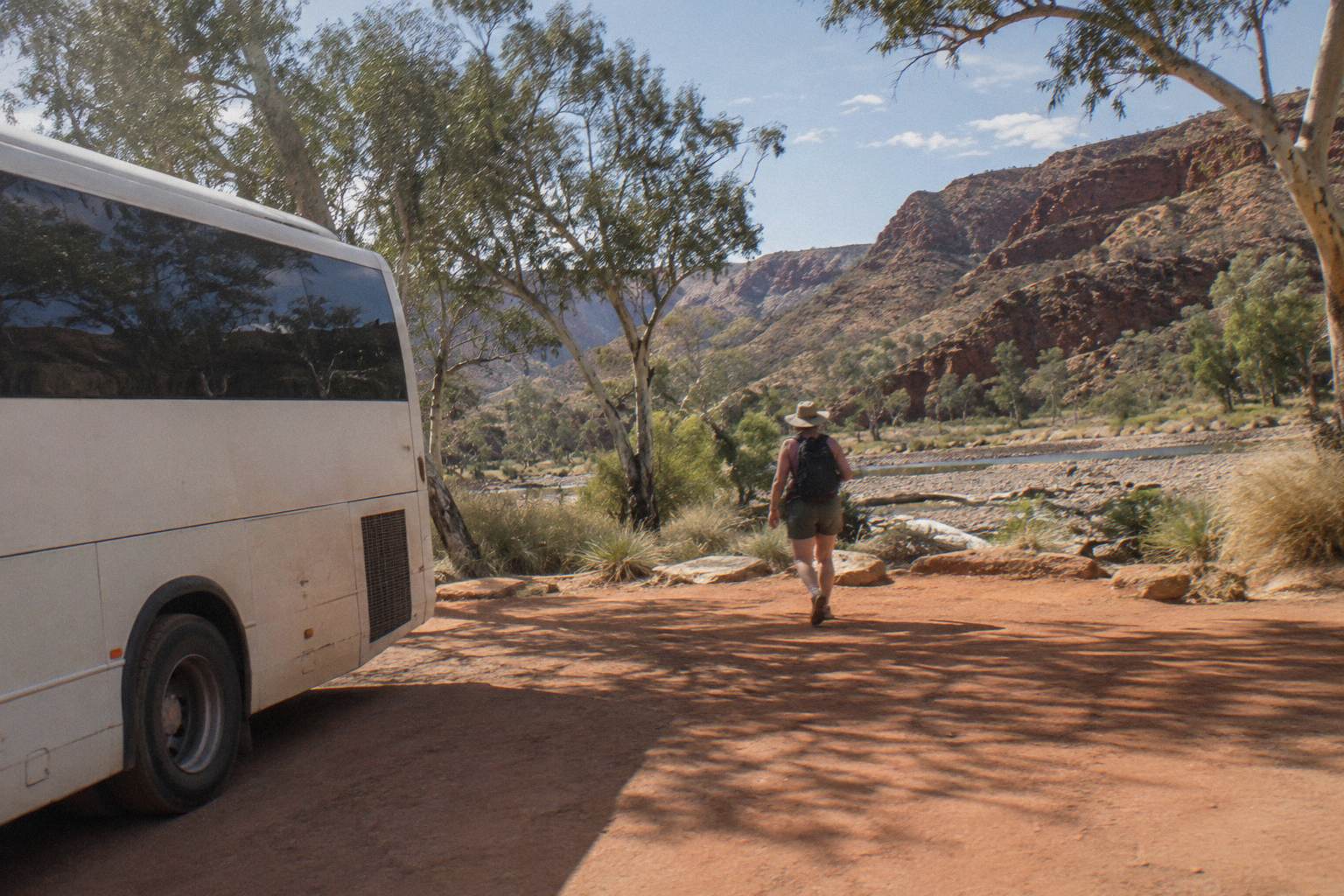
Once the balloon morning is sorted, the rest of the day opens up. Two grounded options from the same booking family work well: the West MacDonnell Ranges day trip, and the West MacDonnell Ranges Day Tour With Lunch, a full-day mini-coach trip that suits the day before or after.
The West MacDonnell Ranges day trip, run by Emu Run Experience and rated 4.7 from 334 reviews, departs 7:45 am and returns about 5:30 pm, which slots neatly after a balloon morning ends near the airport. It includes a guide, Standley Chasm entry, morning tea and a bushman's lunch, with hotel pickup from 22 locations around town. Seeing the Ranges at ground level after watching them lit from the basket is a pairing many travellers plan without realising how cleanly the timings connect.
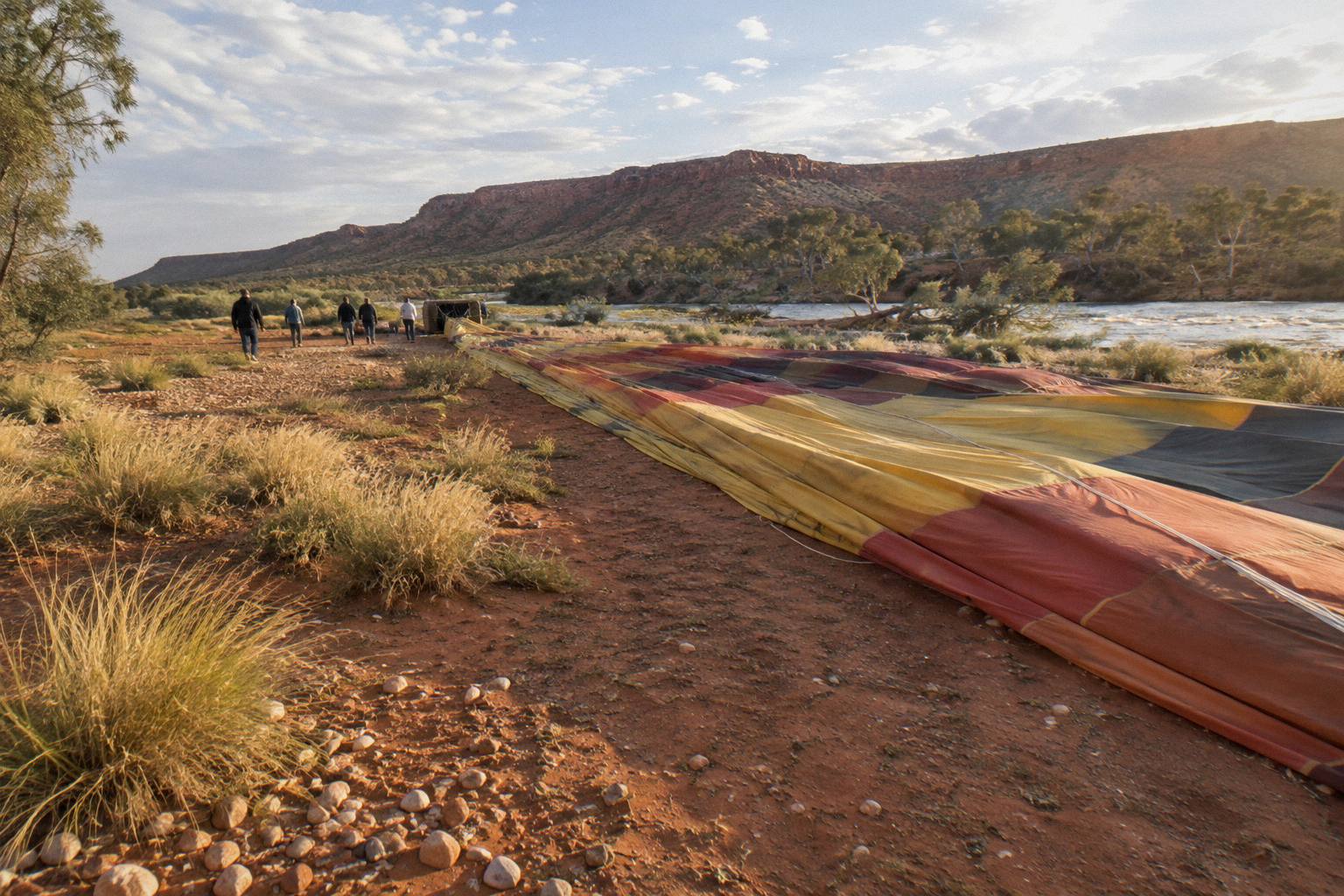
The West MacDonnell Ranges Day Tour With Lunch, run by Wildlife Tours Australia, runs about 10.5 hours with a morning departure, picking up from selected inner-city Alice Springs points. A full day in the ranges suits the day before or after a dawn balloon flight; the considerations specific to cameras aloft are in taking a phone or camera on a balloon.
What Should You Ask Your Pilot On The Morning?
Ask where the wind is taking you, how long the flight is likely to run, whether help with pack-up is wanted, and what the landing position will be, because these four answers shape the whole morning. The pilot is the one person on the field with complete knowledge of the day's conditions, and most enjoy questions asked before the burner fires rather than after.
The launch field is a working site for about half an hour before flight, and that window belongs to the crew and pilot. Where the flight is headed is a fair question, and the answer, typically a 10 to 20 km drift over Owen Springs Cattle Station, tells you which side of the basket to claim for the Ranges view. Duration is worth confirming because the 30 and 60 minute products share one morning operation, and the terms on approximate durations mean the pilot's expectation is your best information. Whether the crew wants help packing the balloon is genuinely an open question, with the operator inviting optional pack-up assistance, and many passengers describe it as the most memorable part. The landing position, knees bent, back to the direction of travel, is the one briefing item to hear properly.
A note on what not to expect the pilot to decide: fares, refunds and booking changes are office matters. The pilot's authority covers flight safety, launch site, loading and passenger suitability, all of it final on the day. Everything administrative runs through the booking channel, including the free changes allowed up to 24 hours before, and the balance payment taken on the morning of the flight itself.
The three bookable pieces of the morning, both flight durations and the grounded day trip that follows, are collected here for a final comparison.
Common Questions About Hot Air Balloon Pilots
What Qualifications Does A Hot Air Balloon Pilot Need?
A CASA Commercial Balloon Pilot Licence, a current aviation medical and an aviation security clearance. At Outback Ballooning, pilots also operate under the company's Air Operator Certificate, CASA.AOC.0496, with the operator holding CASA Approved Maintenance Organisation status and carriers' liability insurance.
Can A Pilot Cancel My Balloon Flight?
Yes, and the pilot's decision on weather is final under the operator's terms. If weather cancels the flight you rebook another day or take a full refund if prepaid. Flights can also be cancelled for minimum numbers.
Can The Pilot Refuse To Fly A Passenger?
Yes. Medical conditions and disabilities must be notified in advance and are assessed individually, with the pilot's discretion absolute. Pregnancy beyond 12 weeks is not flown, and every passenger must climb into the roughly 1.2 metre basket unaided and stand for the flight.
Is The Pilot The Same Person Who Decides Where You Launch?
Yes. The launch site, typically chosen from fields about 15 km south of Alice Springs, is picked on the morning for the wind, and the pilot manages altitude in flight to steer the drift, usually 10 to 20 km across Owen Springs Cattle Station.
How Much Does A Flight With A Licensed Pilot Cost In Alice Springs?
The operator's published fares are A$380 adult and A$340 child for the 30 minute flight, and A$450 adult and A$405 child for the 60 minute flight, with transfers, refreshments and a certificate included. Prices can change, so check the booking page before booking.