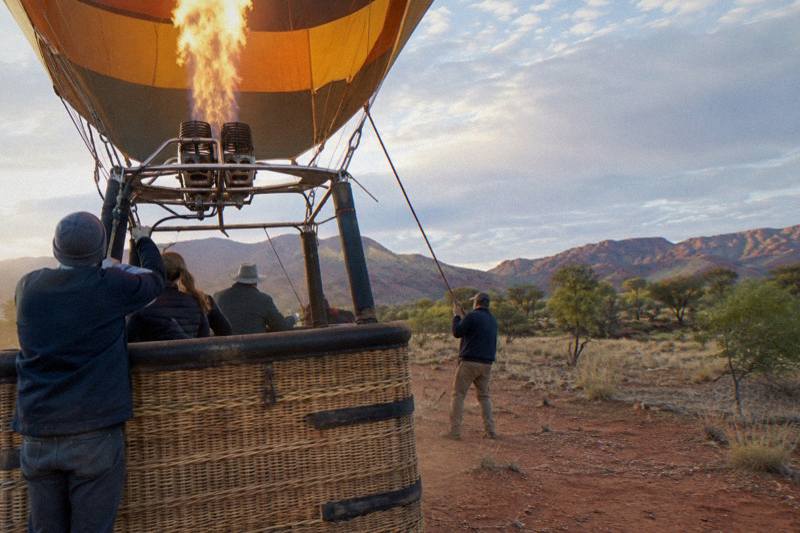
Why Can't You Wear White On A Hot Air Balloon In Alice Springs?
The Alice Springs balloon operators ask passengers not to wear white, and here is exactly what the clothing rules say, what to wear instead by season, and which items are banned outright.
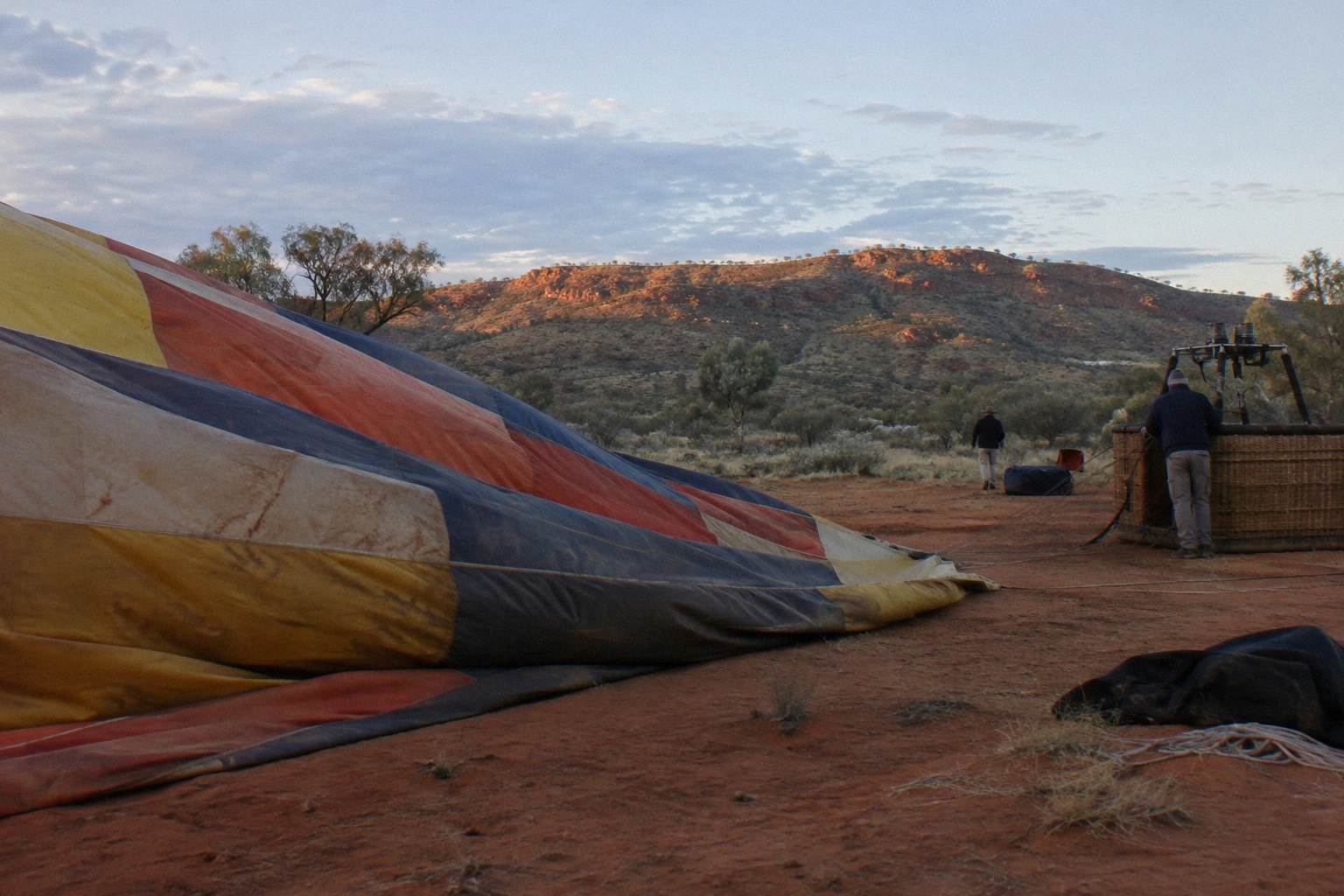
The honest answer is that the operator asks for it without explaining it. Outback Ballooning, the company flying over Owen Springs Cattle Station since 1986, lists its clothing guidance as outdoor clothing, not white, long pants, a hat and enclosed flat shoes. It gives no reason for the white exclusion anywhere in its terms, its FAQ or its brochure. Spinifex Ballooning, the other brand over the same country, says nothing about white at all.
That is an unsatisfying answer, and this page will not dress it up. What the research for this site did find is a short, specific set of clothing rules from the operators themselves, plus a hard safety ban on one particular item, the scarf, that has a documented and serious history in this industry. So rather than guess at the white rule, the useful thing is to set out everything the operators actually say, then look at what Central Australian mornings do to clothing, because that part is measurable and it is in the official Bureau of Meteorology record.
If the question has brought you here because you are deciding what to pack for a flight, the short version is this: dark outdoor clothing, long pants, enclosed flat shoes, warm layers between May and September, and absolutely no scarf or dangling jewellery. The flight sold through this site, the 30 or 60 minute dawn flight by Outback Ballooning, is rated 4.9 from 288 reviews on its main booking page, and its crew will confirm the dress code when the exact pickup time is reconfirmed the day before. The deeper question of whether the flight itself suits you is covered in whether an Alice Springs balloon ride is worth booking.
What The Operator's Clothing Rules Actually Say
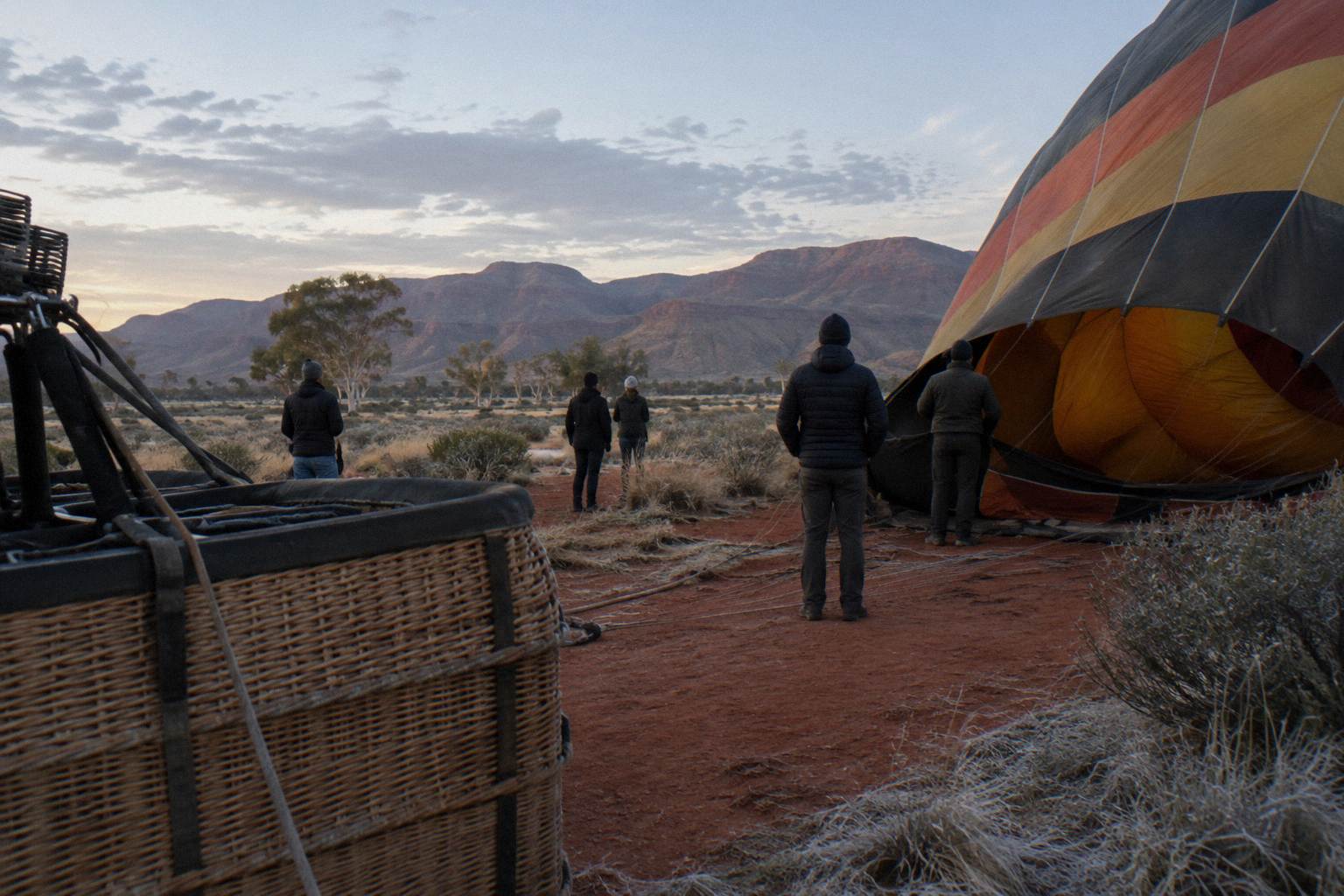
Outback Ballooning's guidance, stated on its own pages, is: outdoor clothing, not white, long pants, a hat, and enclosed flat shoes with no high heels. Warm layers are recommended about May to September. At the launch site, no dangling jewellery and no scarves, and backpacks stay on the bus. Spinifex Ballooning, which flies the same area under the same CASA air operator's certificate, advises a light jacket from April to October and very warm clothing in mid-winter.
Neither operator publishes a document called a dress code. The rules sit in the FAQ and what-to-expect pages, phrased as packing advice rather than conditions of carriage, with one exception: the scarf and dangling jewellery ban is stated as a firm rule for the launch site, and it is the one item on the list with a safety dimension the operator does not spell out on the page. Everything else is practical. Long pants matter because you stand in an open basket, about 1.2 metres high, for the whole flight, and because the landing can involve the basket dragging or tipping on desert ground.
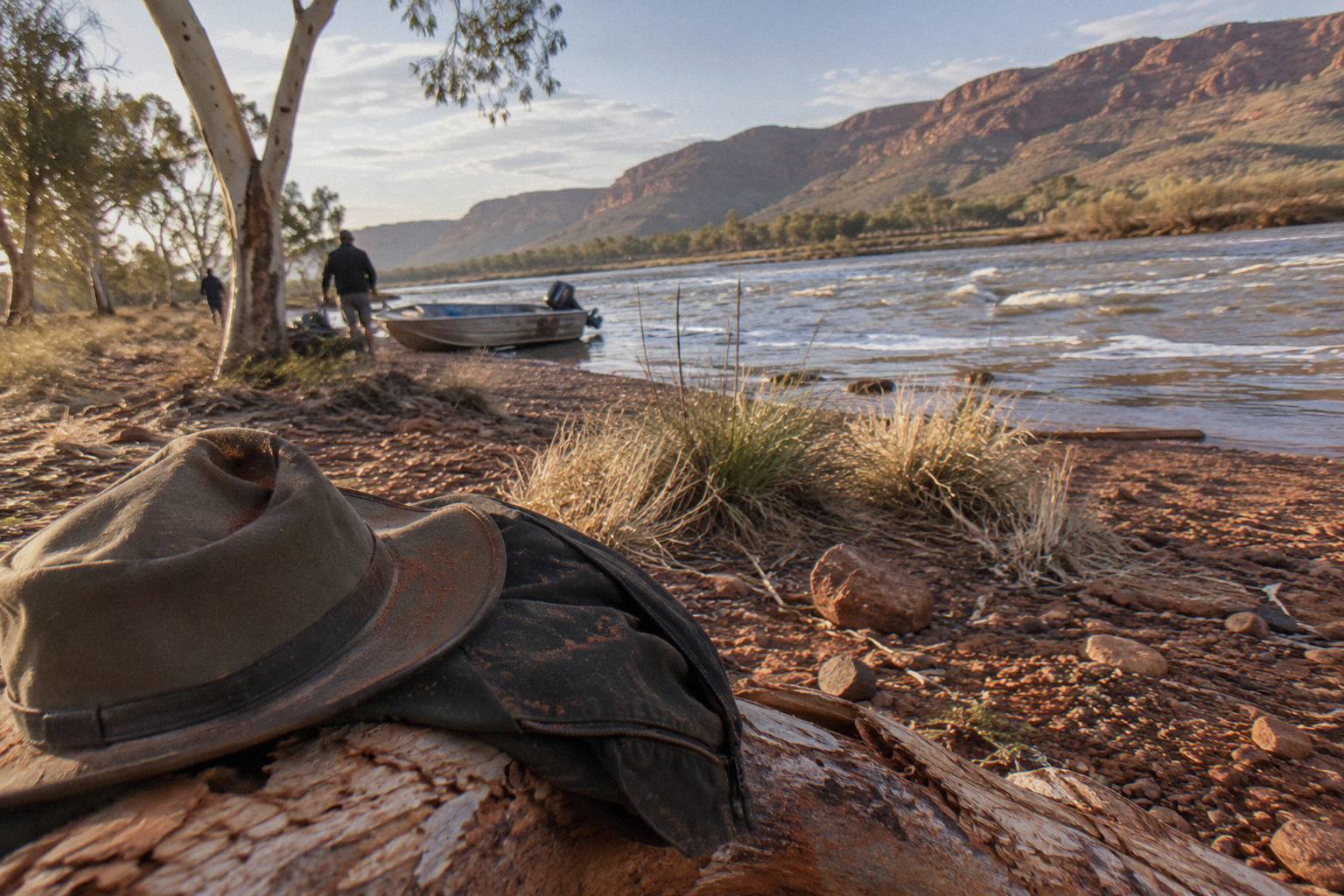
The "not white" instruction is the only line the operator leaves completely unexplained. The operator's home page, FAQ, terms of travel, conditions page and current brochure give no reason at all. Plenty of third-party pages offer theories, dirt and dust chief among them, but those are guesses by copywriters, not statements by the operator, and repeating a guess as fact is how packing myths spread. The defensible position is simple: the operator says not white, the operator does not say why, and a dark or coloured outfit costs you nothing.
What the rules do not cover is also worth knowing. Whether cameras, phones or drones are allowed or restricted is not stated in any of the operator's published material, so if your outfit choice is built around a phone in hand for photos, ask the operator directly when booking. For a fuller packing list beyond clothing, the first flight preparation guide covers timing, check-in and the waiver that arrives by email five days before.
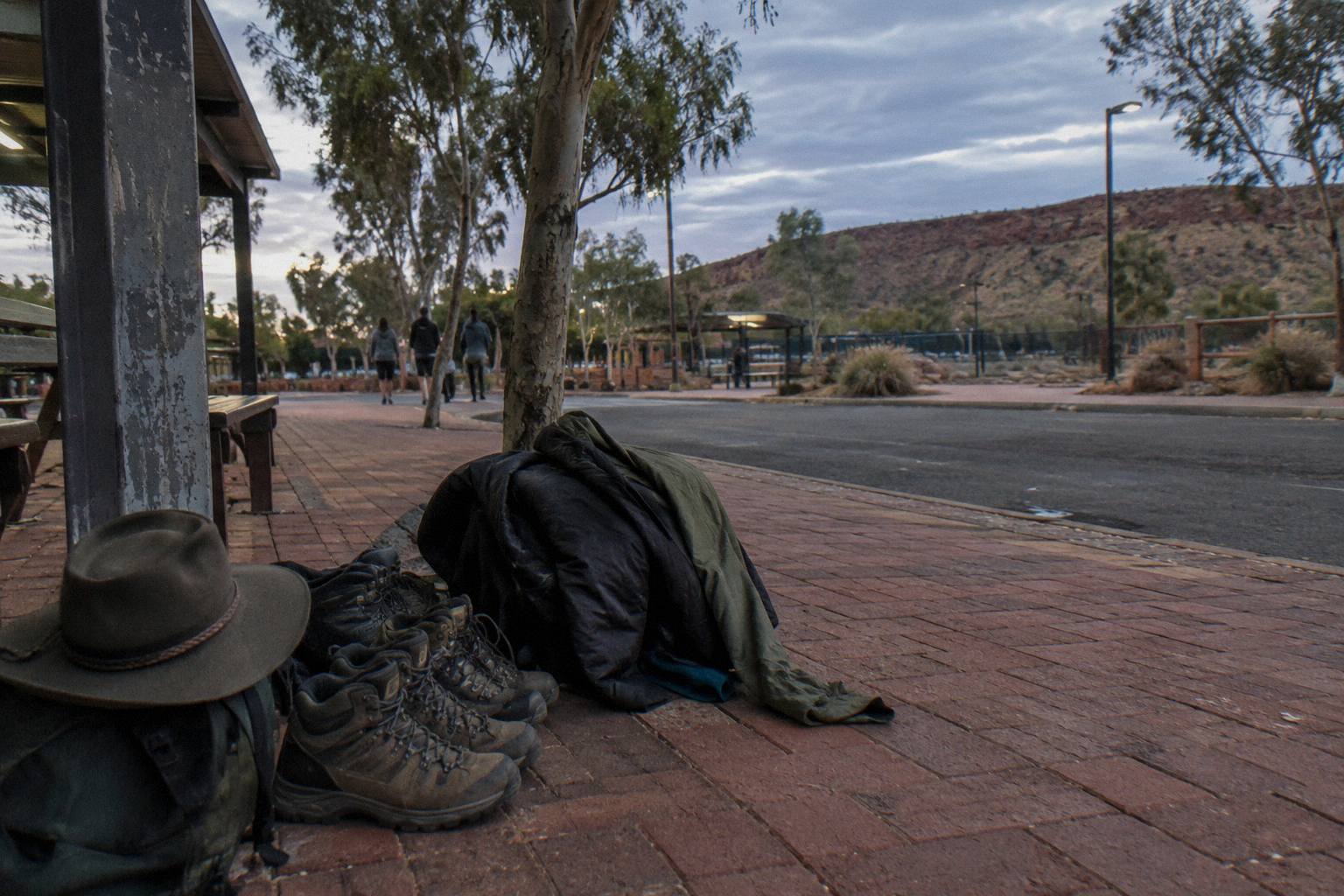
The Scarf Rule Is The One With A Real History
Unlike the white clothing note, the ban on scarves and dangling jewellery at the launch site connects to a documented fatality. NT WorkSafe records that Outback Ballooning Pty Ltd was convicted and fined in July 2021 over the 2013 death of a passenger whose scarf became entangled in the inflation fan, a combined penalty of A$130,000. The operator's clothing rules now prohibit scarves and dangling jewellery on the launch field.
That is a hard fact and it belongs on any honest page about balloon clothing rules, so it is stated plainly here. The inflation fan is a large, unguarded-by-design piece of machinery used to push cold air into the envelope before the burner heats it, and passengers stand near it during inflation. A loose scarf, a long necklace, a camera strap worn loose around the neck or a drawstring hanging from a hood all present the same basic hazard around rotating machinery, which is why the rule is written broadly: nothing dangling, at the launch site specifically.
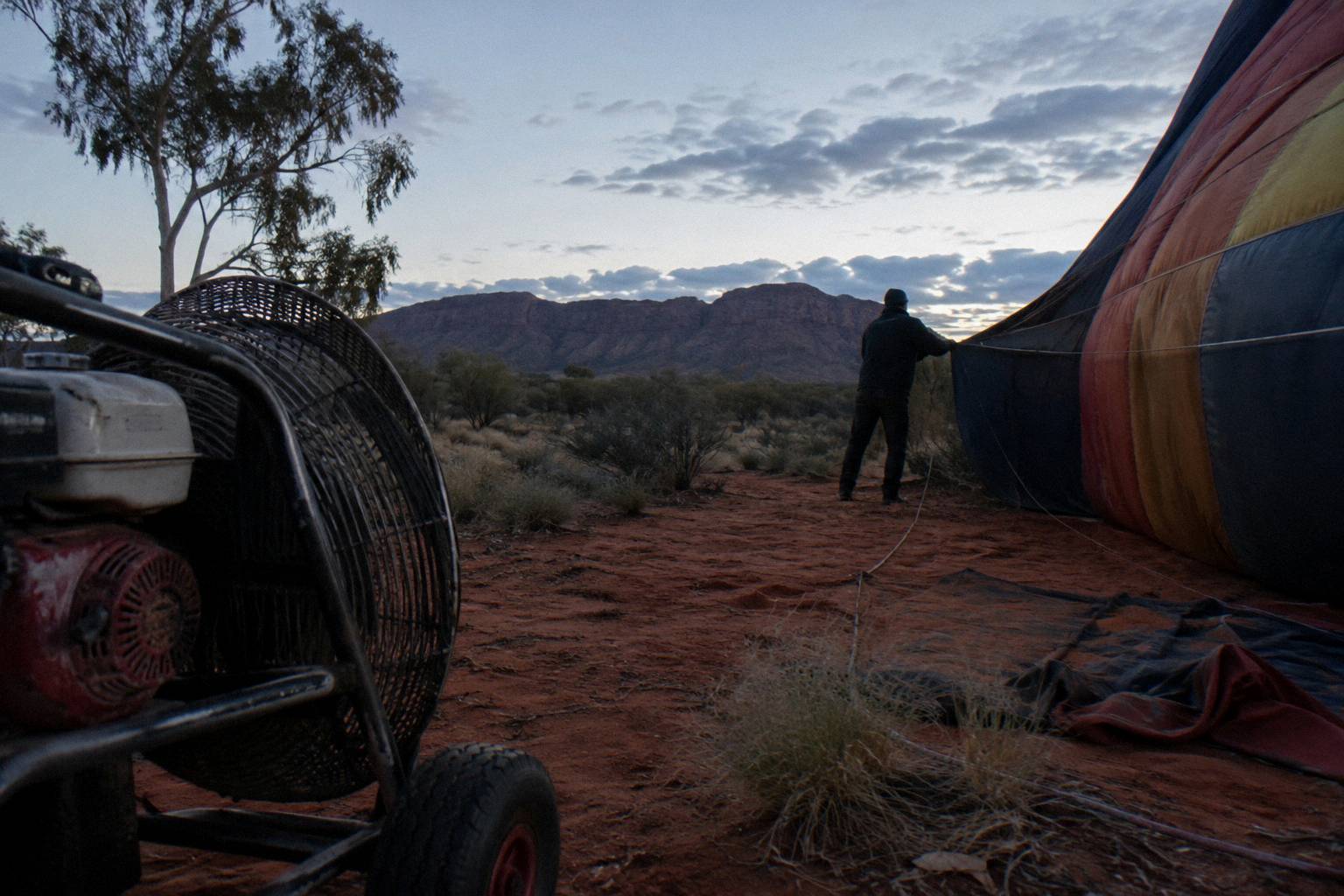
The practical translation for your outfit is straightforward. A woollen scarf for warmth is a reasonable thing to bring on a July morning in Alice Springs, where the mean minimum sits at 3.9 degrees, but it goes on after launch is complete and the fan is off, or better, you replace it with a high-collar top or a neck warmer that tucks flat. Hoodie drawstrings can be tied off or tucked inside. Long earrings, pendant necklaces and loose bracelets are best left in your bag, which stays on the bus anyway under the operator's rules.
None of this is a reason for anxiety, and it should not be read as one. It is the same logic as tying back long hair around any machinery: a small habit that removes a rare but real hazard. The broader question of how safe hot air ballooning is overall is covered in its own guide, including the operator's CASA certification and licensing in detail. For this page, the point is narrower: of every clothing rule the operator lists, the scarf ban is the only one with a publicly documented reason, and it is a reason worth respecting.
What An Alice Springs Dawn Does To Clothing
Clothing advice for this flight is really advice about two very different hours: the launch field before sunrise, when July pre-dawn temperatures average close to 4 degrees, and the flight itself, where the burner overhead radiates noticeable heat. The Bureau of Meteorology's 85-year record for Alice Springs Airport shows the widest seasonal swing of any Australian ballooning region this site covers, from 21.6-degree January minimums to 3.9 in July.
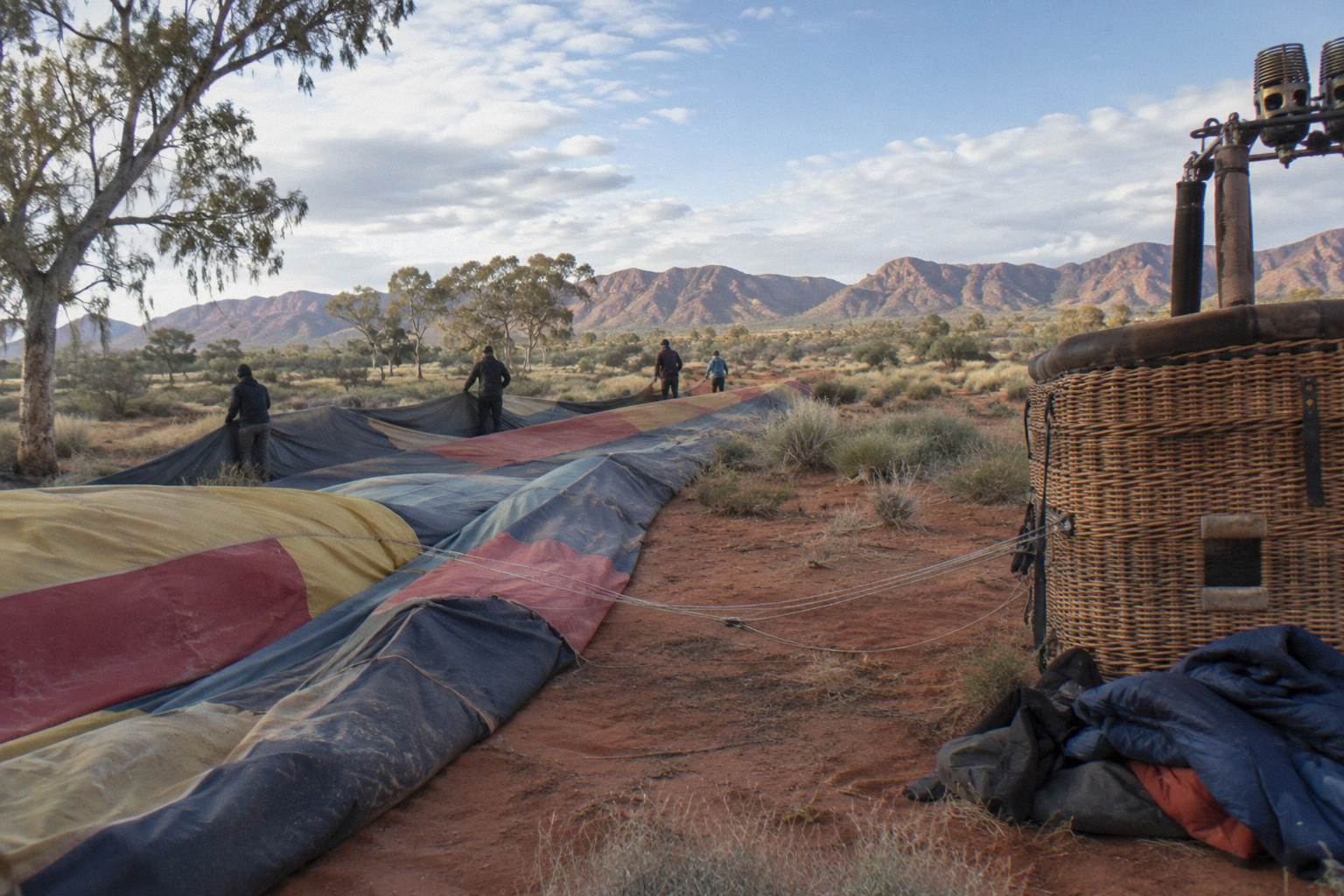
The numbers come from the Bureau of Meteorology's climate averages for Alice Springs Airport, station 015590, compiled from 1941 to 2026, and they are whole-day statistics, so pre-dawn launch temperatures sit close to the minimum row. You are picked up roughly an hour before first light, around 4:15am in summer and around 5:45am in mid-winter per the operator's own anchors, which means standing on open red ground in the coldest hour of the day, then standing under a burner that pushes heat down onto the basket once the flight begins. Layers are not a cliché here, they are the literal solution to a forty-minute swing.
Dust is the other force at work. The launch site is about 15 km south of Alice Springs on cattle station country, and the ground is fine red pindan-style dirt that finds its way into shoes, cuffs and light-coloured fabric. Whether this is the reason behind the "not white" instruction is not stated by the operator, so it remains unconfirmed. It is simply true that red dirt plus white fabric is a combination most travellers regret, whatever the operator's reasoning. The full seasonal guide to the best time to fly works through when to schedule the trip itself.
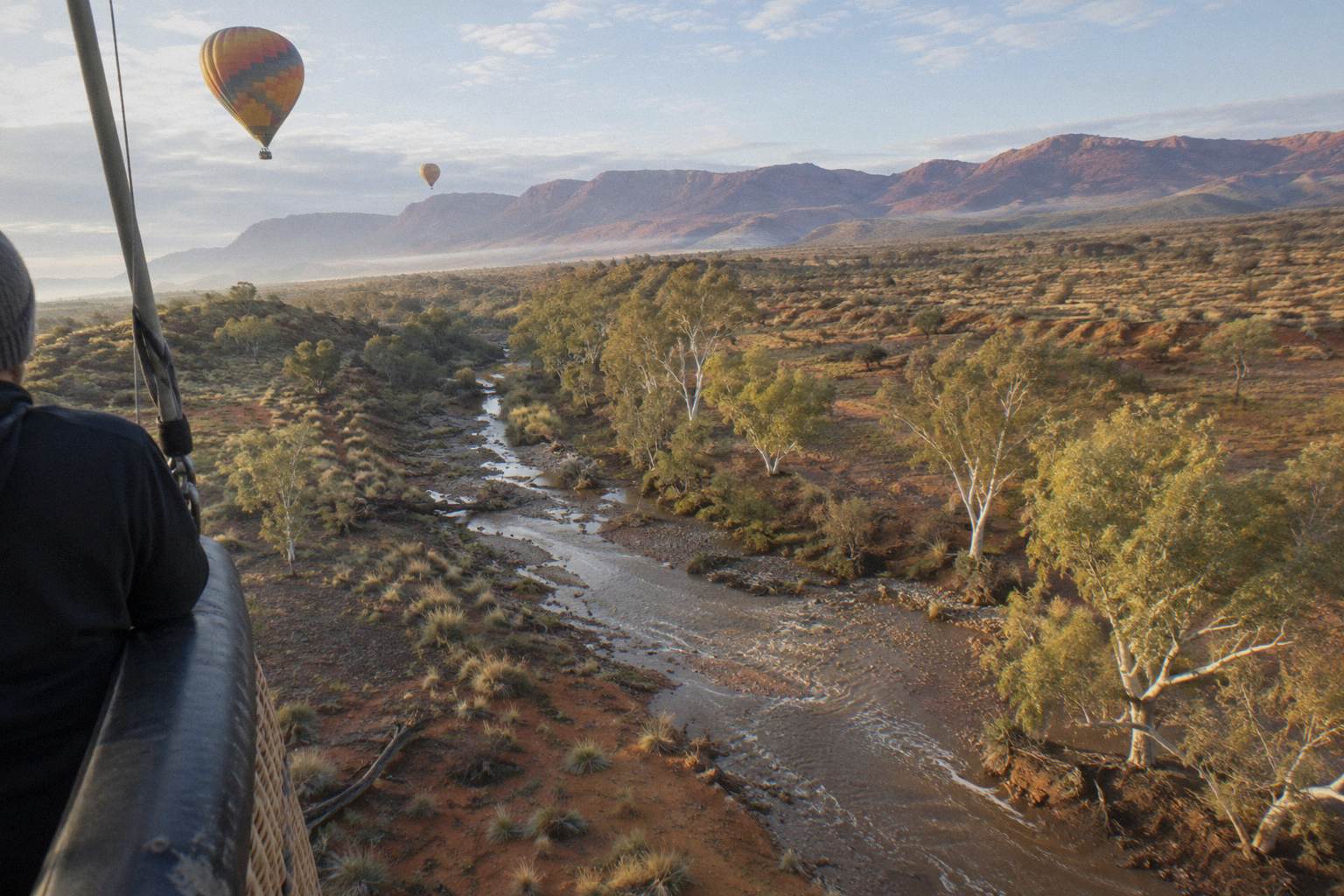
What To Wear By Season, Month By Month
The layering rule from the operators is simple: warm layers from about May to September per Outback Ballooning, a light jacket from April to October and very warm clothing in mid-winter per Spinifex, and ordinary outdoor clothing the rest of the year. The table below maps those instructions onto the Bureau's monthly minimums so you can translate a month into a wardrobe.
| Months | Mean minimum (C) | Lowest on record (C) | What this means for clothing |
|---|---|---|---|
| December to February | 20.3 to 21.6 | 8.5 to 10.0 | Light outdoor clothing, long pants still advised; a light layer for the bus |
| March to April | 12.6 to 17.7 | 1.4 to 6.1 | A jacket from April; mornings cool noticeably through autumn |
| May to September | 3.9 to 10.3 | -7.5 to -1.0 | Warm layers, beanie, closed shoes; mid-winter calls for very warm clothing |
| October to November | 14.9 to 17.9 | 1.3 to 3.5 | A light jacket, comfortable outdoor clothing, sun protection |
Two details sharpen that table. First, the record lows show how far a cold snap can run below the average: July's mean minimum is 3.9 degrees, but the airport has recorded -7.5, so a mid-winter booking deserves serious warmth, thermal base layers included, not just a jumper. Second, the burner changes the arithmetic the moment the envelope is inflated. Passengers directly under it feel radiant heat quickly, which is why zip-up layers you can shed without taking off a harness or shoes, because there is no harness, and no seating, beat a single thick pullover you cannot remove gracefully in a 60-centimetre basket compartment. When you book the 30 minute dawn flight, plan the outfit around both extremes: cold at launch, radiant heat once the burner runs.
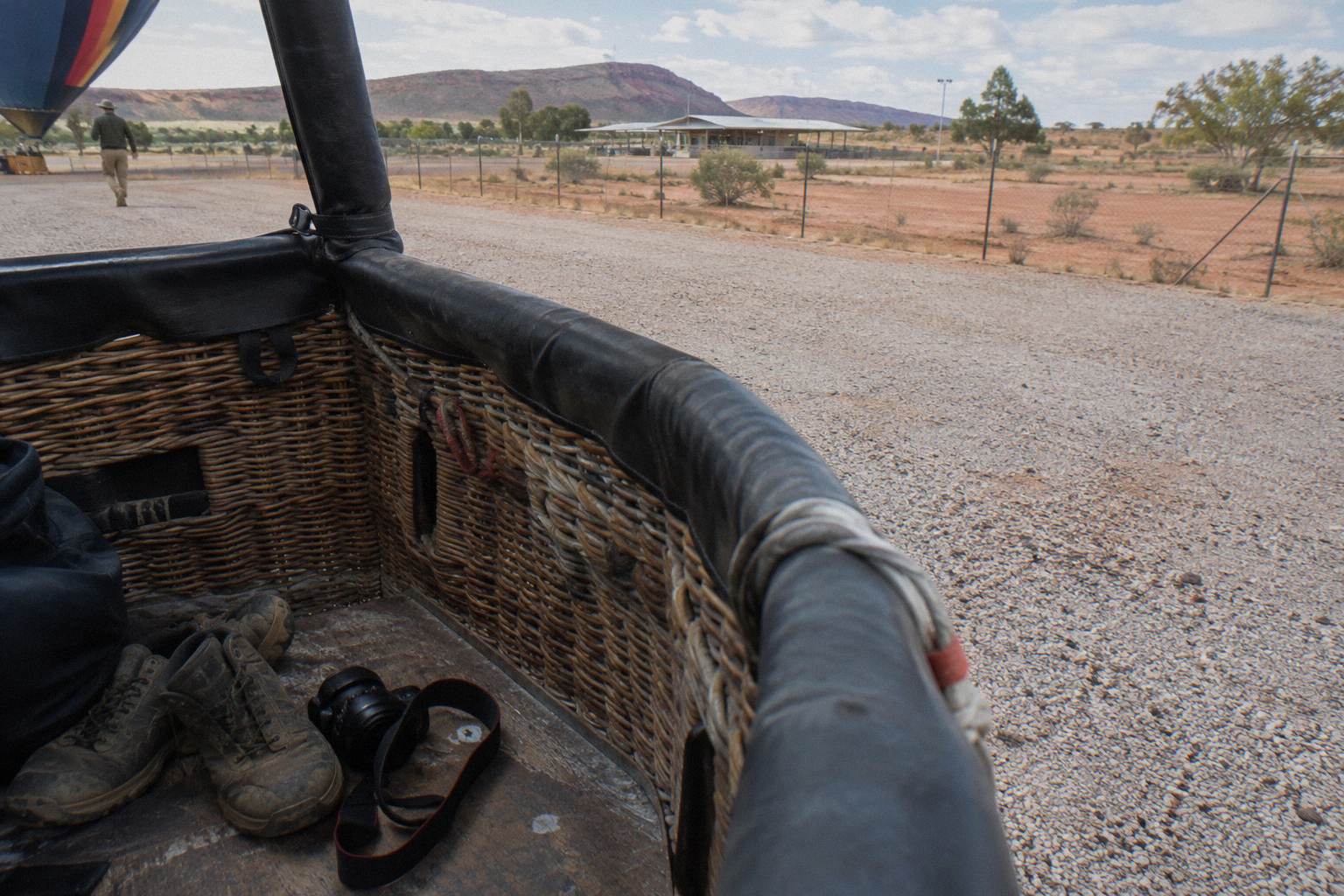
Footwear deserves its own line of thought because the basket imposes a hard physical requirement. You must climb into it unaided, using foot holes in the side, to a rim height of about 1.2 metres, and stand for the duration. Enclosed flat shoes with grip serve all three needs: the climb, the standing, and the landing, where the basket can lean or bump along the ground before it stops. High heels are named and ruled out by the operator, and sandals or thongs fail the same tests even though they are not named. The full clothing and gear guide extends this into hats, hair ties and what to do with a bag.
The Colour Question, Beyond White
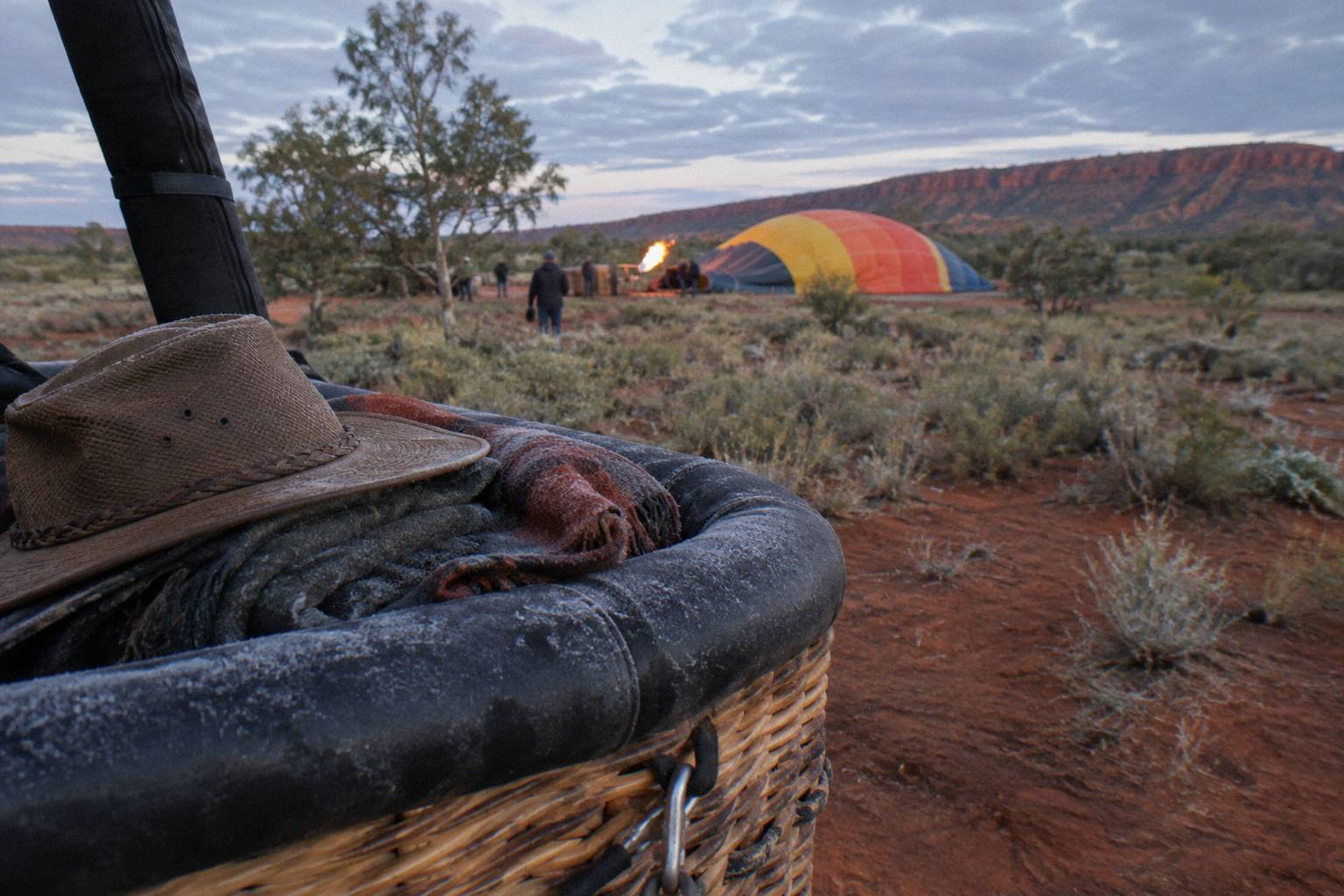
Since the operator will not explain the white rule, treat colour as a dirt-and-function decision rather than a rule to decode. Dark and mid-tone colours hide the red dust that settles on passengers during inflation and pack-up, and they cost nothing in warmth or comfort. White jeans, white sneakers and pale jackets fail those tests on station country, regardless of why the operator excludes them.
There is also a photography angle, and it is one the operator does not mention. The hour after first light in Central Australia is golden and warm-toned, and a white top in a passenger photo picks up that light as a blown-out highlight while everyone around you photographs each other in the basket. Mid-tones photograph better. Whether camera policy restricts what you can bring is not stated by the operator, so confirm phone and camera arrangements directly; the question of taking a phone or camera on a balloon is covered in its own post with the same honest caveat about what is and is not published.
If your outfit planning is really colour planning for photos, the same logic applies to the whole palette. Earth tones, dark denim, olive, navy and burgundy all sit comfortably in the landscape and hide dust. One practical note worth repeating: not white does not mean only black, and in the January heat a black long-sleeve top is its own punishment. A mid-tone long-sleeve shirt in a breathable fabric is the better summer choice.
The last colour-adjacent item is the hat, which the operator recommends and which serves two purposes at once: sun protection once the sun is up, and warmth retention in winter, since a beanie under a brimmed hat or in place of one is standard cold-morning practice. A hat with a cord is not necessary and the cord itself edges toward the dangling-items rule, so a snug brimmed hat or a plain beanie is the cleaner choice at the launch site.
Cameras, Phones And The Operator You Should Ask
What the operator publishes about cameras, phones and drones is, plainly, nothing: no fetched page, FAQ entry or brochure line states a policy either way. Rather than repeat third-party guesses, this page's advice is to ask the operator directly when booking, and to treat the dangling-items rule as your only firm constraint, which rules out loose camera straps around the neck during inflation and anything hand-carried during the climb into the basket.
The reason this matters for clothing is that most people's outfit decisions now include a phone pocket or a camera bag. The bus is where backpacks stay per the operator's rules, so anything you want in the air travels on your person: a zipped pocket for a phone, or a camera on a strap secured tight against the body rather than swinging loose. Drone policy in particular is worth asking about, because airspace around the launch corridor is active aviation space and assumptions are a poor substitute for an answer.
The booking confirmation process gives you two natural moments to ask. The exact pickup time is confirmed on booking and again the day before, and the online check-in waiver arrives by email five days before the flight, so a reply to either message with a clothing or camera question lands with someone who can answer it with authority. Questions about drones or professional photography equipment deserve the earlier slot, since the answer may affect what you pack at all.
For travellers combining the balloon with a same-day plan, clothing choices compound. The flight ends with light refreshments and sparkling wine on the ground, and the whole trip runs about four hours from pickup, so what you wear at 5:45am is still what you are wearing at morning tea and possibly at the airport, since the operator can drop guests there on request. An outfit that works standing, climbing, toasting and walking is the goal, and that is exactly what the operator's list describes.
Not every Central Australian experience starts before dawn, and the outfit logic differs. The West MacDonnell Ranges Day Tour With Lunch below is a full-day morning trip that suits a separate day, when dust is still a factor but the pre-dawn cold is not, so it rewards the same footwear thinking with far less layering.
A Packing Checklist That Follows The Rules
The complete clothing answer, drawn only from what the operators publish, fits in one short list: long pants, enclosed flat shoes, a hat, outdoor clothing in any colour except white, warm layers May to September, nothing dangling at the launch site, and your bag left on the bus. Everything beyond that list is comfort optimisation, not requirement, and the table below separates the two so you can pack in five minutes.
| Item | Status | Why |
|---|---|---|
| Long pants | Operator-advised | Standing in an open basket; landing contact with the ground |
| Enclosed flat shoes | Operator-required (no high heels) | Climbing the 1.2 m basket unaided; standing for the flight |
| Hat | Operator-advised | Sun after launch; warmth retention in winter |
| Non-white outdoor clothing | Operator-advised | Reason not stated by the operator |
| Warm layers, May to September | Operator-advised | Mean minimums of 3.9 to 8.1 degrees across those months |
| Scarf at the launch site | Prohibited | Dangling items near the inflation fan; documented fatality history |
| Dangling jewellery | Prohibited | Same launch-site rule |
| Backpack | Stays on the bus | Operator rule; carry essentials in pockets |
| Phone or camera | Not stated | Ask the operator directly when booking |
One closing thought on the white question itself. A clothing instruction that comes without a reason invites invention, and the internet has supplied plenty, but the operators' silence is itself information: if white were dangerous, it would sit in the scarf paragraph of the rules rather than the colour note. Treat it as a practical preference from a company that has dressed thousands of passengers on red dirt since 1986, pack the mid-tones, and spend your worry instead on the one rule that carries real weight, which is keeping everything snug and nothing dangling near the fan. The dawn flight itself, whatever the booking page rating says, is there to be enjoyed, and the right outfit is simply the one you stop thinking about.
Planning the wider morning is the natural next step, and the guide to Alice Springs ballooning from Alice Springs Hot Air Balloon pulls together timing, prices and the pickup logistics that shape what you can realistically wear and carry on the day.
Common Questions About Wearing White On A Balloon
Why Can't You Wear White On A Hot Air Balloon?
The operator, Outback Ballooning, lists "outdoor clothing, not white" among its clothing guidance but gives no reason for the white exclusion in its FAQ, terms or brochure. The most defensible practical reading is that red desert dirt shows badly on light fabric, but that is inference, not an operator statement, so treat it as a packing preference rather than a safety rule.
Is White Clothing Banned From Alice Springs Balloon Flights?
No operator document calls it a ban. It appears as advice in the clothing guidance, alongside long pants, a hat and enclosed flat shoes. The only outright prohibitions in the operator's rules are scarves and dangling jewellery at the launch site, high heels, and backpacks carried into the basket.
What Should I Wear On A Balloon Flight In Winter?
Warm layers are advised from about May to September, when mean minimums range from 3.9 to 8.1 degrees and the record low is -7.5. Thermal base layers, a beanie and enclosed shoes work, and zip-up layers help because the burner radiates noticeable heat once the flight begins.
Why Are Scarves Banned On Balloon Launches?
Loose items near the inflation fan are a real hazard. NT WorkSafe records that Outback Ballooning Pty Ltd was convicted and fined in July 2021 over the 2013 death of a passenger whose scarf became entangled in the inflation fan, a combined penalty of A$130,000, which is why the operator's rules now prohibit scarves and dangling jewellery at the launch site.
Can I Bring A Camera Or Phone Onto The Balloon?
The operator publishes no stated policy on cameras, phones or drones, so ask directly when booking. The practical constraints are the dangling-items rule during inflation and the climb into the 1.2 metre basket, which means a zipped pocket for a phone and a camera strap secured tight against your body.
Do I Have To Wear A Hat On The Flight?
A hat is advised rather than required, for sun protection once the sun rises and for warmth in winter. Choose a snug brimmed hat or beanie rather than one with a loose cord, since cords sit close to the dangling-items rule at the launch site.