What Is A Hot Air Balloon Ride Like?
A factual walkthrough of an Alice Springs hot air balloon ride: the 4am pickup, the launch, the 30 or 60 minute flight over Owen Springs Cattle Station, the landing and the sparkling wine.
A balloon morning in Alice Springs starts in the dark and ends with a plastic cup of sparkling wine on a dirt track about 15 km south of town. Between those two points there is a bus ride, a giant fabric envelope being inflated by a fan, an hour or so of drifting, and a landing that involves the basket tipping on its side more often than not. This page walks through that sequence using what the operators publish, not sensations, because a ride like this is easier to picture as a series of events than as a feeling.
The flight this site features is the Outback Ballooning dawn flight from Alice Springs, which runs 30 or 60 minutes in the air and about 4 hours door to door. It is rated 4.9 from 288 reviews on its main booking page, and the same flight is also listed under a second booking page at 4.8. You can read the full rundown in the Alice Springs ballooning guide, or start with the flight itself below.
In Alice Springs it is a pre-dawn operation: a pickup roughly an hour before first light, a short drive south, a launch beside the MacDonnell Ranges, then 30 or 60 minutes of drifting 10 to 20 km over Owen Springs Cattle Station, staying within the first 1000 ft above ground, before a landing, snacks, sparkling wine and a drive back to town. The whole thing runs about 4 hours from pickup to drop-off, and the operator describes it as floating silently above the Outback as the morning light begins to illuminate the MacDonnell Ranges. Nothing about it is fast, and nothing about it is guaranteed to coincide exactly with sunrise.
That is the honest one-paragraph answer. The rest of this page expands each stage of the sequence, because the question is usually really asking about the parts nobody photographs: the 4am start, the standing in a cramped compartment, the fact that you land wherever the wind says you land.
A good way to frame it is borrowed from first hot air balloon flight tips: the ride rewards preparation, and almost every complaint in guest reviews traces back to something a reader could have known in advance. The early hour is not a surprise the operator springs on you. It is printed in the confirmation, and confirmed again the day before.
The Pickup: An Alarm In The Dark
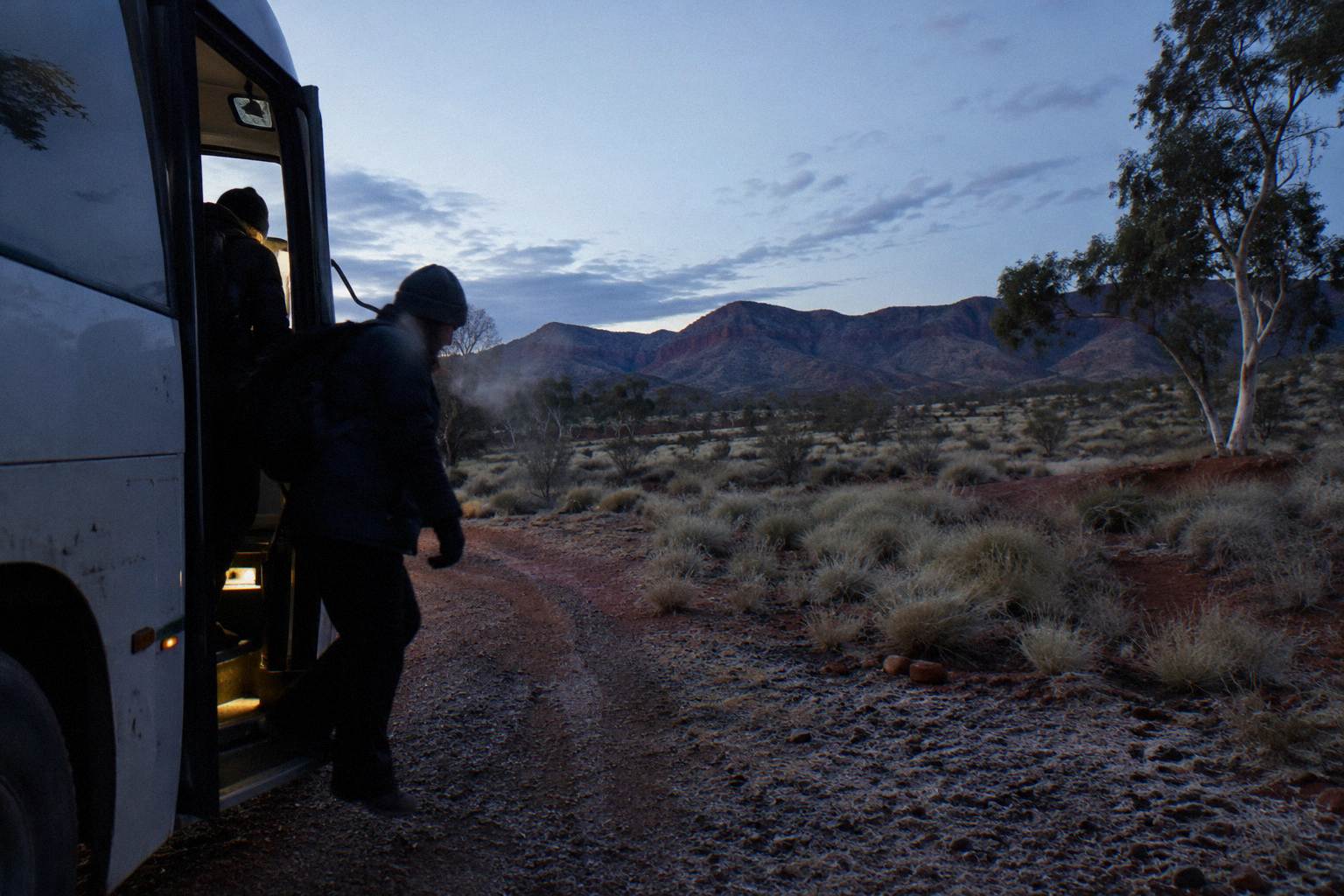
Pickup is approximately 1 hour before first light, which means about 4:15am in summer and about 5:45am in mid-winter, and the exact time is confirmed when you book and again the day before you fly. Return transfers from all Alice Springs accommodation are included in the fare, though private addresses and rural properties may not be covered, and there is no pickup from Uluru. Rural and camping guests meet instead at Crowne Plaza Lasseters reception, 93 Barrett Drive, and Uluru is roughly 450 km away, so the flight requires a night in Alice Springs first.
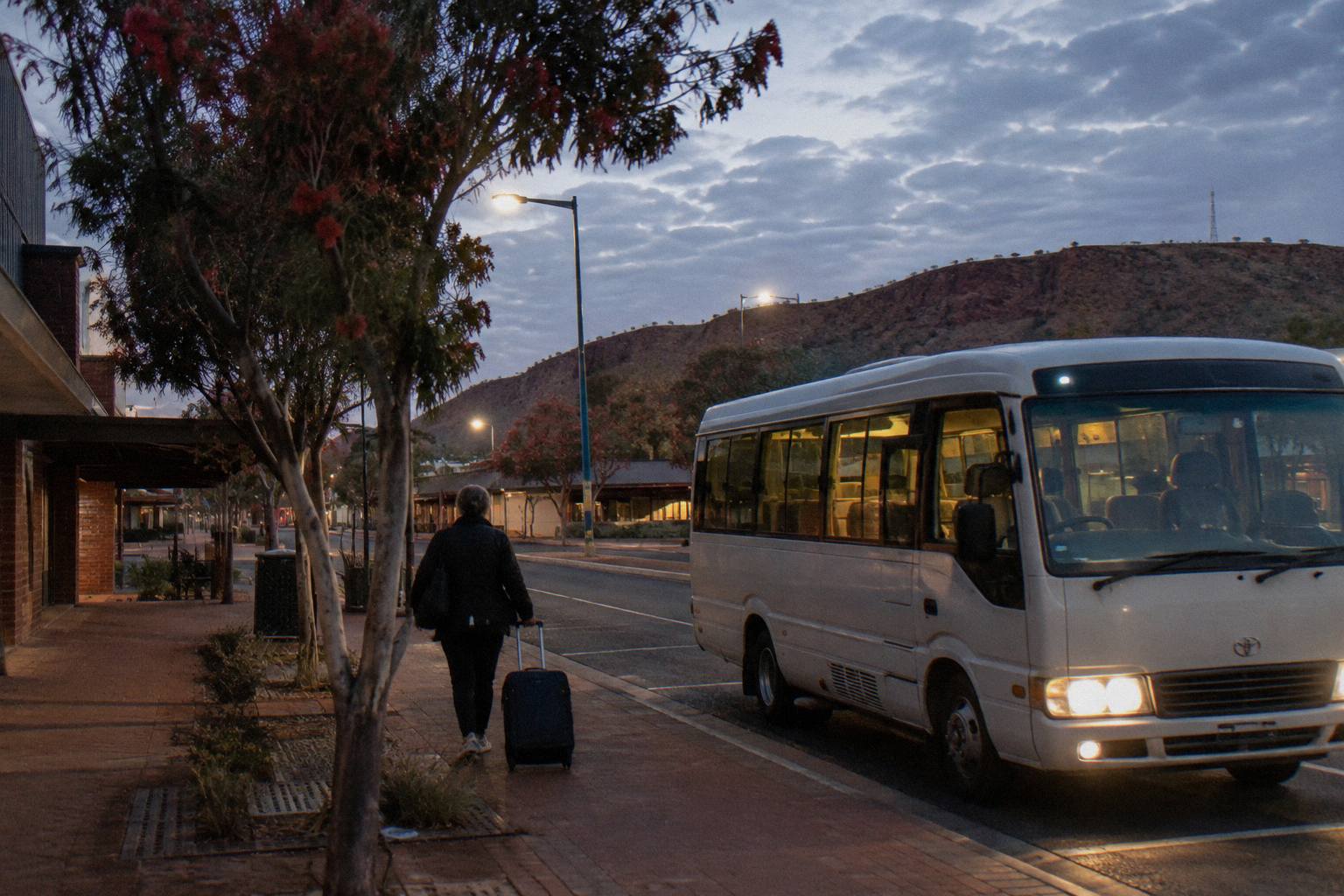
Why so early? Balloons fly in the first hours of daylight because that is when the air is calmest and most stable, and the whole schedule works backwards from first light. The table below shows how that shifts across the year. These times are computed from the NOAA solar position calculation for Alice Springs and are labelled approximate; the operator's own anchors, about 4:15am summer and about 5:45am mid-winter, are the numbers to plan around.
| Month | Sunrise (ACST) | First light | Likely pickup window |
|---|---|---|---|
| January | 6:00 | 5:35 | ~4:35am |
| February | 6:22 | 5:58 | ~4:58am |
| March | 6:36 | 6:14 | ~5:14am |
| April | 6:48 | 6:25 | ~5:25am |
| May | 7:01 | 6:37 | ~5:37am |
| June | 7:14 | 6:49 | ~5:49am |
| July | 7:16 | 6:52 | ~5:52am |
| August | 7:01 | 6:38 | ~5:38am |
| September | 6:32 | 6:09 | ~5:09am |
| October | 6:02 | 5:39 | ~4:39am |
| November | 5:42 | 5:18 | ~4:18am |
| December | 5:42 | 5:17 | ~4:17am |
An online check-in waiver is emailed 5 days before the flight, which is the moment to declare passenger weights and any medical conditions, since passengers over 110 kg receive an extra safety email and each medical case is assessed individually, with the pilot's discretion absolute. Backpacks stay on the bus. The dress code is outdoor clothing, not white, long pants, a hat and enclosed flat shoes, with warm layers about May to September; mid-winter pre-dawn temperatures in Alice Springs sit close to the July mean minimum of 3.9 degrees, and the record low is minus 7.5, according to Bureau of Meteorology climate averages for Alice Springs Airport.
Before the morning arrives, it is worth knowing the cancellation terms that frame the whole experience: no fee when cancelling more than 24 hours before, a forfeited fare inside 24 hours or on a no-show, and a pilot's weather call that is final, with a rebook or a full refund for prepaid guests. Those terms are covered in detail in how balloon flights handle cancellations and weather.
Planning backwards from the confirmed time makes the morning straightforward. Treat the pickup time as the moment you are standing at your accommodation's front desk or the kerb, not the moment your alarm sounds, and lay out clothes, shoes and wallet the night before. Keep your phone charged and within earshot so the day-before confirmation can reach you, and if you are staying at a private address or rural property, work out how you will get to Lasseters reception before you go to bed rather than in the dark before first light.
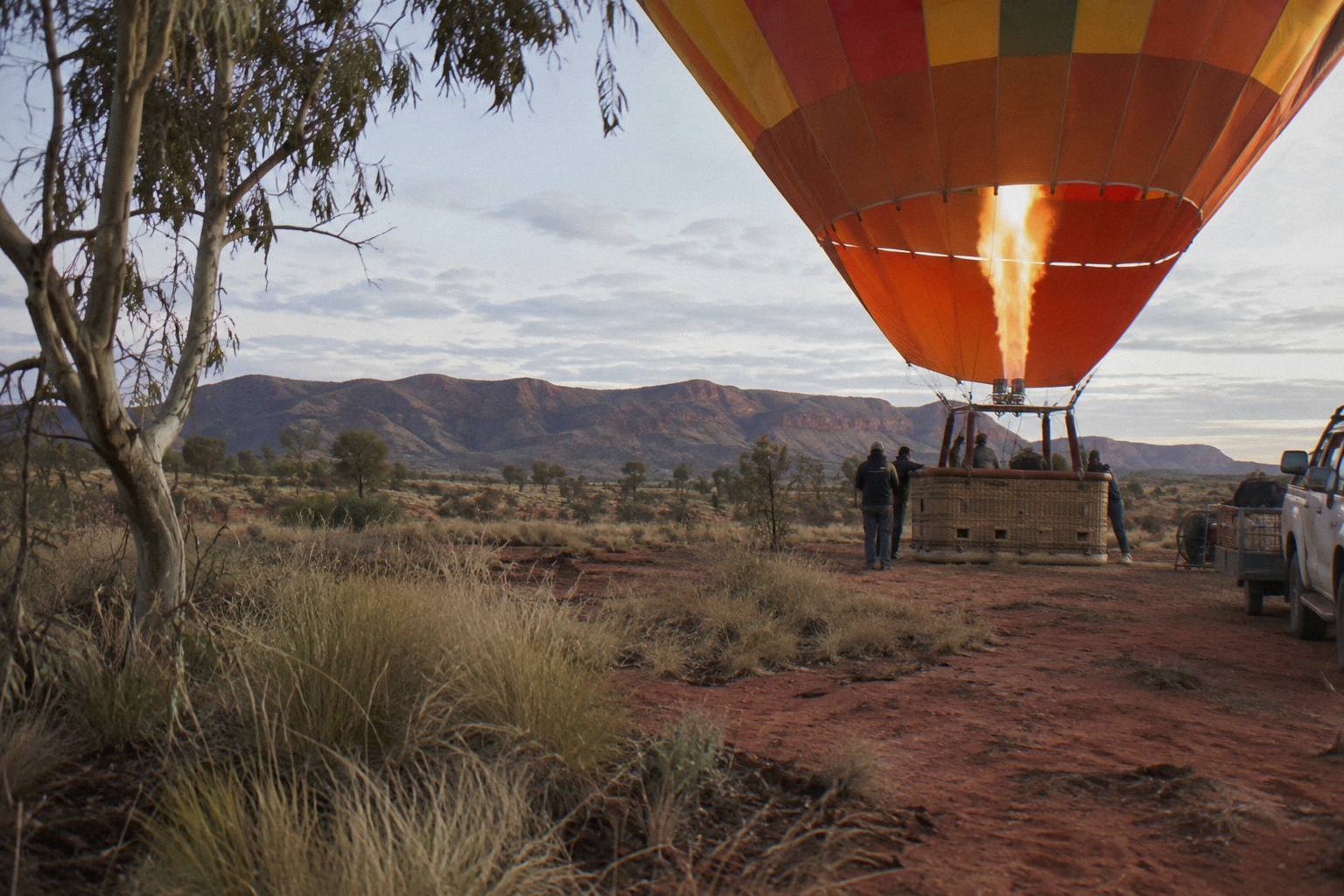
Packing follows the same logic. Because backpacks stay on the bus for the whole morning, anything you want during the flight itself has to fit in pockets, which in practice means a phone or small camera, glasses and not much else. Leave anything bulky or valuable locked at your accommodation, wear your hat and enclosed shoes from the start, and take the warm layers advice literally from May to September, since you will be standing outdoors in the coldest part of the schedule and then wearing the same clothes in the air.
The waiver email is the one administrative task that deserves genuine care. Weights and medical details are exactly what the pilot needs in advance, and because the pilot's discretion is absolute, declaring everything honestly five days out beats raising a surprise on the kerb. The same applies to anyone over 110 kg: answer the extra safety email promptly, because that conversation goes best with time in hand. And since the fare forfeits inside 24 hours, the day before your flight is the practical deadline for changing plans, so keep that evening free enough to check your messages.
The Launch: Fans, Fire And A Basket On Its Side
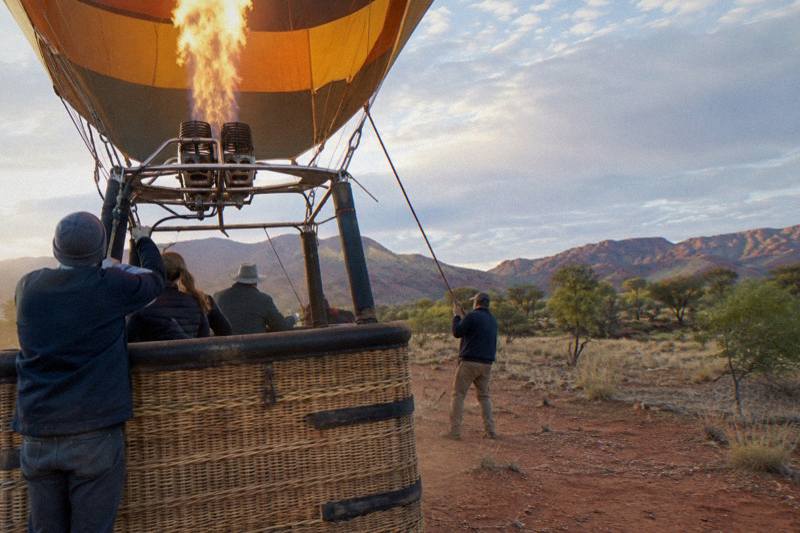
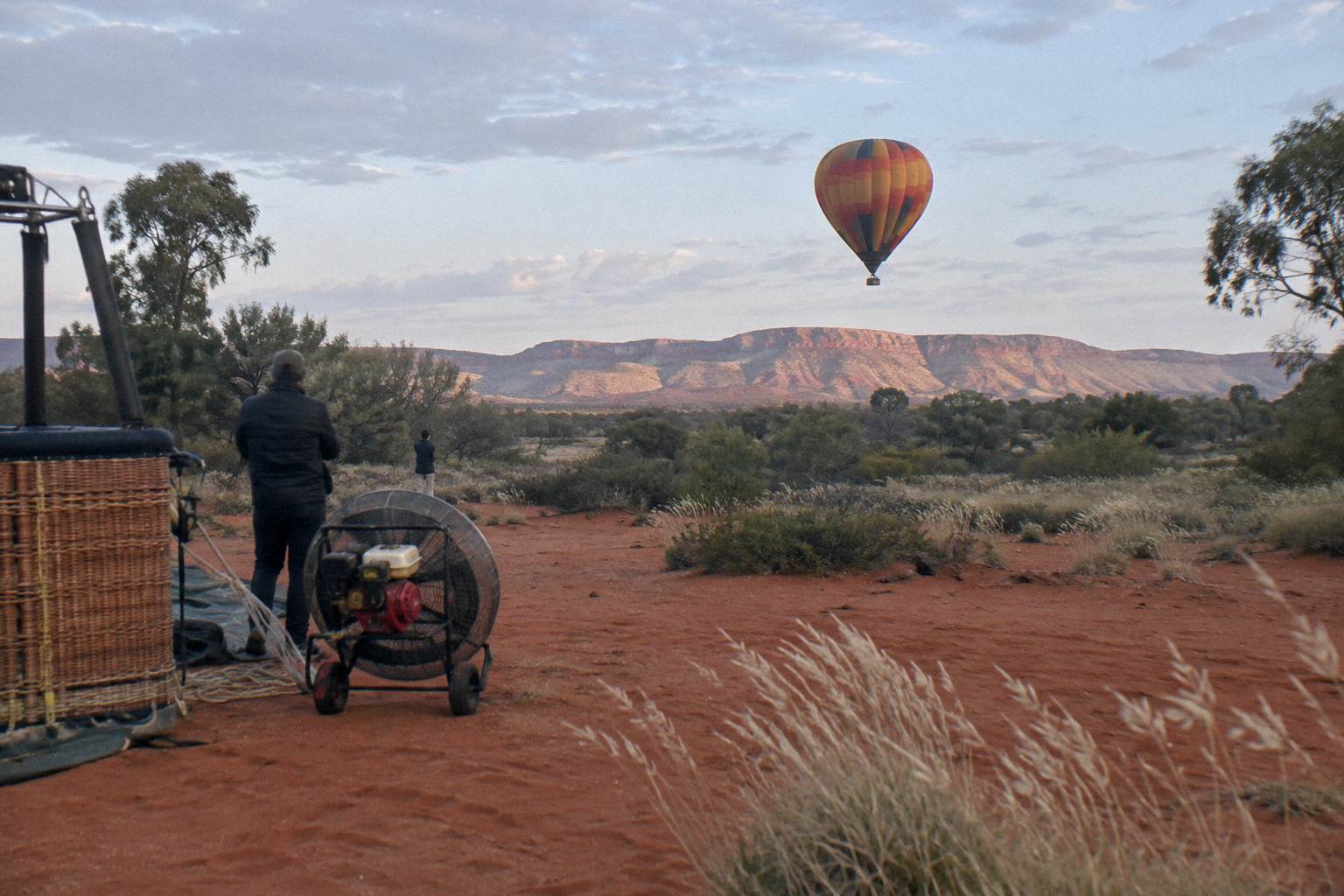
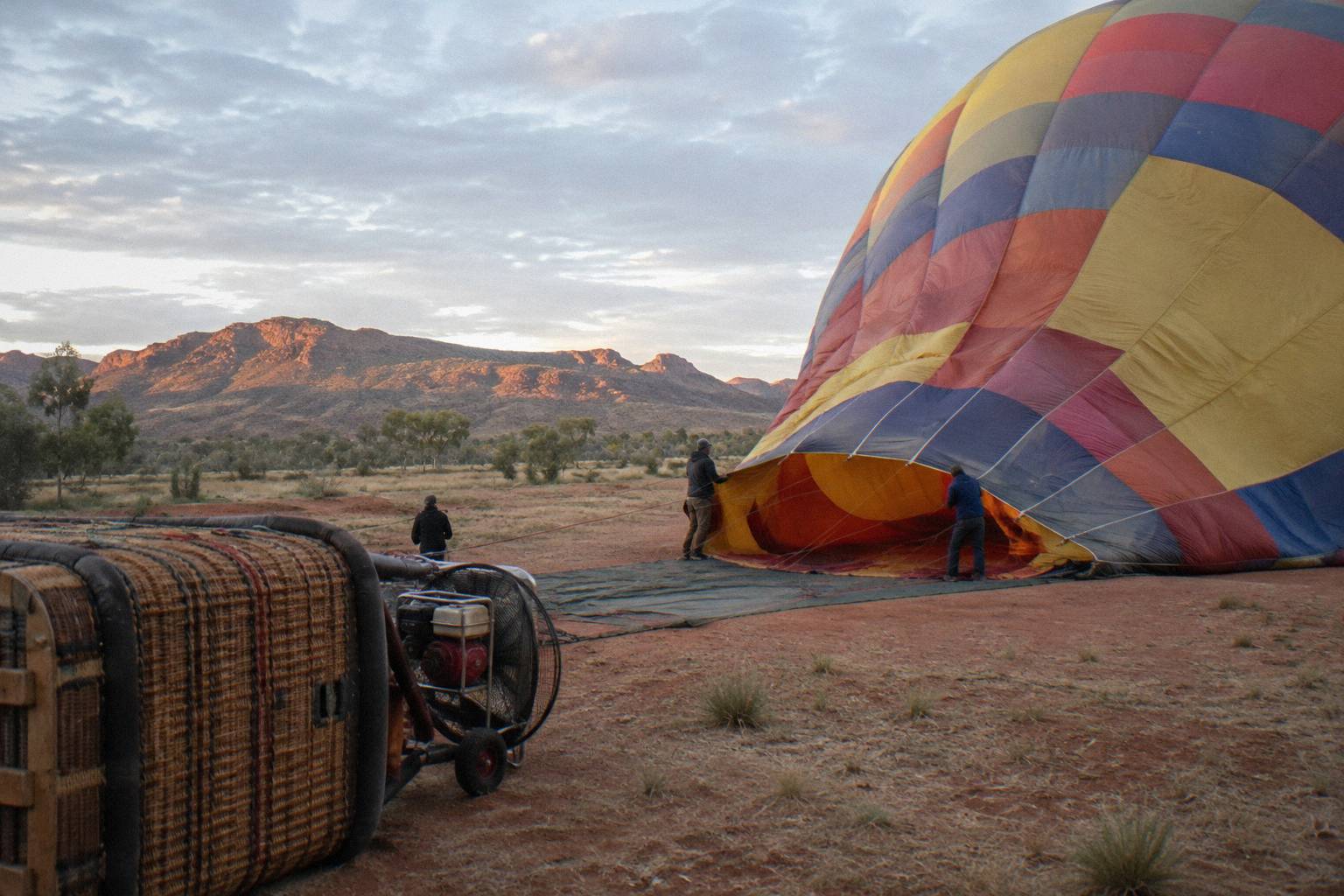
The launch happens about 15 km south of Alice Springs, adjacent to the MacDonnell Ranges, over historic Owen Springs Cattle Station, and the exact field is not published because the pilot chooses it on the morning according to the wind. Spinifex Ballooning, the other brand operating in the area, says it uses about 20 launch sites within 30 km of town, selected the same way. On site, the sequence is standard ballooning: the envelope is laid out, a fan pushes cold air into it, then the burner heats that air until the fabric stands up and the basket, which has been lying on its side, is pulled upright by the balloon itself.
Then comes the part the brochures underplay. Passengers climb into the basket unaided, using foot holes in a wall about 1.2 m high, and stand for the whole flight in compartments about 60 cm wide. Outback Ballooning flies 2 to 4 up to 24 people per balloon depending on the aircraft; Spinifex's figures vary by source, so the honest summary is that the operators give different group sizes. Nobody is seated. There is no toilet, no refreshment on board and no moving around the compartment, which is why who should not ride in a hot air balloon is a question worth checking before booking rather than at the launch field.
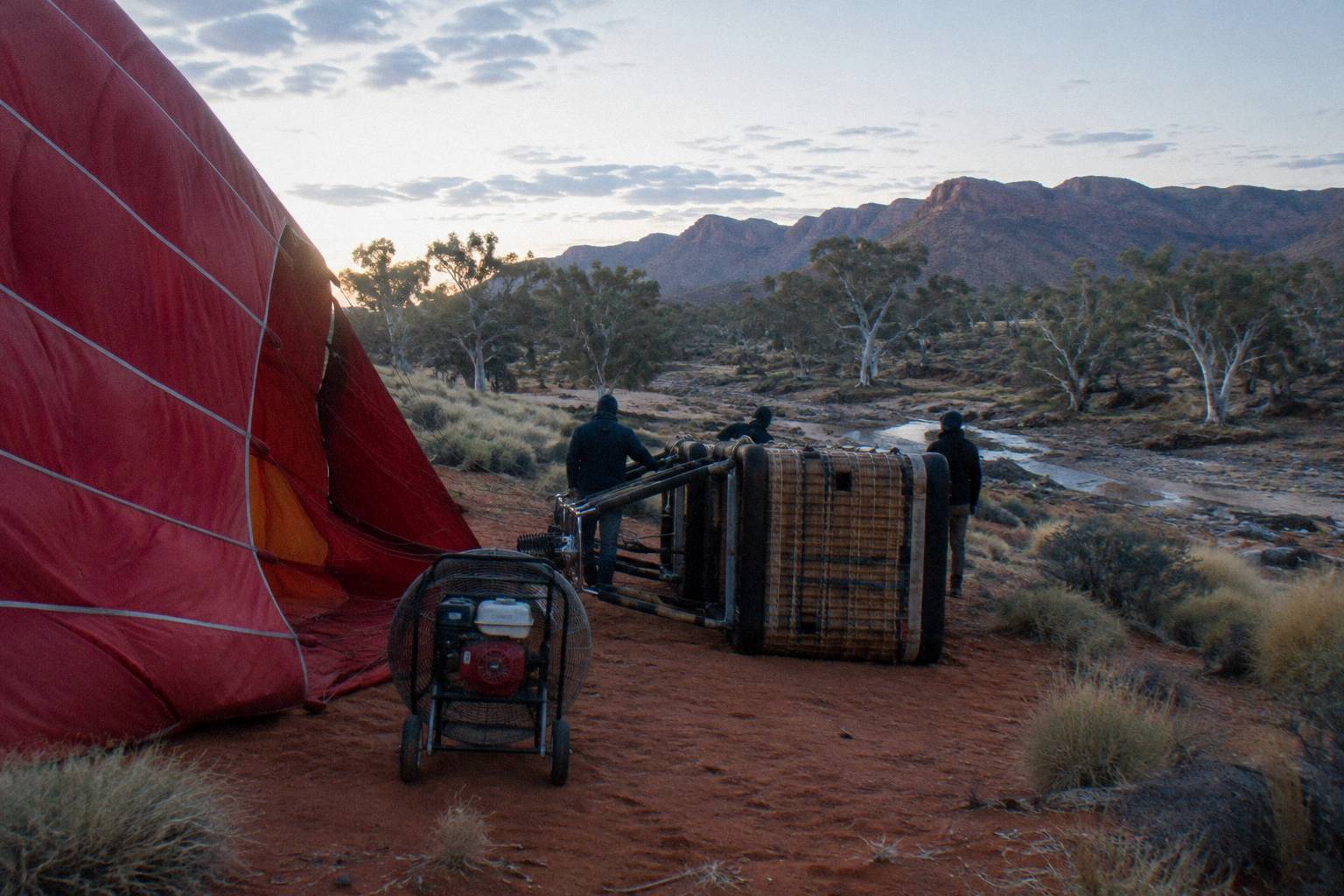
The launch phase is also the noisiest and, for some, the most startling part of the morning. The burner is loud when it fires, in short blasts rather than a continuous roar, and the fan that cold-inflates the envelope runs for several minutes before that. Between blasts it is quiet enough to talk normally. If any of that sounds difficult, the pages on fear of heights in a balloon basket cover the specifics of how high the flight actually feels, which is different from how high it is.
The Flight: What The Operator Actually Promises
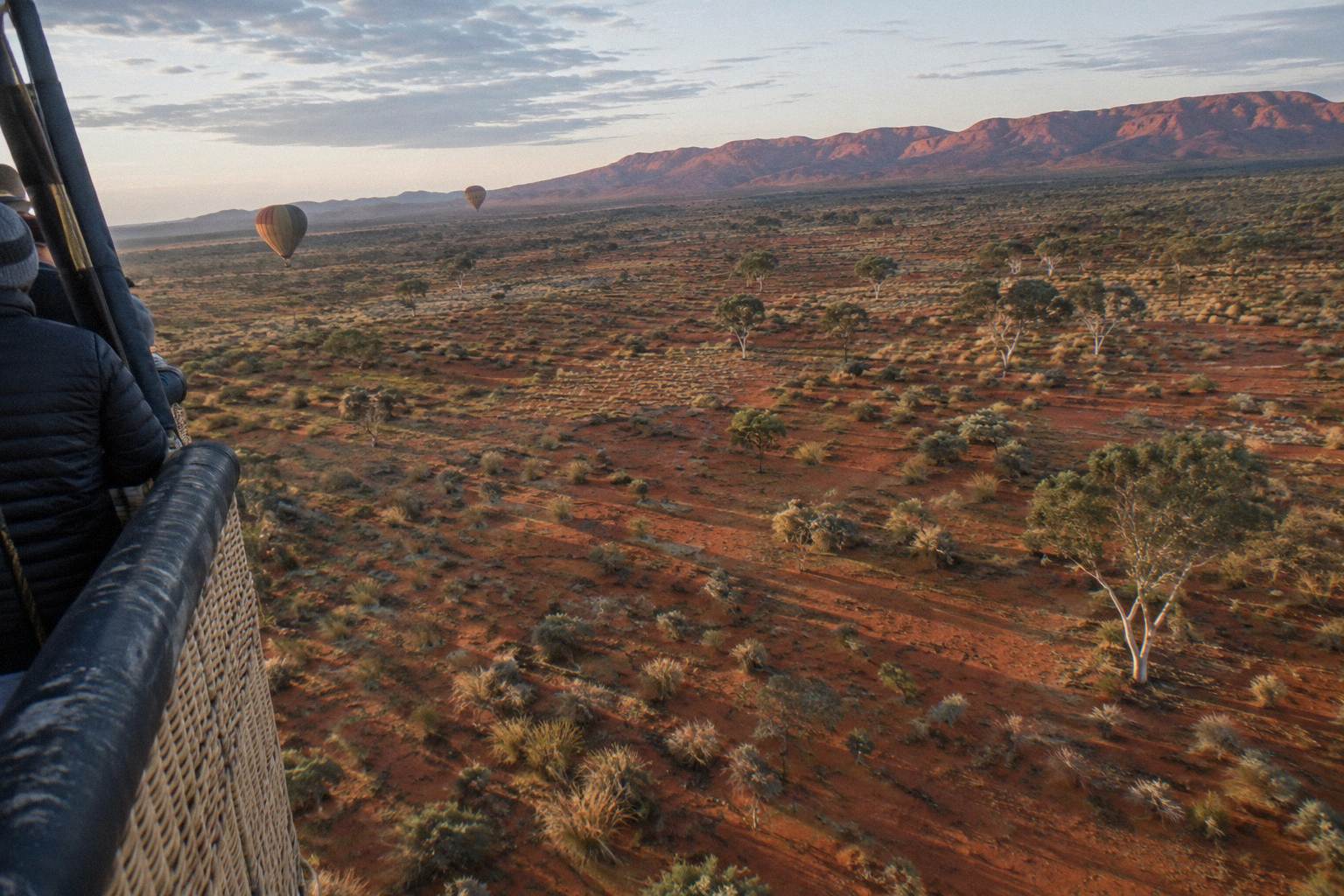
Outback Ballooning describes the 30 minute flight as floating silently above the Outback as the morning light begins to illuminate the MacDonnell Ranges, and the 60 minute flight as a chance to keep an eye out for kangaroos, spinifex grasses, mulga scrub and cattle stations; the flight typically covers 10 to 20 km and stays within the first 1000 ft above ground. Those are the operator's own words, and they are worth reading closely, because what they promise is landscape and light, not thrills.
Two corrections to common expectations come straight from the operator's terms. First, Outback Ballooning states plainly that it does not fly over the MacDonnell Ranges: the Ranges are the backdrop, lit by the early light, not the flight path. Second, flights are not guaranteed to be in the air at sunrise. Durations are approximate, and there is no refund if a flight runs less than the advertised 30 or 60 minutes; a 60 minute flight cut short to 30 is charged as the 30 minute fare.
The wildlife is real but not staged. The animals the operator names are red kangaroos, birds and wild camels, and the crew points them out when they are there. The operator says it flies an average of 250 to 300 days a year, its own claim, which is a function of the desert climate: Alice Springs averages only 43.1 rain days a year on the long-term Bureau of Meteorology record. For readers weighing the two local brands, the detail that surprises most people is that both print the same CASA air operator's certificate number, CASA.AOC.0496, on their own pages, and both brands appear to be one operator. For this site's purposes the flight is the same one either way, sold under the name Alice Springs: Early Morning Hot Air Balloon Flight, with a second booking page for the identical flight.
The same flight can also be booked on a page sold as Early Morning Ballooning in Alice Springs, which offers the same 30 or 60 minute choice with the same inclusions: return transfers, sparkling wine and juice after landing, and a commemorative certificate. Neither page is a different experience; they are two doors into the same basket on the same morning. When you are choosing, the 30 minute dawn flight is the shorter of the two options.
The Landing And The Sparkling Wine
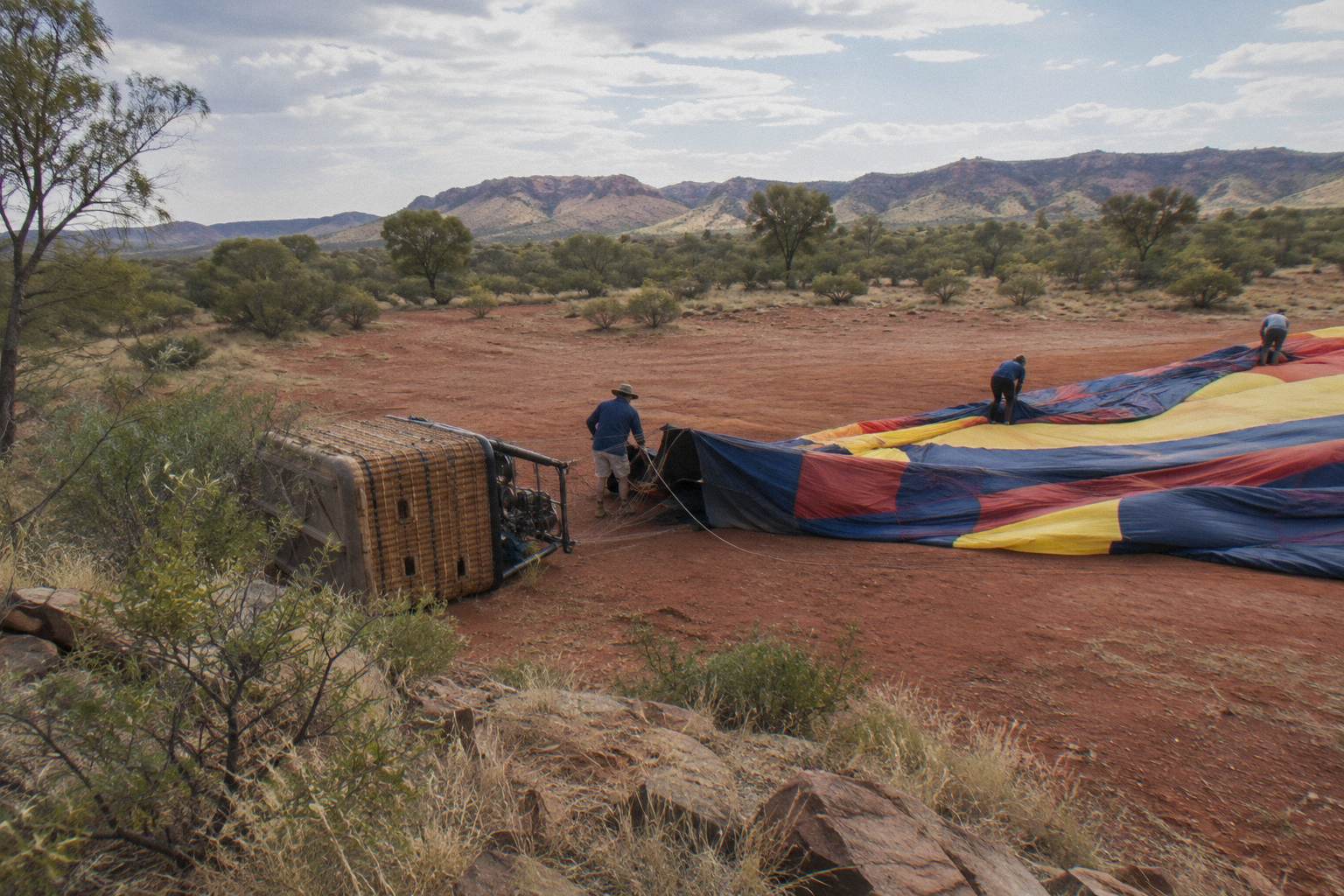
After landing there are light individually wrapped snacks, Australian sparkling wine and fruit juice, a commemorative certificate, and an optional chance to help the crew pack the balloon back into its bag; the landing itself usually happens on the station country the flight has been drifting over, and the basket can and often does tip onto its side as it slows. Passengers are briefed on the landing position before touchdown, and the crew is on hand the whole way down. This is a normal part of ballooning rather than an emergency.
This is the moment most reviews mention, and not for the wine. Standing in a paddock in first-light desert air, watching a crew of people wrestle a fabric building back into a bag the size of a fridge, tends to be what people remember. The flight is over by mid-morning at the latest, which leaves the rest of the day free, and the operator can drop guests at the airport on request, since the flight ends near it and the airport is a 15 to 20 minute drive away.
What It Costs And How The Morning Is Framed
On the operator's published fares the 30 minute flight is A$380 adult and A$340 child, the 60 minute flight is A$450 adult and A$405 child, and the ground-based Balloon Chase is A$110 adult and A$99 child, with the child band set at ages 6 to 14 in both local operators' brochures. For comparison only, Spinifex Ballooning lists a 30 minute flight at A$355 adult and A$320 child. Fares include return transfers from most Alice Springs accommodation and light refreshments including sparkling wine and fruit juice. No family fare is published by either operator, and prices can change, so treat these as the operator's listed fares and check the booking page before you book.
| Option | Adult fare | Child fare (6-14) | What it is |
|---|---|---|---|
| Outback 30 minute flight | A$380 | A$340 | The standard dawn flight described on this page |
| Outback 60 minute flight | A$450 | A$405 | Same morning, longer track over the station country |
| Outback Balloon Chase | A$110 | A$99 | Follow on the ground; needs at least one adult flying |
| Spinifex 30 minute flight | A$355 | A$320 | Comparison only; not sold through this site |
The Rest Of The Day, And Whether It Is Worth It
The flight finishes back in Alice Springs by mid-morning, which makes it one of the few headline experiences that leaves an entire day unused, and the sensible move is to plan the afternoon before you fly rather than after you land. Two options sold on this site fill that gap: a West MacDonnell Ranges day trip run by Emu Run Experience, about 9.5 hours with a 7:45am departure, hotel pickup from 22 locations, Standley Chasm entry, morning tea and a bushman's lunch; and a West MacDonnell Ranges Day Tour With Lunch run by Wildlife Tours Australia, a full-day air-conditioned mini-coach trip of about 10.5 hours with a morning departure, guided bush walks, lunch, snacks and Standley Chasm entry included, which suits the day before or after the flight rather than the same day. The balloon operator's own morning ends near the airport, and an airport drop-off on request is the trick for anyone flying out the same day.
Is it worth it? That is a fair question with a 4am alarm attached, and it has its own page in is a hot air balloon ride worth the money. The short version from this site's reporting angle: the fare buys a working morning of aviation, not a theme-park ride, and the people who enjoy it most are the ones who arrive knowing they will be standing still, in the cold, in the dark, before anything beautiful happens. Safety questions also have their own treatment, including whether hot air ballooning is safe and the documented record of the local operator under its regulator, the Civil Aviation Safety Authority, whose requirements the operator details on its own CASA-regulated page.
For transparency on that record, because a page like this should not curate it away: NT WorkSafe reported that Outback Ballooning Pty Ltd was convicted and fined in July 2021, a combined A$130,000, over the 2013 death of a passenger whose scarf became entangled in the inflation fan, in the official NT WorkSafe media release. The no-scarves, no-dangling-jewellery rule at the launch site is not arbitrary. Read it alongside the fact that the no-white clothing rule has no stated reason, which is covered separately in why you can't wear white on a hot air balloon.
That combination, a quiet drift over station country and a paperwork-heavy industry underneath it, is the truest answer to what a ride is like. This site, Alice Springs Hot Air Balloon, exists to report both halves of it.
Common Questions About A Hot Air Balloon Ride
What Is A Hot Air Balloon Ride Like?
It is a roughly 4 hour door-to-door morning: a pickup about an hour before first light, a drive south of Alice Springs, a launch beside the MacDonnell Ranges, 30 or 60 minutes of drifting 10 to 20 km over Owen Springs Cattle Station within the first 1000 ft above ground, then a landing, snacks, sparkling wine and a transfer back.
Will I Be In The Air At Sunrise?
Not guaranteed. The operator's terms state plainly that passengers are not guaranteed to be in the air at sunrise, because launch timing depends on wind and conditions on the morning. Sunrise is the schedule anchor, not a promise.
Do You Sit Down During The Flight?
No. Passengers climb into the basket unaided, using foot holes in a wall about 1.2 m high, and stand throughout the flight in compartments about 60 cm wide. There is no seating and no toilet on board.
What Do You See From The Balloon?
According to the operator: red kangaroos, birds, wild camels, spinifex grasses, mulga scrub and cattle stations, with the MacDonnell Ranges as a lit backdrop. The flight does not go over the Ranges, and Uluru, about 450 km away, is not visible.
How Many People Are In The Basket?
Outback Ballooning flies 2 to 4 up to 24 people per balloon depending on the aircraft; other figures published for Spinifex range from 4 to 24. The operators give different group sizes, so expect to share the basket on a standard flight.
What Happens After Landing?
Light individually wrapped snacks, Australian sparkling wine and fruit juice, a commemorative certificate, and an optional chance to help the crew pack up the balloon. The basket may tip onto its side during landing, which is normal.